





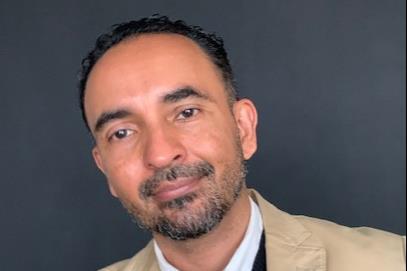
“Activism, resistance,” says Sheffield Doc Fest creative director Raul Niño Zambrano of the key themes stamped across the 2026 programme, the fifth one he has overseen
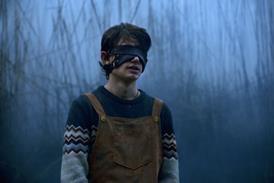
Zambrano points to the opening-night film, the world premiere of Rich Felgate’s We, The Hated, about UK climate protest movement Just Stop Oil, as well as the world premiere of Daniele Rugo’s Life Support, in which a group of international doctors breach the blockade of Gaza, and Lev Omelchenko and Nolan Huber’s A City In The Forest, which is screening in the international first feature competition.
The latter follows a grassroots movement fighting to stop Atlanta police from destroying a forest to build the city’s largest police training facility.
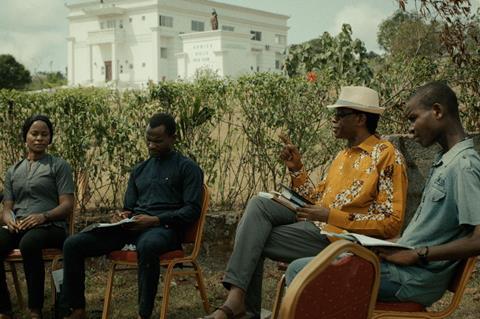
He says the themes can also be seen in Maria Galliani Dyrvik’s Hope Is A Word, about a poet fighting back against the Nigerian oil industry, and Adrian Van Wyk and Chris Kets’ Notes From The Underground, tracing Cape Town’s hip-hop scene of resistance.
The festival will run from June 10-15, with backers including BFI, Sheffield City Council, Arts Council England, BBC, Amazon Prime Video, Channel 4, Netflix, the Bertha Foundation and Sky Documentaries.
Zambrano spoke to Screen about his optimism for the documentary market, rallying sponsorship in a complex geopolitical climate and adapting around the disruption of AI.
This year’s programme doesn’t shy away from confronting geopolitical issues. How are you preparing for tough conversations, and for platforming opinions that could be perceived as controversial?
From the snapshot of the films we received, we feel these are the ones that can speak with each other.
Nowadays, it’s not only about showing films. Can we have a proper conversation after the film? Can we make the space so people can talk about it? Our opening film, We, The Hated, is about a very divisive activist group, but I really believe that this is a film that can bridge the dialogue.
What have been the key challenges in pulling the festival together?
Films are reflecting what is happening in the world, and I can’t deny the majority of the films were really hard [to watch]. Advisors and consultants said to me, ‘I just watched two films, I cannot watch anything else, I’m devastated.’
How are you feeling about the health of the documentary sector? Funding and distribution are facing considerable challenges for both film and TV docs.
It’s always been hard. I was working at IDFA [International Documentary Festival Amsterdam] for a long time, and documentary filmmakers have always had a hard time finding resources, trying to share their work, dealing with streamers and broadcasters. I’m grateful for their resilience.
I am always optimistic, somehow. What I get to see are wonderful pieces and there is something at this particular moment with artificial intelligence and many other things in the world, this search for authenticity is at the top [of audience priorities], and that’s something I am very much nurturing. Our role as festivals, we can create those spaces.
Are potential sponsors becoming more risk-averse about what they attach themselves to?
Absolutely. What I always try to say is, ’let’s sit together, let me explain to you, let me show you things’. Most of the conversations begin cautious, but [conversations improve] as soon as you are transparent and you explain the scope of the whole thing.
How are the streamers engaging with the festival?
They are taking meetings in the Meet Market, our big industry event. They have their own meetings as well. If you compare with big festivals like Berlin and Cannes, here is easier to connect and find them.
Which theatrical distributors are key supporters of documentary in UK-Ireland at the moment?
Picturehouse, Curzon, Conic are doing interesting things, Dogwoof is helping in a lot of things.
How do you find the films for your programme?
A lot of surprises come from the open submission. Picking these gems is the lovely part of the work. This year we got more than 2,900 submissions, and we just have 103 films. It’s the biggest [year on record for submissions] It’s more than 200 than last year.
Are you seeing many filmmakers use AI? Does the festival have a policy on programming films made with AI?
We do have a question on our submission form – ’if you are using AI, please let us know, and how, and which places in particular’. If people answer properly, that’s another question.
I’m very open, it is something that’s already part of our reality. It would be strange to put it aside. On the other hand, there is something about the journey of documentary, the search for authenticity and truth, that’s what we definitely connect more with.





No comments yet