













The hard-hitting documentary premieres in Venice Competition and is executive produced by Jonathan Glazer

‘NAZA’ is a slang term that the Israeli military uses for collateral damage. It’s also the title of the new film by Oscar-winning Israeli directors Yuval Abraham and Rachel Szor (No Other Land).
The feature documentary, which is sold by mk2 Films, produced by The Guardian and Jim Wilson through JW Films and executive produced by Jonathan Glazer, receives its premiere in Venice Competition today (September 10).
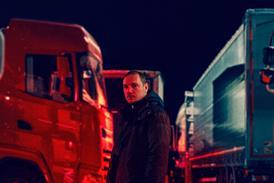
In NAZA, 24 Israeli intelligence officers and soldiers are interviewed on rooftops in nighttime Tel Aviv. They all bear witness to the genocidal killing of Palestinians, including civilians, in their homes and apartments in Gaza.
“These are all confidential sources. Finding them wasn’t easy. It took a long time before they agreed to speak. I think they had different motivations,” Abraham suggests. “Some were acting out of a feeling of shame at what they had done; a feeling that what they had done shouldn’t remain only in their heads but should be public knowledge. Others were more relaxed and spoke with a certain pride about the knowledge they had acquired through being in a sensitive unit.”
Intelligence officers are, we are told in the film, Israel’s social elite. The anonymous interviewees are articulate and intelligent. They are also, in some cases, mass killers.

The documentary doesn’t dwell on the motivations of its whistleblowers. Instead, it focuses on the killings themselves, the victims and what is happening in Gaza.
Szor acknowledges she doesn’t know how NAZA will be received back home. “It is hard to tell. Of course, it is very important for us that this film will be shown in Israel and the Israeli society will see it and have some response to it.”
She knows, however, that when allegations were made previously in newspapers by investigative reporters about war crimes in Gaza, “the IDF [Israel Defense Forces] spokesman just denied it. [But] now, when it is in Hebrew and on camera, and people are speaking about it in Tel Aviv, then it might be hopefully a bit harder for the Israelis to ignore it.”
As the film reveals, large swathes of Israeli society still believe “there are no innocent people in Gaza,” and that the entire population was somehow complicit in the October 7 atrocities. NAZA will confront these doubts with hard evidence that their army is killing infants as well as Hamas operatives and that it is using AI and mass surveillance to find its targets.
Glazer influence
The filmmakers met Glazer when he hosted a Q&A for their 2024 Oscar-winning documentary No Other Land. “I don’t only admire him for his filmmaking but also as a human being,” Abraham says of his executive producer.
One phrase Glazer used in a talk at the New York Film Festival about his Holocaust-themed feature The Zone Of Interest had a special resonance for Abraham. “He was saying his film was one where the victims are out of sight but never out of mind. That sentence influenced our thinking around this project, and in our approach to this challenge of speaking with Israelis involved in the killing.”
Abraham and Szor worked with The Guardian and Israeli news sites +972 Magazine and Local Call. “It is an interaction between film and journalism. It is trying to take the rigour of journalism [and put it] alongside the storytelling power of cinema,” the two filmmakers say.
The directors realised that the Israelis were deliberately targeting family homes in Gaza. “It is not a bug or a mistake,” says Abraham. “It is a feature of how the system works. Every single home in Gaza was mapped already before October 7th. There are systems designed to wait until a target enters his house and the bombing takes place there together with their families. Often, it is three generations of the family that are being killed, and the neighbours and everyone else.”
The intelligence officers make it clear that the IDF is after “quantity of targets” and isn’t overly concerned with pinpoint accuracy.
Szor was startled by the casual way in which the term ‘NAZA’ is bandied around by people her own age (she was born in 1994) when they “refer to women and children they killed… if you had 40,000 targets and you knew you were allowed to kill them with at least 20 ‘NAZA’, this is a system that is going to destroy this place and kill all the citizens there.”
Sometimes, they say, the wrong houses would be bombed or homes would be destroyed when the Hamas operative target wasn’t even there.
We are told in the film that a “15% error rate” is considered acceptable, but Abraham says that’s not the issue.
“It’s not the things that happened as a mistake – it is the mass killing of civilians, of children, men and women that happened in a calculated way, with full knowledge.”
The directors insist all their allegations have been checked “multiple times with multiple individuals”. They also say that the killing continues. “The crimes the film depicts are not a thing of the past. Just recently, a seven-year-old girl was found bombed with her father in a car. It’s a daily occurrence. There is no ceasefire in Gaza. People use the term ‘ceasefire’ but since October 2025, Israel has killed more than 1000 Palestinians, 300 of them children.”
The documentary was shot in secret to protect the sources. Now, the aim is to attract as much publicity as possible.
“We feel we are not doing anything wrong by making this film. We feel it is important that people hear these testimonies,” Abraham states. “We will do everything we can to make sure everyone everywhere has access to this film as soon as possible.”
After Venice, NAZA will also screen in San Sebastián and at the New York Film Festival.



No comments yet