









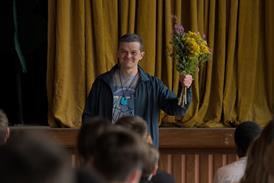


July Jung made history as the first South Korean female director to have three titles invited to the Cannes Film Festival. With her third feature, Dora, Jung sets out to reshape history, giving the subject of Freud’s famous case study a perspective and agency of her own.
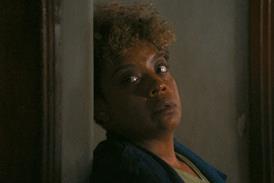
Set over one summer at a Korean seaside village, Dora follows a young woman who begins to recover from her physical and emotional struggles after finding love. The film stars former K-pop idol Kim Do-yeon alongside Japan’s Sakura Ando, of Hirokazu Koreeda’s Monster and Cannes winner Shoplifters, in her debut Korean film. International sales rights are handled by Finecut.
Following Jung’s 2014 debut A Girl At My Door and 2022’s Next Sohee, Jung’s third feature has been invited to screen in the Gala Presentation section of Busan. She also serves on the Competition jury. Screen spoke to Jung about the inspirations behind Dora and the challenges she faced making it.
What inspired the focus of Dora?
When I was 25 or 26, I read Freud’s complete works, and I was immediately drawn to the case of Dora. I found many elements fascinating, such as the way a young girl finds herself at the centre of two families and forms various relationships around her. Freud focused on analysing the complex psychological factors that a sensitive young girl experienced in relation to those around her, but he ultimately failed to treat her. Dora remained, in his account, a hysterical patient who continued to engage in concealment and deception.
I looked into the point where his research ended and revisited the events from Dora’s perspective. When I did, everything looked completely different. I wanted to portray her as a Dora who is alive here and now, living among us. I also wanted to depict this reversal cinematically. That was how the framework of the story came together.
A young girl who believes that everyone loves her. From the moment her devotion to those people, and her desire to return their love, is suddenly turned upside down, a tragedy begins in which everyone blames her. Can she rise up and free herself from this swamp of humiliation? Can she find a sense of justice that belongs to her alone?
Unlike Freud’s Dora, who remained a hysterical patient after her failed treatment, I wanted my Dora to be a human being who could recover and rise on her own. I wanted her to become a clear “case” of a person who, after gradually losing the light within her through suffering, fully recovers and ultimately takes a leap forward.
What was your experience like working with Kim Do-yeon and Sakura Ando?
Kim Do-yeon was cast after a very long audition process. She gave her all from the very first round and quietly made it through the entire process. As I watched her throughout that journey, I discovered something she had in common with Dora. I described it as “steadfastness”.
In the original screenplay, Dora was described as someone who was visibly vulnerable. Kim was quite far from that image. But I sensed in her the strength that Dora possesses after her recovery in the latter part of the film. I felt that her height and distinctive features could reinforce that quality even more.
Once we confirmed her casting, I changed Dora’s appearance to suit Do-yeon and also revised some of the dialogue. It is wonderful to meet an actor who looks exactly like the person I had imagined, but the experience of meeting an actor, being inspired by that person, and seeing the character finally come together through the synergy between us is truly exhilarating.
Nami was originally conceived as Korean during the early stages of development. However, I always felt a certain hesitation when it came to expressing the deep loneliness and emptiness within her. Then I realised that not even I could ever know everything about her. I could only try to imagine and understand what she might be feeling.
That was when I realised that, only when we acknowledge the unknown and willingly embrace what cannot be fully understood, can a character in a film truly become that one person living her own life. Once I moved beyond the anxiety of not being able to know her completely, I found that there was a larger life within the film that could encompass even that uncertainty.

After finally letting go of the anxiety I had been carrying throughout the process, Ando Sakura came to mind. Until then, I had never even imagined making a film with a foreign actor. But the moment I thought of Ando, everything fell naturally into place. It was such a wondrous experience. I was filled with joy, as if I had finally met the very person I had been waiting for over 10 years for, without even knowing who I was waiting for.
It felt as though Nami was appearing before my eyes—not as a character completed solely through me, but as a person who would live her own life between Ando and me. That was how Nami became a woman who comes to Korea to try to live a different life, barely holding together her broken body and completely empty heart after falling apart in Japan, without even knowing whether she was running away or arriving somewhere.
Ando has played many different characters throughout her career, but I think she is a uniquely talented actress who somehow makes all of them her own, in her own way as Sakura. It was an honour to create Nami with her.
What was the biggest challenge in making this film?
There were four languages being spoken on set, where Japanese actors and a French crew were filming together in a remote seaside village in Korea. Every form of communication took more than twice as long. And this did not simply mean the physical amount of time. The amount of energy and stress that everyone had to put into making it work was enormous as well. The brutally hot Korean summer weather also made things difficult for everyone.
What does it mean to bring Dora back to South Korea after its Cannes premiere?
I feel more nervous than ever. On the one hand, I hope that the audiences who loved A Girl At My Door and Next Sohee will recognise and embrace this film as well. On the other hand, I worry that they might be disappointed if the film falls short of or goes against their expectations. All I can do is sincerely hope that the audiences at Busan International Film Festival, who love cinema more passionately than anyone else in the world, will receive the film warmly.
What does it mean to serve on Busan’s Competition jury?
I had some hesitation before accepting the invitation to serve on the jury. It felt even more burdensome because my own film would also be meeting audiences at the same time. But these days, when I am facing great challenges – both in making films and simply in existing as a creator – I decided to take part in the jury because I feel an urgent need to find fellow filmmakers who, as contemporary filmmakers, are boldly stepping forward through our own cinematic language.




No comments yet