














Hong Kong International Film Festival (HKIFF) started life in the summer of 1977 with the aptly titled opening film Year One by Italian master Roberto Rossellini. It was established by the now defunct Hong Kong Urban Council alongside various other local arts and cultural institutions, from dance and theatre to film and orchestra.
“Some 30-40 titles were on the first line-up, mostly foreign films, filling a gap for Hong Kong audiences who had few viewing opportunities for such films, which were mainly available through Alliance Francaise and cine clubs like Studio One and Phoenix,” says Albert Lee, who took the role of executive director of Hong Kong International Film Festival Society in late 2018 and steered the event through the global pandemic in the early 2020s.
He was among the first to experience the inaugural HKIFF and remembers watching the closing film, King Hu’s martial-arts feature A Touch Of Zen. “It had a lively and vibrant atmosphere, with film lovers mingling at the only screening venue, the City Hall,” he recalls.
Core mission
In the 1970s, the notion of an international film festival was a novelty in Asia. HKIFF was a pioneer as only the second such event in the region after the International Film Festival of India (IFFI), preceding Tokyo (launched in 1985), Singapore (1987), Shanghai (1993) and Busan (1996).
“In the early years, HKIFF aimed to spark local filmgoing interest and facilitate international cultural exchange. That has remained our core mission,” says Lee. “We’re happy to see that film festivals sprang up elsewhere in subsequent years with a shared mission.”
His connections with HKIFF run deep, and not just as a loyal cinemagoer during those early editions. The former CEO of Hong Kong studio Emperor Motion Pictures was behind more than 20 films, several of which were spotlighted at HKIFF. Derek Yee’s Shinjuku Incident and Herman Yau’s Ip Man: The Final Fight were the opening films in 2009 and 2013 respectively.
HKIFF served as a timely and strategic springboard to find international recognition, growing in tandem with the rise of the Hong Kong New Wave, the Fifth Generation of mainland Chinese filmmakers and Taiwan New Cinema around the 1980s.
“Overseas festival programmers and film critics would travel to Hong Kong to scout for such films, which were hardly accessible in their parts of the world,” says Lee. “HKIFF’s screening of Yellow Earth in 1985 was its first outside mainland China. Both director Chen Kaige and cinematographer Zhang Yimou made a rare visit to Hong Kong to meet local and international audiences.”
The seminal film went on to win the Silver Leopard at Locarno and Sutherland Trophy at the British Film Institute Awards, effectively putting mainland Chinese arthouse cinema on the global map.
In celebration of HKIFF’s 50th anniversary, running April 1-12, Yellow Earth is among 12 classic works from a bumper section, Revisiting Chinese Cinema: The Beginning of a New Journey. Leading figures from the 1980s are featured, including Tsui Hark (The Butterfly Murders), Ann Hui (The Secret), Hou Hsiao-hsien (Dust In The Wind), Huang Jianxin (The Black Cannon Incident) and Tian Zhuangzhuang (The Horse Thief).
Opening the festival is Anthony Chen’s Berlinale competitor We Are All Strangers, with Philip Yung’s Cyclone as the closer. Hong Kong films receiving world premieres include Herman Yau’s We’re Nothing At All, The Dating Menu by Amos Why and Frankie Chung, and Tommy Tom’s Spare Queens. A total of 215 titles from 71 countries or regions are showcased, including 64 world, international and Asian premieres.
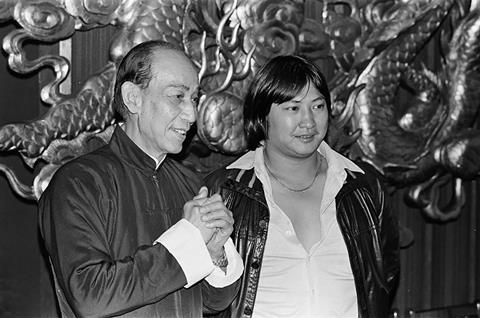
Special events include a film concert for Wong Kar Wai’s In The Mood For Love with live accompaniment from Hong Kong Philharmonic Orchestra, and a retrospective exhibition at City Hall, with archival photographs of visiting stars over the years.
Lee has been seeking a more permanent venue for HKIFF, similar to how Cannes and Berlin are associated with the Palais and Palast respectively. “The high density of Hong Kong makes it very difficult, but we’ll keep trying,” he adds.



No comments yet