












The Hungarian filmmaker was last at the festival in 2015 with his debut feature Son Of Saul
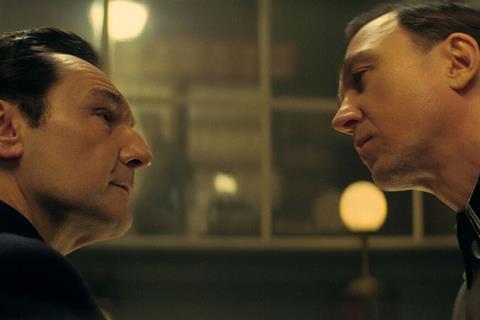
After a blistering arrival with his Cannes grand prix and Oscar best foreign-language film winner Son Of Saul, Hungary-born filmmaker Laszlo Nemes returns belatedly to Cannes Competition with his first French-language film. Moulin centres on the last days of French resistance hero Jean Moulin (Gilles Lellouche), after he is captured and tortured by the Gestapo head Klaus Barbie (Lars Eidinger) in June 1943. The film is produced by Alain Goldman’s Pitchipoi Productions and had its Grand Théatre Lumiere premiere on Sunday. (Read Screen’s review here.)
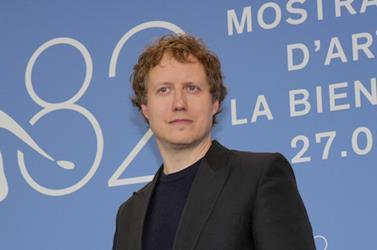
How did a Hungarian filmmaker come to make a film about a famous French historical figure with a French producer and cast?
It does sound strange, but I have a deep connection to France. I lived there when I was younger and did my studies in Paris. So when Alain Goldman came to me with this project, I knew that not only would I be able to make a French movie, but I knew enough about the subject matter to go beyond the usual perception of historical movies and do justice to the figure of Jean Moulin.
What makes Moulin such an interesting subject?
He was a humanist, an art dealer and a painter, with a unique philosophy about life. He was more an intellectual than a field agent, and not prepared for what happened to him. That’s why his story is extraordinary.
Olivier [Demangel]’s original screenplay had this promise of a clash of civilisations, two opposing views of the world – one about finding the good in people, and the other about spreading nihilism and destruction. I didn’t want Moulin and Barbie to simply be two forces; I wanted them to be human beings. In the film, the best and the worst human beings can do is on full display as a warning to all of us.
What do Gilles Lellouche and Lars Eidinger bring to their depictions of these figures?
Gilles gave so much of himself to the movie. He didn’t mimic Moulin, but found a way into who he was. That was a beautiful process – almost like a birth.
Lars’ character was difficult to approach. I didn’t want a circus Nazi and at the same time I didn’t want to overhumanise him. My intention wasn’t to find the man behind Barbie – I wanted him to be perceived through Moulin’s eyes and show a Machiavellian psychopathological person without getting into the psychology of it. The way they interact is never boring; it’s like an ominous play unfolding.
How does it feel to be coming back to Cannes just over a decade since you were here with your debut feature Son Of Saul, and as an established auteur?
I feel more pressure, strangely enough. When you have nothing, you have nothing to lose. After working for 10 years on other things, now, in a way, I’m making a comeback. It’s exciting.
There’s nothing bigger than Cannes. There is a dreamlike quality to it like no other festival, almost like a spiritual ritual. When your eyes are hit by the sudden lights of the theatre at the end of the movie, you are hypnotised by the emotion. That said, I secretly hope no one claps. Clapping has become a competition over the past 10 years. I’m not in the competition of clapping. I hope people take away other emotions from the film.
How else has the industry changed over that time?
I think the internet and streamers have shaped a different kind of storytelling that is damaging for cinema. It’s all about short-term satisfaction instead of deeper emotional layers. There is a need for big stories, but the industry has moved away from that. I’m yearning to go back to that as a community. I long for a new era of films just being films again.
Do you think it’s possible with a film like Moulin?
I made this film on 35mm. It’s widescreen, it’s anamorphic, it’s big cinema. Even the lenses are like the ones big Hollywood films used. It has an instant cinematic quality that helps to broaden its appeal. It’s a logical evolution of my work. It retains the radical quality of independent film, but opens up from arthouse to a more commercial realm.





No comments yet