






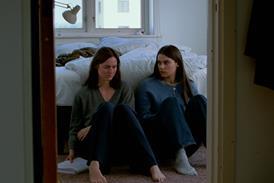

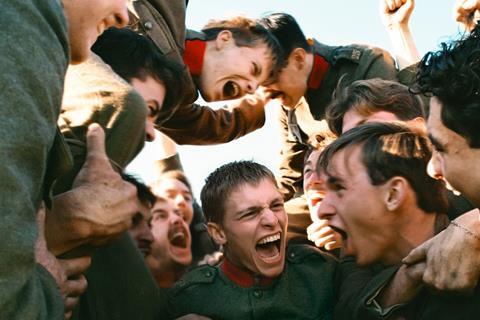
Lukas Dhont won the Camera d’Or in Cannes with his 2018 debut feature Girl, and picked up the Grand Prix with his next feature, 2022’s Close. Now, the 34-year-old Belgian filmmaker is back in Competition with his third and most ambitious feature yet, Coward.
The First World War-set drama is produced through The Reunion, the independent production company Lukas runs with brother Michiel, and is Dhont’s first period picture, tracing the experiences of two young soldiers on the western front looking for ways to escape the brutality of the trenches. Lukas wrote the screenplay with regular collaborator Angelo Tijssens.
Mubi will release the film in several territories including UK and Ireland, Germany and Spain, with The Match Factory selling remaining markets.
What led you to the First World War?
The first spark for the film was these black-and-white photos of soldiers entertaining each other right behind the front lines. For me, this was proof that even in the darkest of times, we have tried to survive by creating life through art, companionship and humour. That is something I wanted to bring to the screen because it is very resonant with today. I remember seeing a clip of a young Ukrainian pianist playing his piano while outside his apartment, the explosions are going on. That is both horrific and incredibly beautiful and poetic. I want the film to be about this, singing in the dark times. I wanted to show companionship, how we can be there for each other. This especially started when I read this journal of a young man who described a comrade dressing up like their mother in order to kiss them good night. I found that so moving.
So this isn’t a typical war movie?
I feel in a genre so dominated by brutality and by violence, which is also in this film, I wanted to bring more light into it. This is what we tried to do when we write the script.
What does the title refer to?
It is a word with so much tension and charge on it because of the fear of that label and what it means – being a coward. For many, especially in 1914, being a hero meant repressing everything you feel – I find that incredibly harrowing. One of the topics in the script was the idea of fear. Sometimes we fear another human being because they can harm but we also fear our emotions and what we actually feel. Sometimes we repress them in order to endure but I wanted this to be about young men who actually express their fear.
Where did filming take place?
We filmed in the actual Somme area. That was a very spiritual experience in a way because we built our sets and base camp there, and we went there with 150 young men on soil where so many waited before they would go out and fight.
You open the film with a statistic about 65 million young men being involved in the First World War. Where did that detail come from?
The First World War is a big part of Belgian history; I drive nearly weekly through the fields [in Flanders] where a big part of the war was fought. All these young men are part of my images of the war. This is a number that has been told to me from when I was young – there were 65 million young men mobilised to fight during that war. It’s a shocking number.
How did you discover your two compelling young leads, Emmanuel Macchia and Valentin Campagne?
When we wrote the script and started to shape these characters, it was clear that our main character was a young man from an agricultural background. When we did the casting for Girl, which is set in the dance world, we went out looking for dancers because the body was so important. I thought about it in the same way [for Coward]. I thought, This is a young farmer, someone who uses their body in a very connected way to the land, and so I went to some agricultural schools in Belgium.
I love to street-cast; it is one of my favourite parts of filmmaking. I was standing in the courtyard and I saw Emmanuel. He was so beautifully timid, he was someone who was using his voice so softly, someone who in the beginning [of the film] is afraid to use his real voice. Valentin is the opposite of that very timid personality; he is someone who is loud and uncontrolled and will celebrate all the parts of his being without any hesitation.
What did you research in The Imperial War Museum in London?
There is a lot of material to find there on the theatre performances [that the soldiers put on]. It was important to me that this film was respectful of the past but that I would also take [artistic] freedom. This isn’t a documentary about 1916, nor is it about a very specific battle. It’s an interpretation, an elaboration, based on things I have read. It’s not based on my own fantasy; it is based on actual photos of young men cross-dressing behind the front lines.
Will the film appeal to a younger audience?
There was not a single moment where I thought about this as a historic film. I always wanted it to be not about the past. Why would that resonate with someone young today? We have been bombarded in the news with images of men harming our world, but what I wanted to bring into this conversation is images of young people who are free, tender, there for one another and joyfully existing in this framework that has kept them trapped. This is a film about young people – and so it needs to speak to young people.






No comments yet