















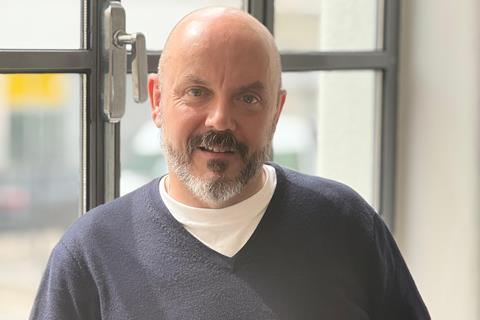
Vítor Pinheiro of Portugal’s Institute of Cinema and Audiovisual was elected last year as president of European Film Promotion (EFP), the network of film promotion institutes from 37 European countries.
EFP supports European cinema through programmes such as Producers on the Move, Shooting Stars, Future Frames, documentary initiative Europe! Docs, Europe! Voices of Women+ in Film, Film Sales Support and Europe! Hub.
One year into the job, Pinheiro reflects on the role, the challenges facing the European industry and how some of EFP’s programmes can help.
What are the main challenges facing the European film industry?
Considering the extremely complex international economic situation, we are all concerned the current crisis may have a strong impact on the financial support that countries allocate to cinema. And then things tend to work in a kind of cascade.
With less funding, we cannot aspire to be present in as many markets, and everything follows from there. The biggest challenge may ultimately be convincing European authorities, as well as those in each individual country, that the film industry should be among the priority sectors — not as a favour, but on its own merit.
What does European cinema and European talent need most right now to remain visible and competitive internationally?
Internationally, European cinema works well, in my view, almost like a brand, an umbrella. We all know that there are many different kinds of filmmaking within what we have come to call “European cinema.” Each country has its own, very distinct voice, yet it often shares certain characteristics that make it part of a broader European whole.
This diversity itself, and, I would even say, the creative freedom, is among the defining features of European cinema, setting it apart and making it something worth preserving. It is precisely this richly diverse unity that makes us unique and gives us international competitiveness.
Why does a collaborative European approach matter so much?
Well, saying this is something of a cliché, but it turns out to be true. We are stronger together by taking joint positions and presenting a cohesive image of the path we want to follow.
What role can EFP play in helping European cinema?
EFP enables films, producers, and talent from LCCs, to use the official terminology. to be presented in markets on a level playing field with those from the “large countries.” It allows the industry, through a single institution, access to a wide diversity of European cinema, professionals and talent.
Can you give examples of EFP programmes from the past year?
Producers on the Move, which celebrates its 27th edition in 2026, has brought together more than 550 producers from 37 European countries since its launch. Its long-term effect is reflected in lasting professional relationships and co-productions, such as the collaboration between German producer Janine Jackowski and Austrian producer Alexander Glehr, who first met through the programme in 2009 and have continued to work together. Their latest collaboration, Marie Kreutzer’s Gentle Monster, just premiered in Cannes Competition.
EFP’s talent programmes also show concrete career impact. Through Future Frames, emerging filmmakers have taken important next steps: William Sehested Høeg has wrapped his first feature after taking part in the LA residency, Simon Schneckenburger is developing his first feature and directing a Tatort episode, one of the most famous programmes in German public TV and Katarína Gramatová’s debut feature travelled from Tokyo to Karlovy Vary and earned her Best Director at the Czech Lions.
European Shooting Stars has also continued to deliver tangible career momentum, with recent participants moving swiftly into high-profile international projects. Latvian Shooting Star 2025 Karlis Arnolds Avots is represented in this year’s Un Certain Regard at Cannes with Ulya, a project he originated, co-wrote and stars in. He has since joined a string of major international productions, including Amazon Prime’s Kill Jackie, Amazon MGM’s epic series Bloodaxe and the BBC/ZDF Killing Eve prequel Honey.
At the sales and distribution end, Film Sales Support, during the 2024–26 funding period, supported 341 films through 184 campaigns from 34 member countries, helping European sales companies increase international visibility and circulation outside Europe. With a sales ratio of 42% so far, FSS shows how targeted promotion can position European films successfully in competitive global markets.
EFP’s Europe! Hub initiatives also showed strong results in key non-European markets. At Filmart 2026, 14 European world sales companies from five countries presented 97 titles, with 25% already sold — a significant increase compared to previous years and a sign of active buyer interest in European films in Asia.
Looking ahead, what do the next 12 months look like for EFP?
A successful next 12 months for EFP would mean continuing to strengthen the visibility, circulation and competitiveness of European cinema across all stages of the value chain — from emerging talent and producers to films, sales companies, festivals and international buyers.
It would also mean securing continued support from Creative Europe MEDIA, ideally through another two-year contract. MEDIA’s support has been crucial to EFP since its inception almost three decades ago, enabling EFP to build and sustain a pan-European network that promotes European cinema internationally.
It will also be important to exchange and discuss the upcoming AgoraEU programme and to ensure European Film Promotion remains strongly positioned within future cultural and audiovisual policy frameworks.





No comments yet