









The state of the world was on Mamoru Hosoda’s mind when he wrote Scarlet.
“I’ve generally made films about the lives of young people in Japan,” says Hosoda. “But following the pandemic, as wars and conflicts began to break out, it made me think about chains of retaliation, cycles of revenge that keep going, seemingly without end. I wanted to make a film about this very contemporary theme.”
Scarlet is the first film in four years from the anime director, who was Academy Award-nominated in 2019 for Mirai and whose Belle was the third-highest-grossing film at the Japanese box office in 2021. Hosoda found a vehicle for his story of vengeance and forgiveness in Shakespeare’s Hamlet.
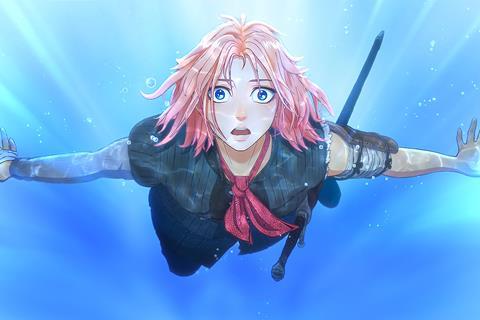
His stand-in for the titular prince is Scarlet, a Danish princess voiced by Mana Ashida whose father is deposed by her evil uncle. Scarlet is killed while attempting to take revenge and finds herself wandering a hellish afterlife where she meets an unlikely companion: an emergency medical technician (EMT) from modern-day Japan voiced by Masaki Okada (Drive My Car).
Though the European period setting is a departure for Hosoda, the meeting of characters from different times and places is a favourite motif, from the time-travelling protagonist of his 2006 breakout hit The Girl Who Leapt Through Time to the titular duo of 2015’s The Boy And The Beast.
“The contrast of two different people is what sparks the drama of a film,” says Hosoda. “In Scarlet, I have a princess who is obsessed with revenge, and an EMT whose job is to save lives. She’s a realist, he’s an idealist. By pairing them up, we can see how they start to influence each other and change over the course of the story.”
Innovative ideas
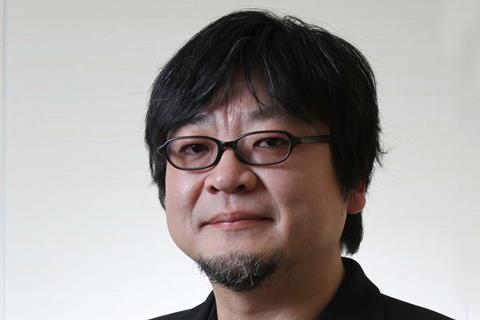
Another departure is the film’s look and feel, created with a new hybrid animation method devised at Chizu, the studio Hosoda and producer Yuichiro Saito founded in 2011.
“The film deals with themes of life and death, so I needed a large-scale style of animation that could encompass those themes,” says Hosoda.
“Hand‑drawn animation has been the tradition in Japan, but my goal was to leverage the strength of 2D animation while using 3D technology to give a new look.”
The result allows for more expressive facial expressions and dynamic camera movements, but getting there presented challenges for Hosoda and his team.
“I didn’t know if it would even be achievable,” he says. “We were creating new technology and there was no correct answer. We were figuring it out as we went.”
Despite the challenges, Hosoda says he feels innovation is key for Japan’s storied animation industry to keep thriving.
“The trend in Japan in recent years is toward anime that adapts hit manga to the letter,” says Hosoda. “From a business perspective, it makes sense if the source material is a huge hit, but is it good for culture?
“I feel as if the appeal of animation as cinema is somehow being held back,” he continues. “Especially at this moment, where Japanese animation is being embraced by people around the world, the time is ripe for films that pursue techniques exploring anime’s potential as a cinematic medium.”






No comments yet