








The Munich International Film Festival is one of Europe’s leading summer film festivals, garnering over 90,000 admissions last year.
This year’s event opens on Saturday, June 17 with Pawel Pawlikowski’s Fatherland , and will host the biggest gathering of the German film industry since the Berlinale in February.
Actors Toni Servillo and David Duchovny will receive this year’s CineMerit Awards in recognition of their contributions to film as an art form while an homage is dedicated to the veteran German filmmaker Jutta Brückner.
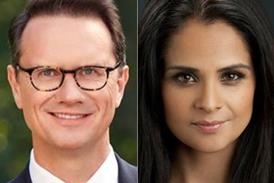
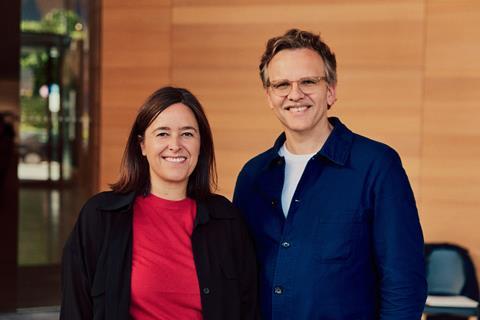
Festival director Christoph Gröner and artistic director Julia Weigl talk to Screen about the place of political debate at film festivals, the Filmfest’s championing of US indie cinema and the trends they have spotted in new German cinema.
What changes have you made for this year’s festival?
JW: We want to return to the festival’s roots and become a real home base for US independent cinema again. This year we have six international premieres of US independent movies, and Jay Duplass, who presented The Baltimorons last year, is back. He has entrusted us with the international premiere of his new film, See You When I See You, as the closing film, a brilliant film starring David Duchovny, who will be receiving one of this year’s CineMerit Awards.
Our cooperation with various cultural institutions has meant we have been able to dig even deeper into more experimental kinds of films that have found a home in our CineRebels competition. Spanish filmmaker Carlos Casas’ Krakatoa will be complemented by a video installation and we will be working with Museum Brandhorst to show a series of shorts by Serbia’s Zelemir Zilnik, about his experiences of living in exile in Munich in the 1970s.
Which German films and filmmakers should the international industry look out for in the New German Cinema programme?
CG: Our dream has always been to feature fresh voices right out of film school alongside established filmmakers returning to the festival with their new films, like Anatol Schuster (Ms Stern) or Annekatrin Hendel (Schönheit & Vergänglichkeit).
Some are also making their comeback in the international competitions, such as Visar Morina with Shame And Money and Ana-Felicia Scutelnicu with Transit Times, both of whom began their careers here at the New German Cinema section years ago with their early films.
Many films are humorous without compromising their message, and they work with different aesthetic approaches. Peter Meister’s Bearhunting, for example, is set in the past, but the satire has a direct relation to our present day. And Randa Chahoud’s Identitti touches on many of the sore points in our times, but with a performative spirit and a wild sense of humour.
JW: Several of the films we’ve selected are no-budget productions without any public funding, with the filmmakers from different backgrounds and often wearing several different hats. For instance, Christoph Otto previously worked as an editor and makes his directorial debut with The Ballad From Wednesday To Thursday, Ella Cieslinski and Nina Wesemann have worked together on documentaries and now collaborate on their first fiction feature Dear Future Self, and David Helmut is the director, screenwriter and male lead in his debut feature So Happy It Hurts.
This year’s Berlinale was dominated by debate about the role of film festivals as a forum for political debate and free speech. How are you approaching the issue at Munich?
JW: We are having to navigate very complex times right now, but you have to realise that running a festival in Germany comes with another legacy. We have to be very precise about how we navigate things, but at the same time, we have to keep our platform and festival open to everyone with both a local and global responsibility.
CG: Our festival is an invitation to engage with the films and their artists, but it should be for the artists themselves to decide what they want to talk about or not. The privilege of cinema is to serve as a question mark and open up our perspectives, not to jump to easy conclusions and shut the discussion down, but to have a respectful dialogue that may challenge one’s own notions about an issue.
What makes MIFF stand out from other film festivals?
CG: Munich has always been a festival of discoveries. We want to surprise our audiences by presenting diverse voices from around the world. That’s shown this year by the world premieres of Daydreaming Lullabies, an independently financed Iranian film in the Turkmen language, and Pitico by the veteran Brazilian director Júlio Bressane. We also have films from countries not often put into the spotlight, like Angola with My Semba and Kazakhstan with Sicko.






No comments yet