










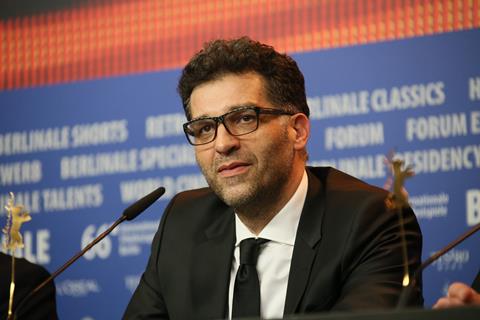
It is 25 years since Bosnian director Danis Tanovic made his Oscar-winning film, No Man’s Land in 2001. The anniversary has just been marked by a photography exhibition in Sarajevo and the film has been restored digitally by Canal+.
“It was the first win for Bosnia since the war finished,” the director recalls of the national pride for the film. “It was the first time someone managed to do something unusual, a kid from the block making a war film about Bosnia and then winning all the awards.”
Tanovic has been at Slano Film Days in Croatia this week, meeting and mentoring rising filmmakers from the region.
“It is a window into new directors and young actors. You have time to sit with people and hear their stories,” he enthuses, of the event which he always tries to attend. “We don’t have the opportunity very often to sit with fellow directors and talk about where we are, what we love to do and how do it.”
However, Tanovic does not hide his dismay at the situation for filmmakers back home in Bosnia. He suggests ruefully it may actually have been easier for filmmakers in the war-torn 1990s when he was starting out than it is today.
“It’s funny to say but when you are a filmmaker in war, you just take a camera and you film. Today, it is becoming a difficult world for filmmakers. In the region, most of the funds are falling apart. The Bosnian fund [Foundation of Cinematography Sarajevo] didn’t give money for the last three years. They did, but then they retracted it. It’s a political mess basically,” he explains why feature production has been grinding to a halt.
“In the region, in a lot of different places, it is really hard for filmmakers to get money for their projects if they don’t align with official politics.”
He says it is not any easier for him to raise funding.
“We usually bring at least 80% of the budget from outside [Bosnia] when we make a movie, but if we don’t have the initial money from our own country, then it is really hard,” he says. “Why would anyone in France or the UK give money for a Bosnian film?”
In recent years, Tanovic has been as involved in TV drama as in feature films, a creative decision as much as one driven by the public funding crisis in Bosnia. Kotlina, the hit crime series he co-wrote with Amra Baksic Camo, was a passion project for both of them that ran from 2022 until 2025. “We didn’t do it for any other reason than we love series.”
Now, he is pushing ahead with a series called Hedgehogs In The Haze, which has been largely written by its cast and was presented in the Berlinale co-pro series earlier in the year.
The six main actors - three female, three male - met at Tanovic’s home to devise what became a plot about three best friends whose lives, caught in toxic relationships and financial struggles, are turned upside down when they discover a small box with controversial contents.
The cast is led by leading Bosnian actress Džana Pinjo, a driving force in writing the screenplay.
Tanovic hopes to shoot the six-part series next year, co-directing with Nermin Hamzagic. “That was what was interesting for me, having actors write about what they care about.”
The director has also been developing new feature projects for himself. He has spent three years honing his script for the Ukraine-set War Daughter. “It starts as a crime story in the middle of war and then slowly shifts to something else.” Co-producers include Sébastien Delloye and Labina Mitevska.
Another project is an adaptation of legendary war photographer Patrick Chauvel’s novel, Sky, inspired by his experiences in Vietnam in the late 1960s.
“I go for things that are important for me, that matter to me,” he says of how he chooses what to spend his time on. “ It’s not easy but I prefer that kind of hardship to negotiating with money people. I’m just not cut for that world.”






No comments yet