

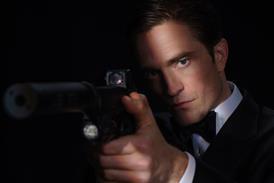











Long a leading figure in Europe’s auteur filmmaking scene, Philippe Bober’s Coproduction Office will celebrate its 40th anniversary next year by unleashing its riskiest venture yet at Cannes 2027: Ruben Östlund’s anticipated The Entertainment System Is Down.
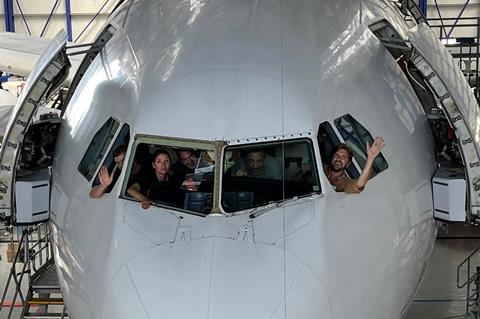
Philippe Bober will not share precise budget details for Ruben Östlund’s The Entertainment System Is Down, but A24 has US distribution rights and Swedish press has reported the double Palme d’Or winner’s satirical drama starring Keanu Reeves and Kirsten Dunst is costing close to $30m.
That is a big number, especially for an independently financed feature from a maverick Swedish director. “Europe gives us the means to make ambitious international films while preserving the director’s creative freedom. That is our ambition with The Entertainment System Is Down, which can be as successful as a Hollywood film but with a distinctive cinematic vision,” says the founder of Coproduction Office, who has been a respected figure on the European sales and production scene for nearly four decades. “The director has the final cut [on] his quite original story and freedom to experiment.
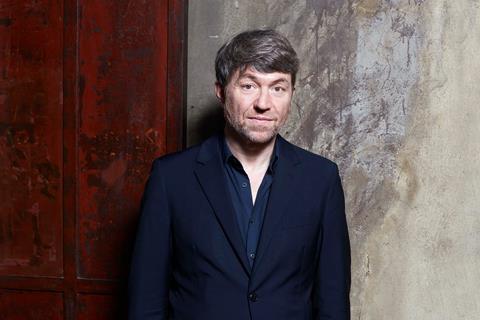
“The price to pay if you choose not to work for a streamer or a studio is to calibrate and carry the risk,” continues Bober. He is producing alongside Erik Hemmendorff at Plattform Produktion and had the financial flexibility to give Östlund another year to complete the project after its originally anticipated launch at this year’s Cannes Film Festival was postponed until 2027. There is no sign of any of the many production and financing partners or the small army of distributors that have pre-bought the film complaining about the delay. If anything, it has heightened the sense of anticipation.
“We secured a substantial production loan from Cofiloisirs, with guarantee support from IFCIC,” explains Bober of a credit line believed to be in excess of $11m (€10m) secured through the Paris-based credit institution IFCIC (Institute for the Financing of Cinema and Cultural Industries). “We remain responsible for repaying the loan, but the combination of specialist lending, guarantees and a clear legal framework makes a project of this scale possible for a company of our size. It helps us preserve the director’s creative freedom.”
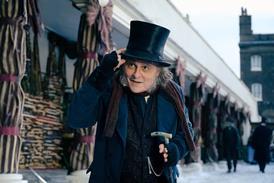
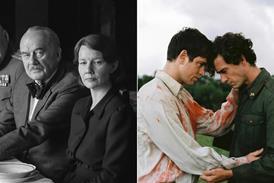
As well as Östlund’s upcoming picture, Bober’s slate includes a pair of films that premiered at Venice in September: Ilya Khrzhanovsky’s Dau, a sprawling three-and-a-half hour apocalyptic epic about Stalinist Russia that won the best director Silver Lion, and Imperium, Sergei Loznitsa’s equally lengthy archive-based documentary about the Soviet Union, which won best film in the BFI London Film Festival’s competition. Coproduction Office is handling world sales on both titles, and co-produced Dau. In the pipeline are the next projects of Cambodia’s Rithy Panh and Italy’s Michelangelo Frammartino.
Over the last four decades, Coproduction Office titles have won many festival awards (see below), 19 European Film Awards (including three best European film prizes for Breaking The Waves in 1996, The Square in 2017 and Triangle Of Sadness in 2022) and has had 13 films selected for Cannes Competition.
That is an impressive haul for an outfit set up as a one-man band by the softly spoken, Strasbourg-born Bober in Berlin in 1987, when he was 23 and two years before the fall of the Berlin Wall. At the time, the would-be producer had just completed a business degree in Paris and an internship at German broadcaster WDR.
In the early years, his company did not even have a name. “It was named after its first project, Europa by Lars von Trier, for which I set up an international co-production and raised 60% of the financing outside Denmark, its territory of origin,” explains Bober.
It took about a decade before Coproduction Office reached “structural break-even” in 2000, when the overheads began to be covered by the profits generated by international sales. From 2014 onwards, says Bober, the company has “generated a good margin almost every year”.
From those one-man-band origins, the company opened a second branch in Paris in 2000 and now also has a footprint in the UK and Denmark, with an international sales and production team of 20 people spread mostly across the Berlin and Paris offices. Alongside Coproduction Office, Bober runs Berlin-based Essential Filmproduktion, which he established in the mid-1990s to separate the sales and production activities. He describes his business as akin to “a micro-studio”, with a hands-on approach to nurture each project from concept to delivery.
Founding principles
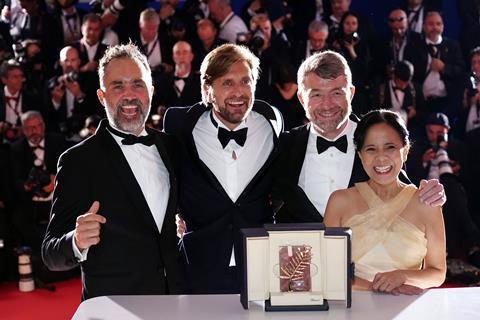
Bober’s principles have not changed since he entered the industry in the late 1980s. He still wants to finance, produce and market films from auteur directors. “I decided very early that I would have international sales because I thought it was virtuous to live from the revenues and not from the budget of the film,” explains Bober.
His first venture into the world sales arena with von Trier’s 1987 feature Epidemic was not propitious. “It was an absolute disaster,” admits Bober. Undaunted, he continued to build the catalogue.
Von Trier’s TV series The Kingdom, which premiered at Venice in 1994 and went on to show widely in cinemas, was the first project he both co-produced and represented as a sales agent. “It was a success, also thanks to the strategy of presenting the series as a theatrical movie [released in two parts of more than two hours each in all key territories], which also increased its reputation and shelf value,” says Bober. “It was the first film with which the sales department actually made money.”
At that time, von Trier’s Breaking The Waves was already in development, which Bober helped to finance and produce. Over the following two years he also began working with Roy Andersson, and soon after with Lou Ye, Jessica Hausner and Ulrich Seidl, all long-term partnerships that continue to this day.
An important early source of new talent for Coproduction Office was through Sarajevo Film Festival, where Bober became programmer in 1996 and also launched the CineLink Industry Days, an event inspired by International Film Festival Rotterdam’s CineMart. Sarajevo festival founder Miro Purivatra had been looking for an industry advisor when the Yugoslav Wars came to an end in 1995; Bober remained associated with the event for 25 years. His programming job forced him “to be disciplined and watch hundreds of films every year”.
In the mid-1990s, Bober was tipped off about Andersson by his filmmaker friend Gaspar Noé. He watched the veteran Swedish director’s shorts and invited one to Sarajevo. At that stage, Andersson had not completed a feature since the mid-1970s but was talking about making his self-funded comeback Songs From The Second Floor. Meeting Andersson by chance while the director was on holiday in Berlin in early 1996, Bober took some of the early footage and organised screenings at the European Film Market; one was attended by a commissioning editor at ZDF/Arte who subsequently came on board to help finance the film that relaunched Andersson’s career.
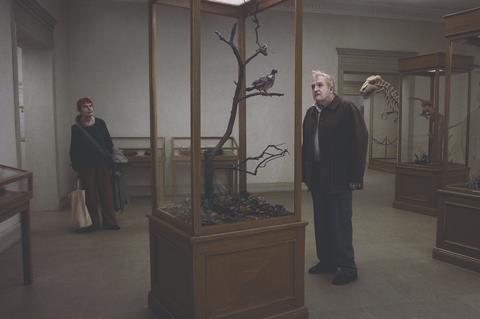
Two decades later, Bober was by Andersson’s side when he won the 2014 Golden Lion for A Pigeon Sat On A Branch Reflecting On Existence, which Coproduction Office produced and sold.
Seidl was another maverick whose work Bober had screened in Sarajevo. The Austrian filmmaker won the audience award in 1999 for Models, and Bober stepped in with financing when Seidl went over budget on his 2001 feature Dog Days.
He found young Austrian talent Hausner through Cinefondation in Cannes with her 1999 graduation short Inter-View, which he took on for sales. “I think it had as many viewers in cinemas as it has minutes,” he says dryly.
The collaboration with Östlund began in Rotterdam in 2005 after Hemmendorff gave Bober a VHS of the director’s short film Autobiographical Scene Number 6882. “It is composed of two shots and it has Östlund’s stamp all over it, especially the sense of humour, an amused perspective on group dynamics and a very clear eye for composition,” says Bober, who acquired it for international sales and has since worked on all of the director’s films as a co-producer, financier (since 2011’s Play) and sales agent.
Going global
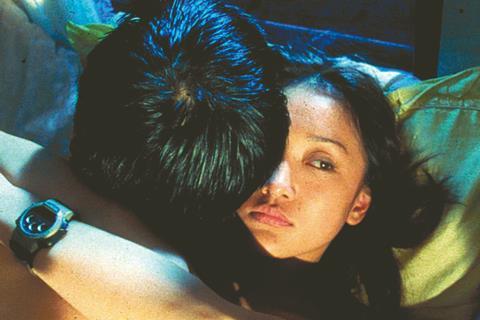
Although Bober’s focus is primarily on European titles, Coproduction Office has occasionally looked further afield. In the late 1990s, a Chinese assistant brought him a box of VHS tapes by young Chinese directors of the emerging ‘Sixth Generation’. He systematically watched them all, with Lou Ye’s low-budget debut feature Weekend Lover (1993) catching his eye. Bober went on to co-produce and sell Lou’s third feature Suzhou River, financing it through pre-sales to France and Japan. The film went on to win a Rotterdam Tiger Award in 2000 and established the director as an international name.
He met Mexican director Carlos Reygadas in Rotterdam in 2002 and spoke to him about handling international sales for his debut feature Japón. They eventually ended up working together on a new edit of the film, which sold to more than 30 countries after its Cannes Directors’ Fortnight premiere the same year.
Ask Bober the secret of dealing with brilliant but single-minded and sometimes temperamental auteurs, and he talks of trying to understand each director’s way of working. “My responsibility is to build the conditions in which inventions can exist, and to say when I think a decision puts the film at risk,” he says. “Since the directors have the final cut, I rely on persuasion when we disagree creatively, and the trust built over several films makes those conversations possible.”
When Bober started Coproduction Office, there were many more strong independent distributors willing to get behind auteur-driven films. The market is starkly different in 2026, and yet Bober has never deviated from the type of films he is producing and selling.
“I had lunch with two people from my team and I was telling them that the company is 39 years old and in the first 10 years, everybody was asking me the same question: ‘How do you keep going?’” he says. “I told my colleagues that resilience is not only economic, it is psychological. If you believe in the direction you’re going and keep moving forward, eventually you get where you want to be. We now stand in a strong position – and without changing our direction or compromising.”
Having been built through a combination of production and sales, Coproduction Office remains a “theatrically driven” company, but one that now has a substantial catalogue.
“The films that we have produced have a long shelf life. They do not grow old, and generate small but constant revenues,” says Bober. “We have a limited but faithful audience that does not become smaller. We don’t sell packages to platforms because they don’t seem to be interested but we organise retrospectives and re-releases that generate revenue.
“With the total number of films growing a little bit, year by year, between own productions and classics, so do the revenues,” he adds of how the business has sustained its margins in the post-DVD era.
Branching out
Alongside his film companies, Bober now also runs Berlin-based Italian restaurant Briefmarken Weine. The name means ‘postage stamp’ – the building used to be a philatelist and stamp-dealing shop. Bober bought it in 2018 after the owner left Berlin to open an art gallery in Athens. Why? It was the best restaurant within walking distance from his office, he explains, and experience told him that producers spend a lot of time in restaurants.
“I always understood delicious food and wine to be excellent earthly support for rich conversations, apart from being a pleasure,” he says.
Not that being in the hospitality business is any easier than producing and selling movies. “It’s even more stressful,” he sighs. “It’s more complicated and is hard work. But now that it’s up and running, there are lots of fringe benefits, especially if you like good wine.”
| Gold rush: Coproduction Office’s select awards | ||
|---|---|---|
|
Title |
Award |
Festival |
|
Dau (2026), dir. Ilya Khrzhanovsky |
Silver Lion, best director |
Venice |
|
Triangle Of Sadness (2022) dir. Ruben Östlund |
Palme d’Or |
Cannes |
|
Il Buco (2021) dir. Michelangelo Frammartino |
Special jury prize |
Venice |
|
Dau.Natasha (2020) dir. Ilya Khrzhanovsky |
Silver Bear* |
Berlin |
|
Little Joe (2019) dir. Jessica Hausner |
Best actress, Emily Beecham |
Cannes |
|
About Endlessness (2019) dir. Roy Andersson |
Silver Lion, best director |
Venice |
|
The Square (2017) dir. Ruben Östlund |
Palme d’Or |
Cannes |
|
A Pigeon Sat On A Branch Reflecting On Existence (2014) dir. Roy Andersson |
Golden Lion |
Venice |
|
Force Majeure (2014) dir. Ruben Östlund |
Un Certain Regard jury prize |
Cannes |
|
Paradise: Faith (2012) dir. Ulrich Seidl |
Special jury prize |
Venice |
|
Women Without Men (2009) dir. Shirin Neshat |
Silver Lion, best director |
Venice |
|
Songs From The Second Floor (2000) dir. Roy Andersson |
Jury prize |
Cannes |
|
Breaking The Waves (1996) dir. Lars von Trier |
Grand prix |
Cannes |
|
Europa (1991) dir. Lars von Trier |
Jury prize |
Cannes |
*Outstanding artistic contribution, Jürgen Jürges (cinematography)






No comments yet