






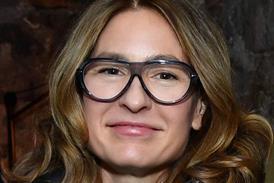

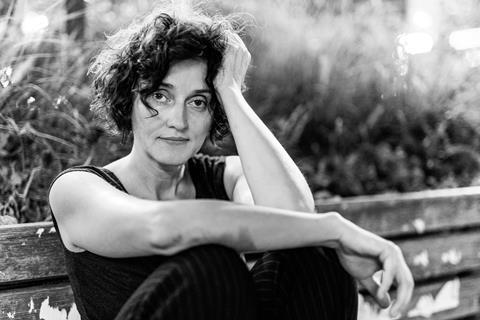
Polish filmmaker Elwira Niewiera gives voice to the women survivors of violence in Ukraine in Women And War, premiering in competition at the International Documentary Festival Amsterdam (IDFA, November 12-22).
The film follows the personal journeys of Olena, Yuliia, Iryna, and Lena, four women who survived the nightmares of the ongoing Russian war against Ukraine: torture, captivity, sexual violence and the loss of loved ones. Over the course of one year, Niewiera and cinematographer Piotor Rosolowski witnessed their path to reclaim their lives through a long-term therapy programme in a remote resort in the Carpathian Mountains.
Niewiera, who is based in Berlin, has long been involved in channelling humanitarian aid to Ukraine. She had worked there for her previous documentary feature, The Hamlet Syndrome, about an alternative production of Shakespeare’s play a few months before the full-scale invasion of the country by Russia.
The Hamlet Syndrome, co-directed with Piotor Rosolowski, won the Critics’ Week grand prize at Locarno in 2022, and Niewiera also won the Venice Classics award for best documentary on cinema in 2017 for The Prince And The Dybbuk, also co-directed with Rosolowski.
Women And War is produced by Germany’s Ventana Film, Poland’s Telemark and Ukraine’s Art Dialogue and sold internationally by Rise and Shine World Sales,
Niewiera talks to Screen about how she gained the women’s trust to tell their stories and the logistics of making such a sensitive film.
How did you learn about the therapy programme you depict in the film, and how did you get to know the women taking part?
At the premiere of The Hamlet Syndrome in Ukraine in 2022, a Ukrainian women’s organisation told me about the launch of a therapeutic programme for victims of war-related trauma.
My initial idea was to talk with the therapists, because I was apprehensive about asking women with fresh trauma about their experience and risking retraumatising them through the filming process.
I was aware that after suffering captivity, torture and sexual violence in war women often continue to live in a constant state of fear. They even lose the connection with their own body, because they tried to disconnect from it in order to survive. They feel physically and emotionally numb.
I think the most moving moments for me while filming were those where I could see they were not able to feel sadness or anger. And then seeing how, during therapy, emotions slowly came back.
How did you build a sense of trust with the women?
Long before we started filming, I talked with the therapists extensively. Our primary concern was not to interfere in the healing process. Several months before the group therapy started, they offered me the chance to meet them and slowly build a relationship with them. At the time, I was already deeply involved in organising humanitarian aid for Ukraine, and this helped to show how much I care about them. For me, making movies is also a tool to fight for Ukraine.
The shoot took over a year. How did you work out the logistics considering you are dealing with such a delicate subject matter?
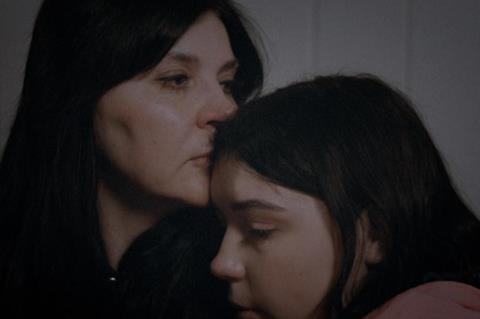
Together with the therapists, we also created very clear rules: never to film individual therapy sessions and only to focus on the group ones. The women’s process always came first to me, which is quite a challenge when making a film because you have a budget and people expect results. Luckily, I had the full support of my producers. I also wanted to find a way to be part of the group, instead of being only an observer. I decided I would take care of preparing the space for each session — getting the blankets, making tea, creating a relaxing atmosphere. And the crew was very small, just me, the cinematographer and the sound technician, who worked discreetly behind a wall.
After each session I spent some time talking with the therapist because they thought they could help me to better understand the emotional process I had witnessed without carrying an excess of emotional weight with me.
What do you feel you discovered personally in the making of Women And War?
Rape and torture are used as weapons to break women and weaken communities. I felt a big responsibility in giving voice to these women and helping give them back their dignity, which is what the perpetrators try to steal from them. We often hear heroic stories about war, but much less about women survivors of war. Their stories remain invisible, and I wanted to show the world how incredibly strong they are.
They are heroes; they teach us we can have the strength within us to overcome whatever may be. Just now, talking about the film, I am starting to reflect on everything I witnessed in the making of this film because there were times I found myself overwhelmed by anger. When you learn about the terrible things people can do to others, you start losing faith in humanity.




No comments yet