












The majority of films vying for Bafta’s film not in the English language award this year were not submitted by their country to the international feature Oscar.

Competition for this year’s Bafta for film not in the English language (FNIEL) promises to be ferocious. Some of the favourites, including Sentimental Value, It Was Just An Accident, The Secret Agent, Sirât, The Voice Of Hind Rajab and No Other Choice, are in the running for the international feature Oscar.
However, Bafta has different eligibility rules, and it is nothing to do with country submission. Qualification for FNIEL is about being released in a timely manner in UK cinemas (within a month of the awards ceremony), and being submitted – at a cost – by the UK distributor.
This year, 42 films have been submitted to the FNIEL Bafta, of which 19 are their country’s international feature Oscar pick. The other 23 are titles not chosen by their country for Oscar, but afforded an opportunity to slug it out for Bafta glory.
Going by recent form, these 23 are by no means out for the count. In the past five years, six of the 25 FNIEL Bafta nominees – almost a quarter – were not submitted by any country to the international film Oscar: All We Imagine As Light, Past Lives, Anatomy Of A Fall, Parallel Mothers, Petite Maman and Minari.
“If you’re not the official entry at the Oscars, you’re out of the conversation in the international category. But at Bafta you can create something a bit different, and that’s good,” says Eve Gabereau, director of distribution for Vue Lumiere. “Featuring in film not in the English language can help a wider range of films stand out in a very noisy, crowded space. Lists by default create buzz. If you’re on the list, you’re part of the buzz.”
Bafta recognition can also have an economic upside, whether directly on box office (if the film is in cinemas or about to be released) or in enhanced ancillary deals.
“Advertising international films to audiences is tricky, and the Bafta awards and Oscars are one of the few things that have real cut-through to a wider audience,” says Curzon publicity director Jake Garriock. “That’s something we are thinking about even at the point of acquisitions. The way we think about releases is timed to the rhythm of the awards season.”
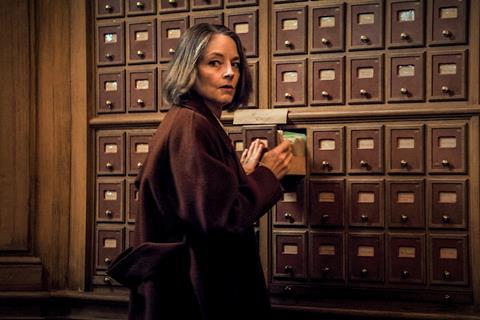
This year, there are again several high-profile Bafta contenders that are not international feature Oscar entries. For example, Altitude Film Distribution is campaigning for Richard Linklater’s Nouvelle Vague, which premiered in Cannes and is released by Netflix in the US. Altitude also has Rebecca Zlotowski’s darkly comic mystery A Private Life, which has the added attraction of Jodie Foster speaking almost entirely in French.
Paolo Sorrentino’s La Grazia may not be representing Italy in the international Oscar category but it opened Venice Film Festival and features a powerhouse performance from Toni Servillo. Mubi is running an Oscar and Bafta campaign across all categories.
Searchlight Pictures has Hikari’s Tokyo-set crowdpleaser Rental Family, which stars Brendan Fraser and features dialogue in Japanese and English. Following a Toronto launch and a BFI London Film Festival gala, Disney gives it a saturation release in the UK in mid-January.
Curzon’s Alpha, the latest feature from Julia Ducournau (Palme d’Or winner Titane), will be helped by the fact that Neon has entered it for the Oscars in the wider categories.
Two Chinese films have been submitted: Fei Zhenxiang and Guan Hu’s Second World War thriller Dongji Rescue, and Bi Gan’s sci-fi epic Resurrection, which won the special jury prize in Cannes. Ivona Juka’s Croatian drama Beautiful Evening, Beautiful Day, set in Yugoslavia in the 1950s, is a late entry to the category.
Vue Lumiere has several titles: Ferzan Özpetek’s Italian comedy-drama Diamanti; Kei Ishikawa’s Kazuo Ishiguro adaptation A Pale View Of Hills, set in Japan and the UK and produced by Stephen Woolley and Elizabeth Karlsen; and French animated feature Little Amélie (Or The Character Of Rain).

There are a handful of Indian movies among the other Bafta FNIEL submissions: Aditya Kripalani’s I’m Not An Actor, Lakshmipriya Devi’s Toronto and London Indian Film Festival selection Boong, and Rishab Shetty’s Kantara: A Legend – Chapter 1, given a limited UK released by Dreamz Entertainment in early October.
Previous Indian films to achieve a FNIEL Bafta nomination have tended to be arthouse titles, including All You Imagine As Light last year and The Lunchbox in 2015. Devdas, nominated in 2003, is more of a traditional, star-driven Bollywood film.
Ukrainian director Mstyslav Chernov’s 20 Days In Mariupol is the only documentary in the last five years to have been nominated in the FNIEL category – but several docs have been submitted this year including Chernov’s latest 2000 Meters To Andriivka, which is Ukraine’s international feature Oscar entry.
Docs competing for the FNIEL Bafta that are not submitted to the international feature Oscar category are Petra Costa’s Apocalypse In The Tropics, Gianfranco Rosi’s Venice special jury prize winner Below The Clouds, Elizabeth Lo’s Mistress Dispeller, Max Keegan’s The Shepherd And The Bear, Baby Ruth Villarama’s Filipino fishing doc Food Delivery and Sundance premiere Khartoum, directed by a five-person team. But the best chance for these films is in the documentary category, not FNIEL.
Cautious distribution
Although all foreign-language films and documentaries (and British films) pay a vastly reduced entry fee to the Bafta Film Awards – £900 ($1,200) per film, instead of £11,500 ($15,000) – smaller distributors still remain cautious about what they enter. Conic decided against a Bafta campaign for Louise Courvoisier’s Holy Cow, despite grossing a healthy £236,000 ($310,000) in UK and Ireland cinemas since its April release.
“Just to be brutal about it, with the competition against films and companies with deeper pockets, it feels like money down the drain,” says a Conic spokesperson, with no financial upside likely to result for a title that has already transitioned onto home platforms.
“It’s difficult to campaign a film that doesn’t have the combination of a Bafta campaign and an Oscar campaign,” notes Curzon’s Garriock. “Also, we have to have a good dialogue with the US distributor. Our successful campaigns have been a real team effort between the UK, the US and other territories where there are a big number of voters, especially France.”
The first goal, he adds, is simply to get your film seen. “People are going to watch 20 or 30 films, so are you in that 30?” pinpoints Garriock as the first question distributors should ask. “If you’re just doing Bafta, this is much more difficult.”
Some point out that films given “isolated campaigns” too long after their UK releases may struggle for awards traction. For example, Alice Rohrwacher’s La Chimera did not secure a nomination at the 2025 Baftas despite glowing reviews and £948,000 ($1.25m) at the UK and Ireland box office.
This year, notable foreign-language films released into UK cinemas but not submitted to the Baftas include several titles competing for the international feature Oscar – Late Shift, Young Mothers, Little Trouble Girls – and many others that are not: The Marching Band, Parthenope, Along Came Love, Dying, the Oslo Stories trilogy, From Hilde, With Love… the list goes on.

It is rare for independent animated features to secure nominations in categories other than animation, but it does not cost extra to enter them. Hence, there are submissions in this category for a pair of Japanese anime titles from Sony – Demon Slayer: Kimetsu No Yaiba Infinity Castle and Mamoru Hosoda’s Venice pic Scarlet – as well as two French-produced films that launched at Cannes: Vue Lumiere’s Little Amélie and Picturehouse Entertainment’s Arco, which boasts Natalie Portman among its producers. The most recent animated films to achieve Bafta nominations for FNIEL are Waltz With Bashir and Persepolis, both back in 2009.
Park Chan-wook’s erotic thriller The Handmaiden won the Bafta in 2018 despite not being chosen as South Korea’s Oscar entry. Pedro Almodovar’s The Skin I Live In was a winner in 2012 having been passed over as Spain’s Oscar candidate, and ditto the Swedish version of The Girl With The Dragon Tattoo in 2011.
The question for distributors remains how best to play their hand. “The ever-increasing costs of an awards campaign is the question. How much is worth risking, because it is a risk,” says Altitude’s head of publicity Mark Jones. “But it’s always great for a film to be recognised. We have the potential to broaden our cinemagoing audience, and if we can make it work then we are encouraged to buy similar films for the future.”




No comments yet