














For the first time, the Seville European Film Festival is presenting seven films by European Roma filmmakers under the programme Raising Romani Gaze.
The focus is not just on Romani culture, but on Romani involvement in directing and producing films. The initiative is supported by the European Film Academy’s Knowledge Sharing label.
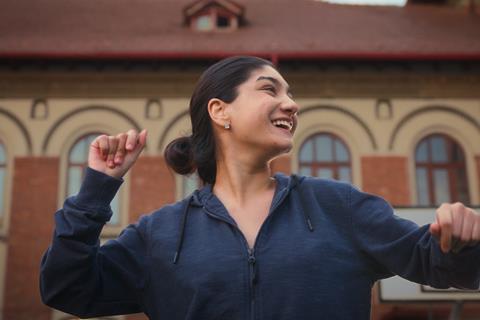
The programme comprises three features and four shorts. I Matter, the feature directorial debut of Romanian Roma actress-filmmaker Alina Șerban, is a coming-of-age drama about a young Roma woman raised in foster care facing an uncertain future as she prepares for university. The film won the audience award of Venice’s Spotlight section earlier this year.
Hungarian Roma filmmaker and sociologist Katalin Bársony’s I Saw A ‘Suno’ is a documentary filmed over 15 years, following a Roma family deported from Germany to Kosovo. It explores displacement, discrimination and the loss of home. The film premiered at the Sarajevo Film Festival, as did her feature debut, How Far the Stars (2019).
Bársony has co-curated the programme alongside Seville-based Roma queer filmmaker and activist Jero de los Santos.
“The films represent different generations, genres, aesthetics and cinematic languages, but they share something important,” says Bársony. “They create space for Romani authorship and for stories emerging from within our communities.”
De los Santos’ Invasión Travesti (Remastered 2025) is an underground science-fiction satire about a planet ruled by a fascist regime of transvestites. Shot in Seville in the 1990s, it has become a cult work of Andalusian queer counterculture. It was co-directed with Paco Cabezas, the Seville-born director whose credits include episodes of Showtime series The Walking Dead: Daryl Dixon.
Among the shorts, Finnish Roma filmmaker Carmen Baltzar’s All The Love In My Body follows two sisters selling toys on a Greek beach. Portuguese Roma director Leonor Teles’s punk-inflected Batrachian’s Ballad (2016), winner of the Berlinale Golden Bear for best short film, challenges anti-Roma prejudice.
UK-based Roma filmmaker Charles Newland’s Smooth The Edges, is making its world premiere in Seville. It portrays a young Roma woman hiding her identity to avoid workplace discrimination. Meanwhile, Swedish Roma director Alecio Araci’s queer drama Chavo (2023) explores community gossip and buried trauma.
“What connects our films is not uniformity, but the freedom to be different,” Bársony suggested. “Raising Romani Gaze is an invitation to recognise this plurality and to understand Romani cinema as part of the broader European cinematic landscape, with its own voices, artistic ambitions and creative visions.”
The Seville’s selection ranges from social-realist drama and documentary to experimental cinema and queer science fiction. While social and political issues predominate —displacement, identity, belonging and the tension between personal freedom and social expectations—, its formal and genre diversity resists reducing Romani cinema to testimony or protest.
“For a long time, Romani people have been represented through an external gaze, shaped by stereotypes, exoticisation and deeply rooted social prejudices,” says Bársony. “The real question is not only how many Romani characters we see, but who writes them, who directs them, who produces them and who decides how their stories are told.”






No comments yet