









Alexandre Desplat has had a long and storied career, beginning in his native France before expanding to the rest of Europe and Hollywood. He won the Oscar for best original score for The Grand Budapest Hotel, one of seven films with Wes Anderson, and The Shape Of Water, the first of three collaborations with Guillermo del Toro.
Desplat’s other credits include Girl With A Pearl Earing, The Queen, The Curious Case Of Benjamin Button, The King’s Speech, Argo, The Tree Of Life, Godzilla, Harry Potter And The Deathly Hallows Part I and Part II and The Sisters Brothers, one of six movies with Jacques Audiard.
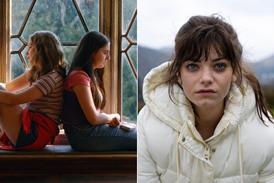
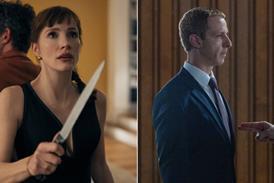
He is a five-time winner of film composer of the year at the World Soundtrack Awards and is this year nominated for his scores for del Toro’s Frankenstein, Eagles Of The Republic, Jurassic World Rebirth and L’Homme Qui Rétrécit (The Shrinking Man).
Let’s start with Jurassic Park Rebirth, which is not the first time you’ve stepped into a franchise where John Williams has laid out the soundscape. You’re working again with Gareth Edwards, with whom you did Godzilla, and it’s another symphonic score. How did you approach it?
What Gareth was hoping for was to have the weight and scope of a huge movie where the sound must be very strong, sometimes brutal, sometimes mischievous, sometimes with a lot of fast action. But, most importantly, he wanted to make sure the characters have some depth, to give them a bit more personality or humanity.
How did you go about that?
I wanted to pay tribute to John’s incredible melody without winking at it, like what the Surrealists called cadavre exquis [exquisite corpse], where one would draw something and another would come and write or draw another thing, and it became kind of a monster. That was the idea, and from that start, go away and create something that reminds you of John but is something new. And that’s the theme that belongs to the [film’s] team [of characters]. Also, Gareth likes melodies, so I make sure to write melodies. Some directors don’t, but he does. Guillermo does, too.
Moving on to Frankenstein, it’s your third collaboration with Guillermo. Given he’d dreamed of adapting Mary Shelley’s novel since he was a teenager, did he bring lots of his own ideas to the score?
He did have a preconceived idea of what the score should be. He said to me, before I’d seen the film, “I think the score should be baroque music.” I said, “It’s set in the mid-19th century and baroque was way before – I’ll think about it.” I understand why he wanted baroque because there are all these Christian images of angels and virgins and the influence of religion, but I didn’t feel the sound of baroque music worked. I didn’t want the score to be gothic, because we’ve heard that so many times.

What was your way in?
The first thing I thought about was the creature, this force of nature, and instead of having a forceful brass section [represent him], I felt that having a solo violin would give him more soul, more fragility, and invite the audience to love him instead of hating him.
The other element is the character of Victor Frankenstein. He’s dressed like a ’60s pop singer and is trying to make his masterpiece. The scene where he puts all the pieces of corpses together is super-gory; it’s scary, it’s ugly, it’s disgusting. But if you play the trance he is in and connect it to what he’s just experienced, falling in love with Elizabeth, dancing a waltz with her – if you write another waltz, then the audience shares the joy, the excitement, the passion Victor has.
The most important thing is to bring out from the characters whatever you can. These actors are fantastic; let’s give them wings so they can fly even higher.
But if Guillermo wants baroque, how do you convince him you’re right and he’s wrong?
I say no, and he laughs. He trusts me to suggest something else.
What are you currently working on?
Before the summer, I completed the score for Aaron Sorkin’s The Social Reckoning. I’m writing a concert piece for the Orchestre National de France, and some things are coming along – a project with Guillermo, maybe one with Gareth and maybe with Wes.
The Social Reckoning is a sequel of sorts to The Social Network, which Sorkin also wrote and which has an Oscar-winning score by Trent Reznor and Atticus Ross that’s become iconic and much sampled. Did Sorkin ask you to steer clear of electronic music for his film?
Aaron insists on saying that it’s not a sequel, it has nothing to do with the previous movie. Yes, Facebook is the centre of the story, but that’s it. So there was no request or desire for me to mention or quote the previous score. I started with a blank page. This movie is about how some of these [tech] companies are slowly pushing democracy over the cliff and there’s something tragic about that. It’s a strong movie, very brave, which shows us the tragedy of what we’re living at this moment in our lives, and seeing how dictatorship and lies start to invade the world.
How did that translate into your score?
Aaron and his movie have a lot of text, and you have to respect that and drive your orchestra in between the hills and valleys of the dialogue. There’s a big finale, and I asked [opera singer] Renée Fleming to sing an aria without words, a lament. Renée is an incredible artist; she sings two notes and already everything is beautiful and strong and deep.





No comments yet