











Jaoui also stars opposite Daniel Auteuil in the film about an opera production rocked by sexual assault accusations
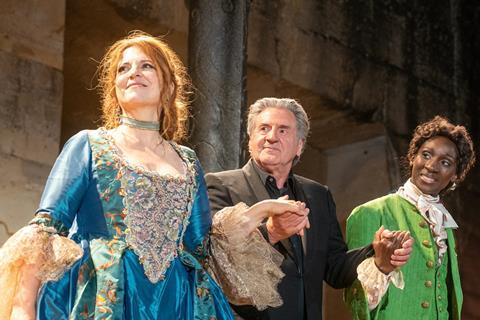
EXCLUSIVE: French actress/filmmaker Agnes Jaoui returns with her sixth feature as a director, Crescendo (L’Objet Du Délit), an ensemble comedy drama about accusations of sexual assault during an opera production that Studiocanal will launch at the European Film Market.
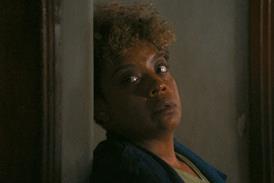
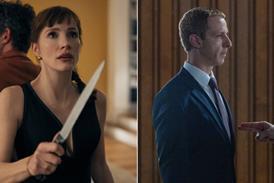
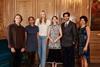
Jaoui also stars in the film opposite Daniel Auteuil, Eye Haïdara, Claire Chust and Oussama Kheddam.
Crescendo tackles #MeToo within the world of an ambitious production of Mozart’s famed opera The Marriage Of Figaro. Tensions rise when troubling accusations of sexual assault jeopardise the production and the brewing scandal leads to clashing egos, generational disagreements and shifting power dynamics that throw the group’s sheltered opera world into a great divide.
The film blends Jaoui’s signature wit with the more serious # MeToo scenario, all with the chaos of the staging of a production in the background. It is produced by Francois Kraus and Denis Pineau-Valencienne’s Les Films du Kiosque in co-production with France 2 Cinema and Belgium’s Versus Production. Now in post, Studiocanal will release the film in France later this year.
“I didn’t set out to write a comedy,” Jaoui told Screen. “Of course, #MeToo is not a funny topic, it is very serious, but laughter often arises in some of the most serious circumstances, both in film and in life. It has always been my way of seeing uncomfortable situations and surviving them.”
The plot for Crescendo, she added, stemmed from wanting to share her own love of opera with audiences and her experiences as an actress and director in a male-dominated industry.
“I have been directly affected by #MeToo, but I think the point of the movement is that we learned that nearly every woman alive has had a #MeToo experience to some degree, some in more traumatic or violent ways than others.”
She explained: “When we look at feminist history, in every era, there have been moments of making great headway, followed by taking steps backwards. I wanted to question this through an 18th-century text – The Marriage Of Figaro – and within the paradoxical world of the opera, and ask why there is always this paradox of progress and resistance to true equality between men and women.”
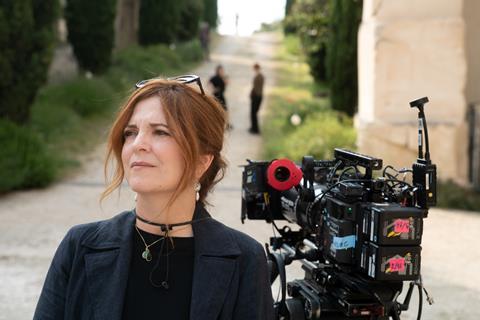
In the film, Jaoui plays a famous opera singer – and she really sings in the film, with her voice mixed with that of real-life soprano Julia Baumier; the production also cast real opera singers in other supporting roles.
Auteuil plays the orchestra’s conductor whose character, Jaoui said, “is living in constant fear that he will be named on a list of aggressors after the anonymous allegations”.
The film itself “is about how everyone involved responds to allegations of assault depending on their age, sex and positions within the production.”
“Meta experience”
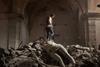
Crescendo shot last summer at the Chateau du Marquis de Sade in the Luberon region in the South of France, and is set in the ruins of a Roman amphitheatre.
The entire cast and crew stayed together on location for two months, and the production was able to benefit from a CNC-initiated training program to avoid incidents of sexual assault like the accusations that propel the plot of Crescendo.
Jaoui said: “There were people who came to set to educate us for hours. In the film, there are also scenes where everyone gets together to talk about what transpired. It was a very meta experience.”
Jaoui was nominated for the best foreign-language film Oscar in 2001 for her debut feature, The Taste Of Others, and she is, to date, the most-awarded actress/filmmaker at France’s Cesars with seven awards, in addition to a best screenplay prize at Cannes in 2004 for Look At Me.
Reflecting on # MeToo within the French film industry, she said: “In France, things started slowly, partly because the producer’s role in the industry is not as powerful as it is in the US and the studio system. We don’t have the equivalent of a Harvey Weinstein here. It isn’t the same pyramidal system, even though some producers still attempted to abuse their position of power.”
France, on the other hand, is known for giving its filmmakers creative freedom. “Yes, power lies largely in the hands of filmmakers in France, which can sometimes make it harder to identify abuse.”
Jaoui said she is pleased that both the French film industry and society have made progress since the days of the French New Wave, not to mention The Marriage Of Figaro, but she wants her new film to make audiences continue to question the status quo.
“Things have advanced but what we have learned throughout history is that we are never protected from moving backwards.”




No comments yet