














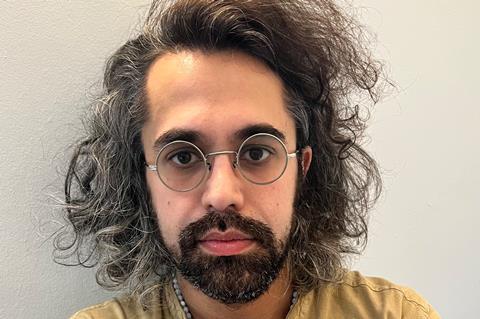
Mostafa Rajaai joined UK actors’ union Equity in the newly created role of industrial official, supporting artists and independent film, at a crucial time for the UK film sector.
A major part of his job is to represent the rights of Equity members working on films budgeted at under £3m, lobbying for improved pay and conditions.
“Producers are trying to save money as much as they can, which often means pay and conditions of people working on films bear the brunt of it,” said Rajaai. “There needs to be more scrutiny and oversight of what happens there and supporting members who may be facing difficulties as a result of this.”
One of the challenges of the job is the volume of UK independent films with UK talent that shoot abroad.
“It brings its own set of potential complications,” he explained. “Working away from home, the quality of accommodation, certain elements of the contract not being adhered to.
“Because we’re not there to do site visits the same way we do with film inside the country, the possibility of things sliding through the net increases. Unless a member raises it with us, there’s no way for us to know…. We still manage to do Zoom visits, but with varying degrees of success.”
Supporting artists
Equity has three agreements with UK producer body Pact – one covering film, one covering TV and one covering supporting artists across both film and TV. Rajaai is also now looking after the supporting artists’ agreement.
The last time the contracts were negotiated between Equity and Pact was in 2019.
Equity has been negotiating with Pact on an updated film and TV agreement for over two years, with an understanding that these will conclude at the end of this summer. The supporting artist agreement between Pact and Equity was last negotiated in 2021, and there are no current negotiations around that agreement.
“There was an understanding that the union definitely needs to do more, politically and industrially, when it comes to supporting artists,” explained Rajaai. “That’s partly due to the rise of AI and the possibility of automation, but also the fact that supporting artists haven’t been at the forefront of the union’s attention when it comes to organising and improving pay and conditions.”
He continued, “On the AI front, we have had people who have been forced to be digitally scanned, and if they have refused, they have lost the gig and had to go home without pay.”
AI is one of the biggest issues for the Equity membership, on all levels of production.
“We’ve even had some instances of [featured artists] likeness being generated and scenes they were completely unaware of created without their consent or knowledge. Potentially the same thing could have happened to supporting artists too, they just don’t find out about it.”
For supporting artists, late cancellation of work with no payment is another major issue. “People are told that they are ‘heavy pencilled’, which traditionally means, ’ you have got the gig but we’re not finalising the contract in case something falls through’. More and more, that doesn’t mean anything,” said Rajaai. “They say you’ve been ’heavily pencilled’, and the night before they say you are no longer needed, and you might have turned down three jobs in that time.
“Dignity at work and how you are treated on set is another serious problem. On period dramas or stuff that involves a lot of costume, people are told they can’t go to the toilet when they want because it takes too long to put the costume back on, the set can’t wait.”
Rajaai joined the union in May from the National Union of Journalists.
“Prior to me joining, we had one film official [Amy Dawson] who was across everything, very low-budget independent films, non-union films, all the way to £200m+ budget films,” said Rajaai, who joined the union in May, previously working at the National Union of Journalists. “No one official can be across it all meaningfully.”





No comments yet