





Maxence Voiseux’s debut documentary premieres in Cannes Directors’ Fortnight
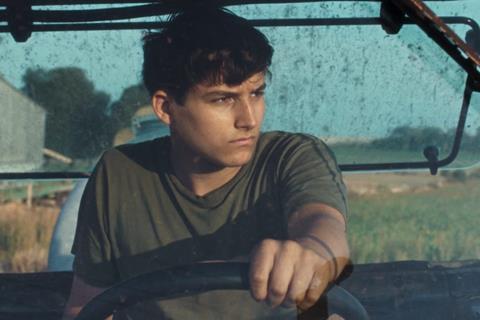
Dir: Maxence Voiseux. Fr/Ger/Switz. 2026. 105mins
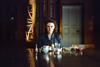
The Artois is an economically distressed region of farmlands and decommissioned coal mines in the north-eastern corner of France. Here lives Gabin, the sensitive, articulate son of a butcher father and a farmer mother. Over the course of Maxence Voiseux’s absorbing debut documentary, we see him grow from dreamy eight year old to a young man of 18 who is finally ready to fly the nest – which, like many of the places we all grew up in, is shown to be both a comfort zone and a source of anxiety.
Ten years of on-off filming are condensed into a real-life Boyhood
Gabin is remarkable both for its immediacy (there is never a moment when its protagonists seem aware of the camera) and its feel for story. Ten years of on-off filming are condensed into a real-life Boyhood, a coming-of-age drama that is as much about a place, time and society as it is about its titular protagonist. It’s a quiet pleasure, a film in which what is unsaid, or conveyed only with the eyes, is laden with information. One for patient, attentive audiences, Gabin has a strong cinematic resonance, but may be confined to specialist documentary circuits outside of French-speaking territories following its premiere in Cannes Directors’ Fortnight.
Gabin appears to be an only child; it’s a surprise to learn at one point that he has two (unseen) older brothers. But this is a film that works by subtraction. It has only three protagonists: the boy, father Dominique and mother Patricia, who are joined by a few minor characters. It is set in a horizontal agricultural landscape whose ruler-straight skyline is broken only by two sky-piercing edifices that represent dual forms of escape from the surrounding flatness: one a ruined church, the other a concrete 1950s communications tower. Gabin and his parents live in a village that appears to be strung out along a single street. That’s a handy metaphor, perhaps, for the narrow prospects of anyone growing up here.
The gruff, irascible Dominique certainly assumes there’s only one route his youngest son can follow: to become his apprentice and inherit the butcher’s shop. No matter that the lad clearly prefers live animals, like the cows he helps his mum with on her dairy farm. In a sequence that underlines this perhaps too insistently, we see Gabin nuzzling up to his favourite calf, then – distaste written all over his face – holding a carcass that his father is cutting up with a rotary saw, then picking flowers for a female friend.
Dominique, however, takes a firm line. As he tells Gabin during a nighttime van journey, if his son doesn’t join the business then he will just burn it down. If Gabin doesn’t start getting better grades, he’ll confiscate his computer. Gabin feeds into the current debate about how challenging it is to be a young man today, caught between outdated gender norms and questionable paternal role models. When dad checks into an orthodox monastery for a head-clearing retreat, we’re caught between compassion and amusement.
Physical changes in Gabin mark the passing of the years but, when he returns from the agricultural boarding college he starts to attend, his home world seems caught in stasis. His undemonstrative but clearly loving mother, who is often caught looking at her emotionally articulate son with something like wonder on her face, is still struggling to make any money out of farming. His father is still waiting for his son to do the right thing. And Gabin has a new girlfriend – or friend who is a girl – but their one long scene together is a poignant goodbye.
If that sounds like something out of a fictional narrative, that’s because, with its lyrical, breathy musical soundtrack by Nicolas Rabaeus, Gabin often feels like the most spontaneous of scripted movies. Is this a trick of the fluid editing or is it because, when you’re followed by a camera for so many years, you begin to play a character and write your own story? We will never know for sure, but the way the film raises the question is all part of its delicate appeal.
Production company: Alter Ego Production
International sales: Lightdox, anna@lightdox.com
Producers: Cecile Lestrade, Elise Hug
Editing: Pascale Hannoyer, Natali Barrey
Cinematography: Francois Chambe, Martin Roux
Music: Nicolas Rabaeus