





Filmmaker David Greaves expertly shapes footage shot by his father at a 1972 meeting of the Renaissance’s key players
Dir: David Greaves. US. 2026. 100mins
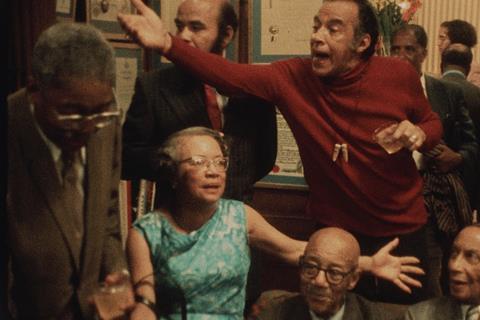
One hundred years after its first flourishing, what can the Harlem Renaissance still teach us? Once Upon A Time In Harlem explores that question in invigorating fashion, resulting in a vital cinematic document that many feared would never see the light of day. Filmmaker and journalist David Greaves has crafted a film based on his late father William’s footage, which was shot during a 1972 gathering of the Harlem Renaissance’s surviving members who spent the day discussing and debating the movement’s lasting impact. The conversations could not be more stimulating, offering a glimpse of Black America past and present that is joyous, defiant and sobering.
The furthest thing from a sepia-toned nostalgia piece
This Sundance Premieres debut merits comparison to other recent superb documentaries based around archival footage that was either lost (Summer Of Soul) or abandoned due to technical and legal issues (Amazing Grace). Notably, all three films honour Black artistry, and the commercial and critical success enjoyed by those previous two projects will hopefully be replicated here.
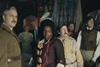
In August 1972, filmmaker William Greaves brought together the remaining leading lights of the Harlem Renaissance, a creative and political blossoming of Black artists and thinkers during the 1920s and 1930s determined to combat that era’s segregation and racial violence. His subjects congregated at Duke Ellington’s New York home for several hours while Greaves filmed their interactions, sometimes asking questions to the group or to individual members. Poets, painters, actors, librarians and photographers shared their memories of the movement’s heyday, often extolling the work of colleagues who were no longer alive.
Best known for his 1971 experimental meta-film Symbiopsychotaxiplasm: Take One, William Greaves died in 2014, aged 87, and his son David, who served as a cameraperson on the Once Upon A Time In Harlem shoot, has now compiled the footage into a completed film. (The onscreen credits indicate that the picture is ’conceived and filmed by William Greaves’ and ’directed by David Greaves.’)
Working with editors Anne de Mare and Lynn True, David Greaves does not simply shape the material but also adds additional layers, including the reading of Harlem Renaissance-era poems mentioned in the onscreen interviews. But, tellingly, Once Upon A Time In Harlem features no contemporary interviews, instead immersing us in this summer party with an immediacy that makes viewers feel as if they are in the room with the documentary’s lively subjects.
Onscreen captions identify the many different speakers, but eventually a few individuals start to take centre stage. Poet and painter Richard Bruce Nugent is a witty, sometimes bombastic presence who mixes it up with activist and intellectual Richard B. Moore, who takes umbrage with the notion that Black artists need to identify themselves as such: are they not simply artists? The late poet Countee Cullen’s widow Ida berates the group for not acknowledging her husband’s creative legacy, while actor Leigh Whipper confesses to William Greaves that he doesn’t think younger Black Americans appreciate the Harlem Renaissance’s importance.
Movements are rarely monoliths, and part of this documentary’s glory is how it shows the divisions and disagreements inside the Harlem Renaissance. The attendees detail how staunch separationist Marcus Garvey butted heads with more moderate leaders like W.E.B. Du Bois, and it’s pointed out that Black women’s contributions have been unfairly overlooked. But such discord only highlights the passion Greaves’ subjects posessed into their later years.
As a result, Once Upon A Time In Harlem is the furthest thing from a sepia-toned nostalgia piece. Quite the contrary, the documentary illustrates how the American crises that sparked the Harlem Renaissance — including lynchings and the rise of the Ku Klux Klan — were still very much on the participants’ minds 50 years later. David Greaves’ incorporation of writings from the period — such as Claude McKay’s stark, mournful 1920 poem ’The Lynching’— is quietly devastating, the words echoing the urgency and anger of the modern Black Lives Matter movement. The filmmakers never underline those connections between then and now, but a thoughtful viewer will sense them.
When William Greaves assembled his subjects for this documentary, America was emerging from the contentious civil rights era and the murder of Martin Luther King Jr. and Malcolm X. The bigotry and violence Once Upon A Time In Harlem’s men and women confronted decades earlier had not gone away, and we see the speakers wrestling with the work still to be done. Many of these figures are now dead, as is William Greaves, but this preserved summit showcases the Harlem Renaissance’s belief that art and activism could celebrate the richness of Black life in a country determined to minimise and destroy it.
Production company: William Greaves Productions
International sales: Cinetic Media, Jason Ishikawa, jason@cineticmedia.com
Producers: Liani Greaves, Anne de Mare
Editing: Anne de Mare, Lynn True
Music: Tamar-kali