


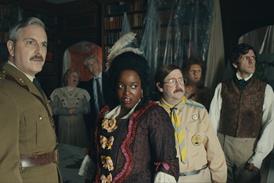







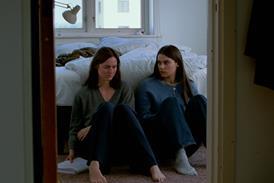

Farhadi’s French language Cannes Competition title stars Isabelle Huppert, Virginie Efira and Vincent Cassel
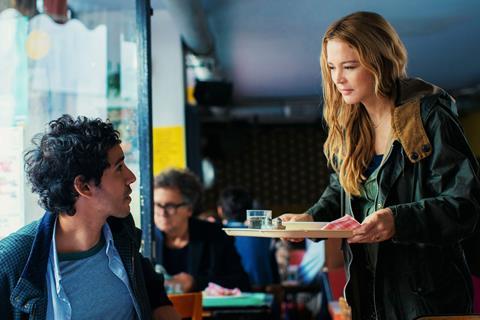
Dir: Asghar Farhadi. France/Belgium/Italy. 2026. 141mins
Art and life are in conversation in Parallel Tales, an intriguing but ultimately frustrating exploration of the mysteries of storytelling. Loosely basing his film on the sixth chapter of Krzysztof Kieślowski’s 1989 Polish miniseries Dekalog — the one associated with the Commandment involving not committing adultery — director Asghar Farhadi casts Isabelle Huppert as a novelist inspired by the neighbours on whom she spies, inventing a drama that, at least initially, is far more compelling than their actual lives. The Iranian filmmaker nods to the late Polish auteur’s humanist sensibility, but this riff on love and theft ends up being merely superficially clever.
The characters operate like chess pieces being pushed around the board
Farhadi’s fifth film to screen in Cannes Competition — and his first since 2021’s A Hero — boasts several marquee names alongside Huppert, including Virginie Efira and Vincent Cassel. Parallel Tales opens in France on the day of its Cannes premiere through Memento, and international buyers will likely be attracted to this star-laden project, even if reviews may not be as glowing as for Farhadi’s past pictures.
Ageing author Sylvie (Huppert) stares out the window of her Paris apartment, entranced by a stranger she’s named Anna (Efira), who works at a nearby sound-effects studio. The writer has also invented names for Anna’s coworkers, and is developing a novel about a deadly love triangle in which Anna is dating Christophe (Pierre Niney) while having an affair with her married boss Pierre (Cassel). When Sylvie hires a friendly young ex-con, Adam (Adam Bessa), to help her move out of her place, he steals her now-abandoned novel, becomes obsessed with the book’s characters and conspires to meet them in real life.
Kieslowski often crafted narratives in which disparate individuals intersect unexpectedly, and Parallel Tales feels like Farhadi’s tip of the cap to the late filmmaker as, eventually, the sound-effects employees learn they are the unwitting protagonists of a novel. But Sylvie’s fantasy of their lives is juicier than what is really going on: Anna is actually Nita, who is dating her boss Nicolas, whose brother Theo is happily married.
Parallel Tales’ plot kicks into gear once Adam moonily pursues — some might say stalks — Nita. Adam went to prison for pickpocketing, so it is fitting he has essentially stolen Sylvie’s work, befriending Nita under the pretence that he wrote the book. But rather than being entranced by Adam’s writing, Nita is disturbed by what the novel insinuates about the clandestine love affairs going on between her and her coworkers. Concerned, Nita shows the book to Nicolas and Theo, which creates tension between all three of them.
Early on, Parallel Tales dramatises scenes from Sylvie’s novel as Efira, Cassel and Niney play heightened versions of the people we later meet. Quite consciously, Farhadi gives these sequences a page-turning pulpiness, arguing the mundanity of life rarely reflects fiction’s potboiler intrigue. But once the film sets aside the novel’s plotline, Nita, Nicolas and Theo find themselves stumbling into their own version of Sylvie’s speculative romantic drama once Nicolas begins to wonder if the other two might actually be involved in a secret tryst.
This is potentially rich subject matter, with several of the film’s characters looking longingly at either other people’s lives, or inventing exciting fictional scenarios. And, of course, Parallel Tales is itself a film based on a film. Farhadi, who has previously tended to explore darker narrative terrain, for once seems to be savouring the simple pleasures of storytelling, rather than plumbing the depths of his characters’ souls. And because Farhadi was himself accused of plagiarism in a 2022 New Yorker article — accusations for which he was acquitted by an Iranian court in 2024 — the picture’s references to idea thievery (which are not present in the original Dekalog) could be seen as a wry commentary on his own well-publicised scandal.
But that pleasure is only intermittently experienced by the audience, who must contend with a convoluted plot that feels unrealistic even when Parallel Tales shifts to the brewing unrest between the real-life Nita, Nicolas and Theo. Too often, the characters operate like chess pieces being pushed around the board as tidy coincidences and pseudo-ironic twists pile up. Farhadi’s lighthearted approach undercuts the performances, with Huppert a little too flimsy as the struggling author and Efira shackled by a one-dimensional dual role in which she plays both the alluring beauty and the anguished innocent soul.
And when Parallel Tales shifts tones near the end to unveil an unsettling surprise, the film’s confectionery construction cannot bear the jolt. Like Sylvie, Farhadi wants to mine riveting fiction from the flotsam of the everyday, but his imagination proves to be not as formidable as hers.
Production company: Memento
International sales: Charades, sales@charades.eu / US sales: UTA Independent Film Group, filmsales@unitedtalent.com
Producers: Alexandre Mallet-Guy, Asghar Farhadi, David Levine
Screenplay: Asghar Farhadi and Saeed Farhadi, based on Dekalog 6 written by Krzysztof Piesiewicz and Krzysztof Kieslowski
Cinematography: Guillaume Deffontaines
Production design: Emmanuelle Duplay
Editing: Hayedeh Safiyari
Music: Zbigniew Preisner
Main cast: Isabelle Huppert, Virginie Efira, Vincent Cassel, Pierre Niney, Adam Bessa, India Hair, Catherine Deneuve