






Tony Jones’ hot-button film plays Thessaloniki Documentary Film Festival after a Sundance premiere
Dir: Tony Jones. Australia. 2026. 104mins
Sentient is a title that cuts both ways in the directorial debut from veteran Australian journalist Tony Jones, which takes an emotionally powerful but nuanced and discursive approach to the world of biomedical animal testing. While being “capable of sensing or feeling” may initially seem to be a reference to the primates that are the chief focus of the film, it soon becomes apparent that the ability of scientists and lab workers to feel what the animals are going through, and the lasting impact that has on them, is just as vital a part of this debate.
A complex and thorough argument that is likely to fuel debate
The documentary premiered at Sundance and takes its European bow at Thessaloniki Documentary Film Festival in the Newcomers Competition. Jones’s rigorous approach to the subject – including shocking undercover footage from private laboratories – means this is often a difficult watch, but the empathy towards the primates and their handlers shines through. Like 2013 Bafta-nominated captive killer whale documentary Blackfish, it lays out a complex and thorough argument that is likely to fuel debate, and could well secure further festival play and specialist distribution.
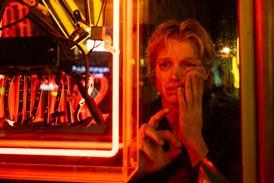
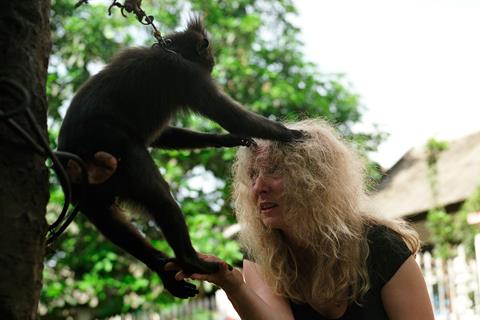
At the heart of Sentient is Dr Lisa Jones-Engel, an expert primate scientist who began working with the animals when she was a teenager and went on to forge a scientific career of lab and field work that involved testing drugs on chimpanzees and macaque monkeys. Now, however, she says she feels “profound shame” about that work, and believes we should end animal testing. Jones films Jones-Engel as she watches footage of herself, first as a surrogate mother to young chimps at the start of her career and then, with her medical doctor husband and daughters as helpmates, on trap and release research overseas. Her physical emotional reactions say just as much about the lasting impact of her career on her psychology as her verbal observations.
Strong editing from Rachel Grierson-Johns interweaves archive footage to help set the testing timeline in context. Jones is also careful to lay out examples of where primate testing has been hugely beneficial for humans – including the development of the polio vaccine – and listen to other voices from the opposite side of the argument. Among them is Dr Sally Tompson-Iratani, who works in a testing lab at the University of Washington; an institution surprisingly open about its work and happy to let cameras inside. Nevertheless, Jones again captures the emotional impact of the animals’ deaths on those involved. A wall full of painted monkey handprint and footprint pictures – recalling those of children – to remember departed “friends” encapsulates the cognitive dissonance at work.
More disturbing still is testimony from Jamie (whose surname is not revealed) and, in voiceover, ‘Mike’, former private lab workers who captured grim covert footage from inside their British workplace showing terrified monkeys being dosed day after day, A simple, “I know its rubbish” from one anonymised worker, as he tries to comfort a macaque highlights the reflected trauma experienced by the humans involved – as does their avoidance of words like ‘kill’ and ‘death’ in favour of more euphemistic terminology.
Beyond the first-person perspectives, Jones pulls back to examine a sort of primate industrial complex that has grown up, with huge farms in southeast Asia breeding macaques for lab use. Questions of how many virus these risky “wild caught” animals are bringing into the system abound, as Jones-Engel suggests animal testing is “more likely to start the next pandemic than to prevent it”. The FDA’s Dr Aysha Akhtar also notes 95% of all drugs and vaccines which are successful in animal trials subsequently fail in human ones, raising the issue of why it is still regular practice.
As science advances, particularly artificial intelligence, questions about whether we need to continue to rely on animals are also raised. It’s a shame there isn’t more space to interrogate this possible future more fully, as the film retains its focus on the primates and the moral question of putting them through much when the scientific benefits achieved in return are often dubious. “We’ve got to start talking about the hard stuff,” observes one scientist. Sentient opens the door to that conversation.
Production company: In Films
International sales: Dogwoof, sales@dogwoof.com
Producer: Ivan O’Mahoney
Cinematography: Andy Taylor, Aaron Smith, Vanessa Carr
Editing: Rachel Grierson-Johns
Music: Helena Czajka