







Melanie Thierry, Vincent Macaigne and Ana Dumitrascu star in the Romanian director’s restrained Directors’ Fortnight title
Dir/scr: Radu Jude. France/Romania. 2026. 94mins
Radu Jude’s films tend to lead with their provocations, but his latest proves to be a relatively restrained, even sombre affair by his standards. Described as a ’variation’ of the 1900 Octave Mirbeau novel, The Diary Of A Chambermaid follows an impoverished Romanian housekeeper toiling for a well-to-do French family, in her off-hours rehearsing a stage version of the titular book. Not unlike with last year’s Kontinental ‘25, the Romanian writer-director takes a minor-key approach to his trademark themes of economic inequality and societal rot, finding in his everyday protagonist a common struggle to survive in an increasingly challenging world.
Takes a minor-key approach to Jude’s trademark themes of economic inequality and societal rot
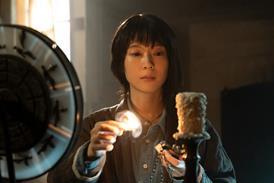
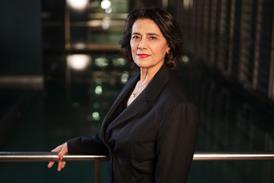
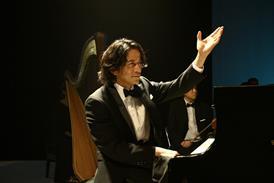
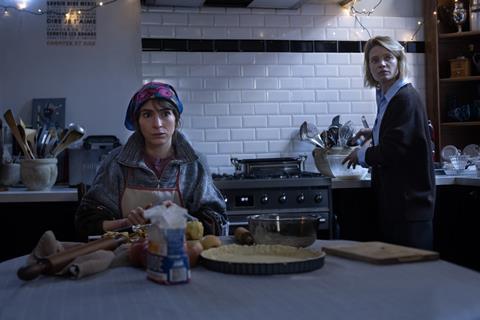
The acclaimed filmmaker will be taking his first trip to Cannes, debuting The Diary Of A Chambermaid – which has previously been adapted by (among others) Jean Renoir and Luis Bunuel) – in Directors’ Fortnight. It also represents his first picture primarily in the French language, and stars Melanie Thierry and Vincent Macaigne as the bourgeois heads of the household cared for by Gianina (Ana Dumitrascu, who last year appeared in Jude’s Dracula). Those enamoured of the writer-director’s scathing cinematic commentaries may be disappointed by the new film’s less-severe tone, although that could help lure a comparatively wider audience.
Set over the course of three months leading into Christmas, the film sees Gianina caring for Louen (Louen Bouteiller), the young son of wealthy parents Marguerite (Thierry) and Pierre Donnadieu (Macaigne), who live in Bordeaux. Sending money home to her elderly mother and own 9-year-old daughter Maria (Sofia Dragoman), Gianina misses her family terribly and hopes to return to her Romanian village for the holidays.
The central storyline has superficial similarities to Mirbeau’s novel, but that work is more overtly referenced in a subplot involving the mounting of a play within the film, in which Gianina stars as the novel’s heroine Celestine in a local production filled with amateur actors. (The theatre director, played by Jude regular Ilinca Manolache, informs her that she was cast for her authenticity as an immigrant maid.) Through static master shots of a largely bare stage, Jude shows Gianina in the role during sexually suggestive scenes; a noticeable shift from the film’s tame depictions of Gianina’s otherwise monotonous existence peeling vegetables and cleaning the Donnadieu’s opulent home. It’s an intriguing gambit on Jude’s part, essentially splitting the novel into two components: the more shocking elements appear on stage, while the actual film contains Mirbeau’s thematic concerns.
Dumitrascu brings a naturalism to what might be considered dual roles, delivering the sarcastic bite one expects from a Jude protagonist. A constant delight of the picture’s early sections comes from Gianina spewing expletives at the spoiled Louen under her breath. But the character is generally timid, knowing she must endure this upper-class family’s obliviousness to her woes in order to support her daughter, with whom she sometimes chats with by cellphone. (As usual with a Jude film, The Diary Of A Chambermaid superbly demonstrates modern technology’s alienating effects, highlighting Gianina’s sense of separation from her loved ones.) Dumitrascu’s delicate features suggest an outsider far from home trying to keep her spirits up amidst Marguerite and Pierre’s lavish, carefree existence.
Cinematographer Marius Panduru shoots with a lushness that’s rare in Jude’s oeuvre, capturing strikingly lovely sequences like Gianina’s visit to Bordeaux’s famed Water Mirror. But The Diary Of A Chambermaid’s outward prettiness merely emphasises the melancholy and quiet anger at its core, as Jude reveals his disdain for how rich families (and countries) treat poor immigrant labour. Marguerite and Pierre are never outwardly cruel, but their repeated microaggressions are a comparable torture.
Macaigne is excellent as the pompous husband who mansplains to Gianina why she should give the gloomy stories she tells Louen happy endings, ignoring the fact that she is drawing from authentic Romanian folk tales. The couple’s displays of admiration for Gianina — “How did we get by without you?!” — are always laced with passive-aggressive attempts to get her to extend her stay; as if she’s inconveniencing them because she wants a few days away to see her own family. Just as Mirbeau’s novel decried the disparities between the haves and have-nots in his era, in his own subdued way Jude argues that that divide has only grown worse in the last 125 years.
Production company: SBS Productions
International sales: SBS International, k.chneiweiss@sbs-productions.com
Producer: Said Ben Said
Cinematography: Marius Panduru
Production design: Stephanie Delpech
Editing: Catalin Cristutiu
Main cast: Ana Dumitrascu, Marie Riviere, Melanie Thierry, Vincent Macaigne