











Manuela Martelli second feature bows in Cannes Un Certain Regard
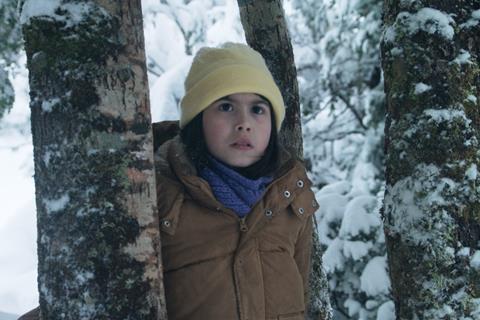
Dir/scr. Manuela Martelli. Chile/USA/Spain/Mexico. 2026. 108mins
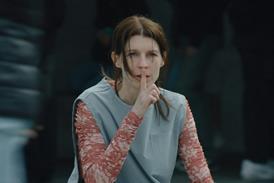
Chile, 1992. Lonely and isolated in the Andean ski resort run by her grandparents, nine-year-old Ines (Maya O’Rourke) forms puppyish attachments to chosen guests and staff members. Her latest crush is 15-year-old Hanna (Maia Rae Domagala), the only girl in a training group of young German skiers. Hanna is amused by Ines’ devotion and allows the child to tag along. But then Hanna disappears, and Ines bears witness to the uncomfortable secrets that are uncovered during the search for the missing teenager. The atmospheric second feature from director Manuela Martelli uses a child’s loss of innocence as an allegory for Chile’s reckoning in the post-Pinochet era.
An allegory for Chile’s reckoning in the post-Pinochet era
The 17 years spent under the military dictatorship has provided a rich source of inspiration for Chilean filmmakers, from Pablo Larrain’s No, which focused on the referendum which ended the period, to Juan Pablo Sallato’s Berlin-premiering The Red Hangar, which explored the events at the very beginning of the coup. Martelli’s own debut picture, Chile ’76, looked at quiet acts of resistance during the regime. Far fewer films, however, delve into the immediate aftermath of the dictatorship, a period in which Chile is rebranding itself as outward-facing and forward-looking, while still bearing the scars of Pinochet’s brutal rule. This distinctive perspective, together with Martelli’s deftly constructed atmosphere of mounting disquiet, should make this an eye-catching title for festival programmers following its premiere in Un Certain Regard.
While Ines has been dumped with her grandparents, her parents are busy presenting the new face of Chile to the wider world. They are part of the team behind the Chilean pavilion at the Universal Exposition of Seville, the centrepiece of which is an iceberg which has been transported from Antarctic waters all the way to Spain. It’s a source of considerable national pride, this feat of sea-ice engineering and transportation, but the inadvertent symbolic implications of a country proudly displaying a chunk of ice to the rest of the world could hardly be clearer. Ice is impermanent and unstable; when it melts, its secrets are revealed.
There is no shortage of ice, or of secrets, in the mountain country that surrounds Ines’ family’s ski resort. It’s a contested land, populated by Indigenous communities but now the playground for affluent “blondies”, as the hotel receptionist describes the European guests. And it’s a valuable resource: Ines’ go-getting grandmother is waging a permanent charm offensive, courting Spanish investors planning to build a hotel and ski complex on a nearby plot of land.
The commercial potential of Chile’s future depends, however, on glossing over some of the less palatable details of its recent past. When Hanna vanishes, it becomes clear that Ines’ family has experienced disappearances before (there’s an uncle that nobody will talk about) and that they have learned not to ask difficult questions of the authorities. Worse than that, Ines’ grandmother thinks nothing of obstructing the investigation if doing so will protect her family and her business from scrutiny.
Benjamín Echazarreta’s handsome cinematography captures the striking winter landscapes but also makes effective use of the interiors – Ines is frequently caught in reflections, her all-seeing child’s eye only just being to comprehend that something is very wrong. Elsewhere, the sense of threat is more overt, with a score that opens with scraping discordant strings and builds to a tortured scream of violin-based panic.
The Meltdown will probably be most rewarding to audiences familiar with the historical and geographical specifics of this particular moment in Chile’s history and this particular place in the country. But it’s a strong sophomore picture from Martelli, which further confirms her as a talent to watch.
Production company: Ronda Cine, Cinema Inutile, Wood Producciones
International sales: Losange Films Sales@Filmsdulosange.Fr
Producers: Alejandra García, Alex C. Lo, Andrés Wood
Cinematography: Benjamín Echazarreta
Production design: Nohemí González
Editing: Yibrán Asuad
Music: Mariá Portugal
Main cast: Maya O’Rourke, Saskia Rosendahl, Maia Rae Domagala, Jakub Gierszal, Paulina Urrutia, Mauricio Pesutic, Lautaro Cantillana, Paula Zúñiga, Roberto Farías, Daniela Pino, Luis Uribe, Marcela Salinas