







Sophie Schrago’s fly-on-the-wall doc plays Visions du Reel’s National Competition
Dir: Sophie Schrago. France/South Korea,/Switzerland/US. 2026. 76mins
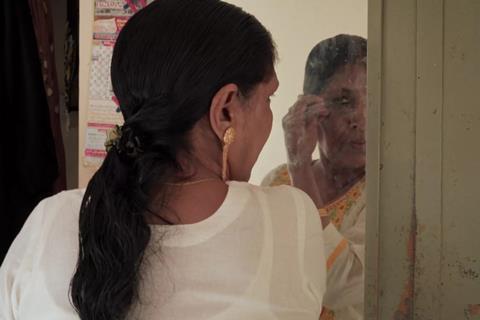
In a cramped office behind an unremarkable shop front in Bandra, Mumbai, dramatic, often heartrending, life stories unfold. This is where Judge Khathoon Zubeda Shaikh and her Indian Women’s Muslim Association team hear cases, acting as confidantes and adjudicators between wives and husbands in the Indian city’s first female Islamic court.
Lacks contextual insight
This intimate observational documentary from debut feature director Sophie Schrago’s (who previously made 2020 documentary short Malcolm X And The Sudanese) follows several marital disputes as they play out over a series of visits. As with most ‘courtrooms’, no matter how low key, the emotionally hefty stories offer a natural arc, but Schrago’s fly-on-the-wall approach means large chunks of Judge Khathoon’s backstory are absent – particularly, how she came to be in such a position of general respect.
The film covers similar – though geographically and culturally distinctive – ground to that of Erika Cohn’s 2017 film The Judge, which followed the first woman appointed to a Sharia court in the Middle East. Yet it lacks the contextual insight which Cohn brought to that project. After premiering at True/False in Missouri before stop-offs at Vancouver’s DOXA and now Visions Du Reel in Switzerland, What Comes From Sitting In Silence? is likely to continue on the festival circuit; not least because of its feminist credentials. Its lack of polish, however, could make securing distribution tricky in a crowded documentary marketplace.
Schrago shot the film herself: a decision that doesn’t always make for the smoothest or most disciplined camerawork, but which does mean she seamlessly slips into her documentary’s emotional rhythm. The filmmaker has a background in anthropology, which is a perfect fit for the human drama that plays out here. The common thread in many of the cases being heard by Judge Khathoon is the domestic abuse suffered by the women – frequently stemming as much from their husband’s family as the men themselves. For one the attacks are physical; for another, the emotional burden results in her wanting to harm herself. “Does my body belong to anyone but me?” asks one woman, encapsulating the frustration of many of those seeking help.
Judge Khathoon provides a twinkly, calm persona, insisting both parties outline their grievances as she attempts to orchestrate reconciliation – “It takes two hands to clap,” she insists. The space to speak is a crucial aspect and one many of the women seem unfamiliar with; the judge and her helper must persuade them to break their silence. The presence of the camera cannot always have helped in the process, and there is a sense of Schrago leaving the room at key moments. Schrago’s patience as a documentarian is evident, however, and pays off in details such as the throb of the ceiling fan above the participants, accentuating the film’s quieter moments.
Beyond how Judge Khathoon achieved her position, more cultural background about women’s position in marriage and the home in general would also be welcome as the cases unfold; particularly as some viewers may not feel comfortable seeing wives return to what are alleged to be abusive environments. Yet while some filmmakers choose to render themselves completely invisible in this sort of set-up, Schrago remains a presence who is periodically acknowledged by others in the room. Her closeness with Judge Khathoon allows for some deeply personal motivations to come to light from both sides of the camera that give the whole enterprise additional depth.
Production companies: Hutong Productions, Seesaw Pictures
International sales: Stranger Film Sales, tiana@strangerfilmssales.com
Producers: Pauline Tran Van Lieu, Lucie Rego, Heejung Oh, Sarah Kang
Cinematography: Sophie Schrago
Editing: Isidore Bethel