






Jason Osder and William Lafi Youmans’ film plays as a Berlin Special Screening after its Sundance premiere
Dirs: Jason Osder, William Lafi Youmans. US. 2026. 83 mins
Even those unfamiliar with the story of Palestinian-American activist Alex Odeh will be drawn in by a documentary that attempts to answer the question of who was responsible for his assassination in 1985. Jason Osder and William Lafi Youmans diligently pull together the threads of a complex case in which one incident opens a window on to a wider picture of Arab-Israeli relations.
Pulls together the threads of a complex case
Densely woven material and a shifting focus combine to make Who Killed Alex Odeh? a fascinating investigative work with timely resonance. That should attract interest from further festivals and documentary channels following its premiere in Sundance, where it won the US Documentary Special Jury Award for journalistic excellence and subsequent Berlin Special berth.
Alex Odeh was the West Coast Regional Director of the American Arab Anti-Discrimination Committee (ADC) when he was killed in a bomb attack in October 1985. Family and colleagues recall he devoted himself to challenging racial stereotypes, furthering understanding and building bridges between Arab and Jewish communities. Over forty years on, nobody has been charged with his murder.
Osder, best known as the director of Let The Fire Burn (2013), and first time filmmaker Youmans emphasise information over emotion as they cover details of the murder and its immediate aftermath in a pacy, involving manner. They work from a wealth of archive material ranging from news coverage to press conferences and interviews with Odeh. His murder is said to be directly linked to an Eyewitness television interview in which he appears to reflect sympathetically on the desperation of members of the Palestine Liberation Organisation (PLO) who had hijacked cruise ship Achille Lauro earlier in October 1985.
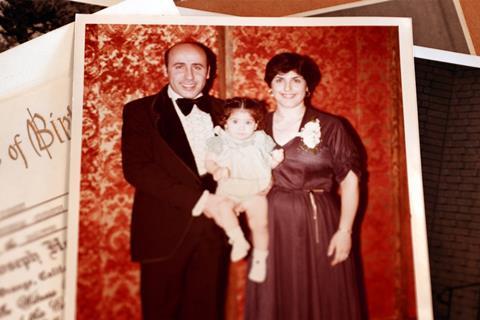
The filmmakers have enlisted the crucial support of Odeh’s widow Norma and his daughter Helena. For decades, they have received continued assurances from the FBI that the murder is a priority, that the case has never been closed and that justice will be served. Norma appears to have kept everything from boxes of family photos to cherished mementoes. The loss of a husband and father becomes a poignant undercurrent of the story but not one that drives it.
There is an irony at the heart of Who Killed Alex Odeh? Many people already believe they know the answer to that question. Three members of the Jewish Defense League were identified as persons of interest in the murder investigation and remain the most convincing suspects. What emerges is a portrait of an FBI unwilling or unable to follow the evidence and the continued activism of three men who were able to act with apparent impunity in the heart of America.
The filmmakers eventually connect with David Sheen, an Israeli journalist who has specialised in reporting on the ultra-right wing in Israel, and whose involvement drives the film towards a cross between a detective thriller and a journalistic examination of the evidence. Sheen pursues leads, contacts witnesses and confronts individuals, showing how straightforward it would have been for the FBI to do exactly the same. His work also leads the film into exploring the influence of Rabbi Meir Kahane, founder of the Jewish Defense League. Kahane was assassinated in 1990, but Sheen identifies him as an influential figure in ultra-right Israeli politics as it has moved from the margins to a place at the top table of the Israeli government.
Who Killed Alex Odeh? may not provide many fresh revelations, but it successfully balances insight into a family tragedy while putting the case into a vital wider context.
Production companies: Parked Bus Productions, Naked Edge Films, Watermelon Pictures
International sales: Dogwoof info@dogwoof.com
Producers: Dawne Langford, Daniel J. Chalfen, Jason Osder, William Lafi Youmans
Editing: Tyler H. Walk, Anne Alvergue
Music: Dana Kaproff