











A busy schedule throughout 2025 saw the European Film Commissions Network (EUFCN) host a series of networking opportunities between film commissioners and producers, as well as panel discussions and events, to highlight issues including the economic and social impact of productions in Europe, how to embed diversity, equity, inclusion and accessibility (DEIA) into productions, on-set sustainability and a long-hard look at mental health in the production sector.
Established in 2007 as the gateway to Europe for filmmakers worldwide, the non-profit association added six new members in 2025, from Finland, Poland, Romania, Spain, and Turkey.
EUFCN manager Venia Vergou, a former director of the Hellenic Film Commission, notes the addition of regional European film commissions and film offices shows they clearly see the value of EUFCN membership.
“The EUFCN fosters networking opportunities between its members and producers, advocates for the pivotal role film commissions in the European film industry play, and provides expert-led training to its members,” says Vergou.
The EUFCN held its General Assembly during the Berlinale in February 2025. It also hosted FrameFusion: A Commissioner & Producer Rendez-vous in Berlin, with the European Producers Club (EPC) for a third year. The networking event brought together seven EPC producers to present projects to 45 EUFCN film commissioners and discuss making films in Europe.
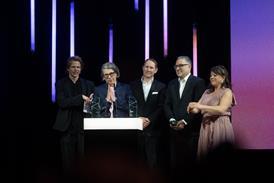
Berlin and the European Film Market (EFM) were the backdrop for the eighth edition of the EUFCN Location Awards, presented to the best European filming locations, organised by EUFCN.
The EUFCN Location Award winner was Frøya, through the Midgard Film Commission Norway, selected by the Location Awards jury, while Schönbrunn Palace, via the Vienna Film Commission, won the EUFCN Audience Location Award, chosen by the public through online voting.
During the Marché du Film and Cannes Film Festival in May, EUFCN hosted the panel ‘Capitalising on Collaboration: Harnessing the Power of Film Commissions in Europe’ for producers, executives, industry professionals and film commissioners.
Moderated by Leon Forde, CEO at Olsberg-SPI, the panel explored how collaborative work between producers and film commissions – including projects from Wes Anderson’s The Phoenician Scheme, to HBO’s limited series The Regime and the Netflix series Billionaire Island – can drive change in local communities, boost economies, and contribute to a healthier European screen sector.
Also in Cannes, EUFCN president Adrian A. Mitchell, of the Oslo Film Commission, and John Rakich, president of the Location Managers Guild International (LMGI), put pen to paper to establish a framework for cooperation between the two associations.
Later in the year, the EUFCN was a partner of the fifth edition of the Shooting Locations Marketplace in Valladolid, Spain. Vergou moderated a roundtable named ’Keys to Competitiveness in Global Productions’ in which speakers explored factors that have a direct impact on international productions and drive competitiveness in the European marketplace.
A second annual online training course in collaboration with Green Film and Trentino Film Commission rolled out in November. It comprised sessions with talking points such as ‘Behind the Scenes, Beyond the Stress: Mental Health on Set,’ ‘Inclusive by Design: Embedding DEIA in Every Production’ and ‘Filming in Nature: Protecting Ecosystems While Telling Stories.’
2025 concluded for EUFCN with a series of events in London, including the announcement of the shortlist for the ninth edition of the Location Awards. Belgrade via the Serbia Film Commission, Figueira da Foz, from the Portugal Film Commission, Inari proposed by Film Lapland-Finnish Lapland Film Commission, La Palma from Canary Islands Film and Sangerhausen via Germany’s MDM Film Commission have all been shortlisted.
“All submissions were shining examples of how professional and respectful collaboration with local partners creates mutual benefits and can turn even small municipalities into something truly big,” says EUFCN ‘s Mitchell. “When I see the quality on screen, I can only imagine some of the great work that has been put in behind the scenes by EUFCN members.”
As part of the partnership between EUFCN and Radisson Hotels, the EUFCN members enjoyed a discussion with Olsberg SPI’s Forde and consultant Nneka Luke to explore the complex geopolitical landscape and the myriad impacts it is having on screen production.
In a second event entitled ‘Tales from Behind the Scenes,’ the LMGI detailed real stories and showcases of successes, challenges, and practical do’s & donts in the collaboration between film commissions and location managers.
Going forward into 2026, Vergou aims to welcome more partners from the film industry “with whom we can continue creating new events to the benefit of our members”.
The 2025 European Film Commissions Network Location Award finalists
The five nominees for the annual European Film Commissions Network (EUFCN) Location Awards showcase the array of locations, communities and industry hubs the continent has to offer filmmakers.
Each year, EUFCN members submit one location from a film or a series shot in their territory and released with international distribution within a specific period.
This year, the jury, was composed of five film industry professionals: Alessandro Bonino (production supervisor at Wildside, Italy, Andrea Keener ( USlocation manager, board member of the LMGI), Gail McQuillan (head of TV production, Blueprint Pictures, UK), Sue Quinn (UK supervising location manager, member of the LMGI) and Caroline von Kühn (executive director of Oxbelly, Greece). They considered 13 submissions before creating a five-strong shortlist vying for two awards: The EUFCN Location Award 2025, the winner chosen by the jury and the EUFCN Audience Location Award 2025, selected by the public through online voting.
EUFCN president Adrian A. Mitchell, says the submissions “beautifully reflect the collaborative efforts of every member of the production teams and all the people who work to promote locations as film destinations”.
Belgrade, Serbia Film Commission, Serbia
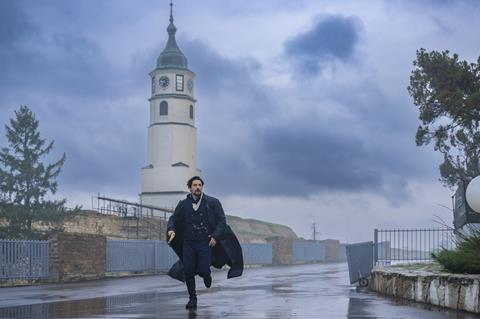
The Serbian capital of Belgrade offers a dense and varied urban fabric where Ottoman, Austro-Hungarian, interwar, socialist-modernist, and contemporary styles collide.
The city’s layered history and landmarks provided an authentic European dimension for The Librarians: The Next Chapter, the supernatural time-travelling drama produced by US production company Electric Entertainment, in partnership with Belgrade outfit Balkanic Media.
Public squares, historic streets, and cultural institutions gave the production a credible sense of place, balancing time-travel fantasy with contemporary realism.
The production utilised the Belgrade Fortress and transformed the exterior of the Military Museum into the central location of the series - the Library.
Furthermore, Serbian folklore elements, including vampires and ‘drekavac’ (otherwise known as shapeshifters), added site-based supernatural spice.
For its second season, the production was granted filming access to the parliament building, the Observatory and the National Theatre.
Balkanic Media has worked regularly with Dean Devlin’s Electric Entertainment. “The Librarians: The Next Chapter presented us with an exceptional creative opportunity, as it engaged local creatives, from actors to cinematography, costumes and designers, integrating local talent into the core of the creative process and storytelling,” says Jonathan English, founder of Balkanic Media.
“It strengthened the collaboration between city authorities and cultural institutions, demonstrating the mutual benefits of showcasing exceptional city locations on a truly international show.”
Figueira da Foz, Portugal Film Commission, Portugal
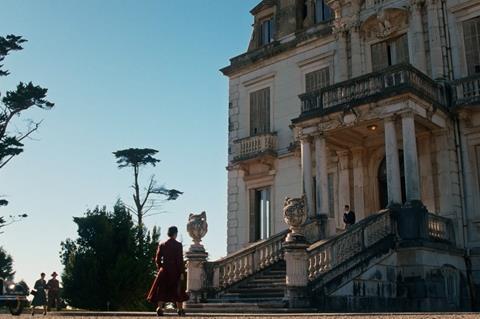
Located between the ocean and the mountains, the western city of Figueira da Foz is one of Portugal’s most cinematic coastal cities.
Heritage, nature and architecture intertwine to create an atmosphere both historical and timeless. Its diversity of locations imbued the Portuguese TV production Broken Spies with an authentic visual identity, evoking the glamour, intrigue and tension of the 1940s.
Figueira da Foz offers international filmmakers a rich architectural heritage, unspoiled coastal landscapes and a cinematic light shaped by the Atlantic.
Created by Pandora da Cunha Telles of Lisbon-based Ukbar Filmes, for local broadcaster Radio and Television Portugal, the production team chose to base half the shoot in Figueira da Foz, realising the potential for the city to become a character in its own right.
Once a luxurious seaside resort for elites, when World War II broke out, Figueira da Foz became a refuge for exiles and spies. The aim was to echo this atmosphere of freedom and control in the tone of the series.
The Broken Spies production contrasted the interiors of the Casino da Figueira and Palácio Sotto Mayor with the isolated landscapes of Serra da Boa Viagem, Cabo Mondego and the salt flats of Lavos.
“Every detail, the 1940s costumes, the architecture, the interplay of light, reflects the spirit of an era caught between beauty and danger,” according to the production.
The Broken Spies shoot has cemented Figueira da Foz’s commitment to becoming a film-friendly city. By successfully hosting a large-scale international production, the municipality strengthened its position as a supportive partner for the audiovisual sector and recognised the economic, cultural and touristic value of welcoming future projects.
Inari, Film Lapland, Finnish Lapland Film Commission, Finland
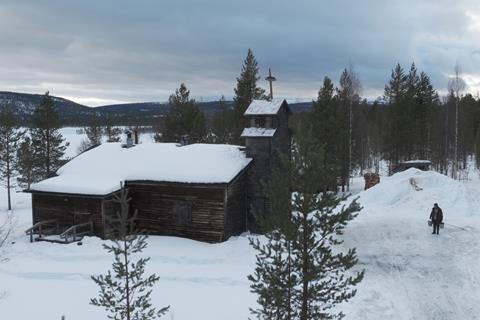
Inari is the largest municipality in Finland - and also one of the least populated. Its centre, Ivalo, is also the original title of the Finnish crime TV show Arctic Circle, co-produced by Yellow Film & TV, which has offices in Helsinki, Dublin and Germany’s Munich-based Bavaria Fiction.
Surrounded by arctic nature, Inari’s raw atmospheric scenery has been an integral part of the five seasons of the crime drama, becoming a character of its own and bringing the Nordic noir drama to life. Set in the breathtaking landscapes of the region, the location has become inseparable from the story itself. The vast, frozen wilderness, where filmmakers can draw on the intoxicating mix of silence, light, and extreme weather, establishes an atmosphere of isolation and fragile beauty that mirrors the series’ psychological intensity.
For the filmmakers, this unique natural setting reflects the characters’ inner struggles and the clash between human vulnerability and the unforgiving power of nature. “From the pale glow of the polar night to the brilliance of snow under a low winter sun, Inari’s Arctic environment enhances the visual storytelling, deepening both suspense and intimacy,” they said.
Inspired by the project’s positive impact, the municipality has developed Lapland’s first-ever local audiovisual incentive, a production tax rebate of up to 15%, in recognition of the potential of the film industry as a driver for economic and cultural growth.
The ever-changing northern light, the architecture of small Arctic villages, and the boundless vistas are all cited as playing a part in amplifying the show’s cinematic scale on screen.
La Palma, Canary Islands Film, Spain
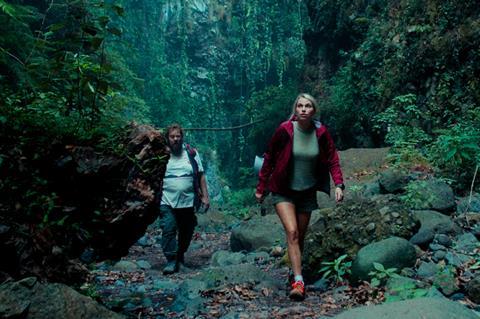
The island of La Palma, located in the northwest of the Canary archipelago of Spain’s Canary Islands and designated a Unesco World Biosphere Reserve, stands out for its rugged terrain, volcanic origins, and remarkable diversity of landscapes.
The Netflix- backed 2024 miniseries La Palma organically integrated this diversity of environments into its narrative, a fictional story that incorporated the 2021 volcanic eruption. The show depicts a recent disaster in which the island’s geography and volcanic landscapes are far more than a backdrop.
Based on the scientific theory of Cumbre Vieja’s potential landslides and the associated mega-tsunami risk, La Palma’s rugged terrain provided the production with the plausible but awe-inspiring setting for which they were looking. It allowed them to integrate the real-life 2021 Tajogaite eruption to reinforce dramatic authenticity.
The filmmakers said the Los Tilos Forest, a jewel of Atlantic laurel forest, provided a humid, primaeval atmosphere. The Tajogaite volcano’s recent lava flows became a central visual element conveying the magnitude of the natural disaster, while the black plains of Los Llanos del Jable offered stark, dramatic, and cinematic arid landscapes.
In addition, the historic centre of Santa Cruz de La Palma, with its colonial layout and lively public spaces, brought authenticity to the production’s urban scenes.
The La Palma shoot exemplified the importance of collaboration between Canary Islands Film, the Island Council (Cabildo), and local municipalities, to create a streamlined permitting process and strengthened logistical coordination.
Sangerhausen, MDM Film Commission, Germany
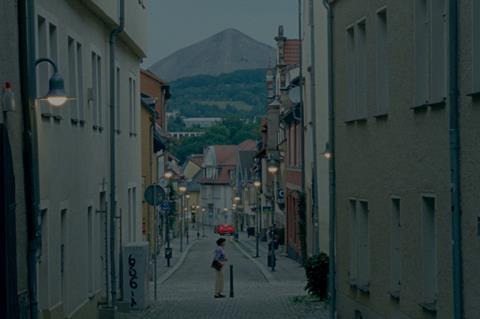
The small town of Sangerhausen in Germany, in the southern Lower Harz region of Saxony-Anhalt, provided the backdrop for Julian Radlmaier’s comedy-drama Phantoms Of July (Sehnsucht In Sangerhausen), which shot in the summer of 2024.
With a visible mining past and a floral present, rich in history and German Romanticism – Martin Luther and 8th century poet Novalis worked in this region – Phantoms Of July was the very first production to shoot in the town.
Radlmaier was fascinated by the town’s “very dense representation of both Germany’s past and present because there are many, many historical layers.”
He developed storylines by observing the town and its residents, the first time the filmmaker began a story from a place and a location.
The film follows two women brought together by the winding paths of chance on an unexpected ghost hunt in the mountains.
The director says he was also inspired by Novalis, who introduced the blue flower as a symbol of romantic longing: Sehnsucht in German. “This is not just a place where you can imagine that people are longing for something else, but also where longing as a concept was invented,” he notes
Since its premiere as the opening film of the 2025 Locarno Film Festival, Phantoms Of July has been screened far beyond Germany and Europe, bringing cultural awareness of this previously unknown region to the wider world. The film crew received every possible support from the town and its residents during the long shoot, even allowing for a reshoot later that year.






![My Dad The Truck [2] Square Image[98]](https://d1nslcd7m2225b.cloudfront.net/Pictures/100x67/7/7/2/1473772_mydadthetruck2squareimage98_640246_crop.jpeg)
No comments yet