





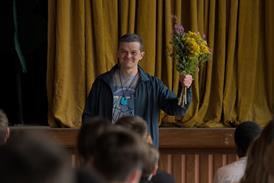

Julien Gaspar-Oliveri’s Critics’ Week title stars Diego Murgia and Romane Fringeli

Dir: Julien Gaspar-Oliveri. France. 2026. 105mins
In the opening shot of The Blow, feature debut director Julien Gaspar-Oliveri places the camera close to the sleeping bodies of adult siblings Enzo (Diego Murgia) and Carla (Romane Fringeli), setting the tone for this intimate French drama about a brother and sister whose loving bond is threatened by the arrival of their ex-con father. Murgia and Fringeli convey layers of anger and fragility as we watch their characters react very differently to this fraught reunion, the depth of their pain only slowly becoming apparent.
Sidesteps the narrative pitfalls that could potentially undercut such sensitive, eventually explosive material.
Screening in Cannes Critics’ Week, The Blow (previously titled Stonewall) will open in France via Ad Vitam, and international buyers should embrace a raw, affecting study of family trauma. Gaspar-Oliveri, whose short Tender Age was Cesar-nominated in 2022, demonstrates confidence in working with young actors while sidestepping the narrative pitfalls that could potentially undercut such sensitive, eventually explosive material.
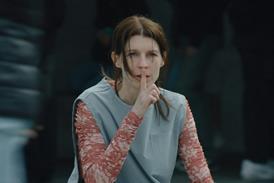
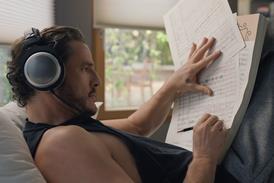
Nineteen-year-old Enzo (Murgia) and his slightly older sister Carla (Fringeli) have clung to one another since childhood, their tight connection demonstrated not just by the fact that they share the same bed, but also because they are genuinely best friends. Still, there’s a dour edginess within Carla that flares up at the worst moments – such as when she inexplicably makes a scene at the birthday party of Enzo’s affectionate girlfriend Roxane (Heloise Volle). Her intense emotional reactions are further triggered by the news that their father Anthony (Bastien Bouillon) is out of prison after serving a five-year sentence for fraud. Carla wants nothing to do with Anthony, while Enzo is eager to give him a second chance.
With cinematographer Martin Rit providing unpolished, handheld camerawork, the film circles these four central characters until the screenplay, co-written by Gaspar-Oliveri, focuses on Enzo and Anthony’s efforts to forge a relationship after the father’s long absence. The Blow selectively fills in this family’s backstory, almost as if the hurt feelings and difficult memories are still too fresh for these siblings and their father to discuss directly. But in due course, we learn that Enzo and Carla spent time in foster care; Gaspar-Oliveri unveils only an oblique, despairing hint about the whereabouts of their mother.
To the director’s credit, for much of The Blow the drama surrounding Enzo and Carla’s divergent responses to their dad’s return is sufficiently gripping on its own, even as viewers begin to suspect that a dark secret will be revealed. Anthony presents himself as a charming but strict father, playfully grilling Enzo about his sex life, but Carla’s volcanic aversion to the man, and her decision to stay away, provokes questions about what is being left unsaid. Soon, Enzo also starts behaving in strangely turbulent ways, wavering from frighteningly icy-cold stares to disturbing violence. Delphine Malaussena’s occasionally rattling string-laden score only amplifies the tension.
The two younger actors are superb at gradually externalising their characters’ stormy interiors. Fringeli exudes a disquieting volatility from the start, suggesting that Carla is ill at ease in any world in which she’s not near Enzo, proving to be fiercely and unreasonably possessive of him. By contrast, Murgia brings out Enzo’s sweet, hopeful personality — first around Roxane, his girlfriend of four months whom he’s crazy about, and then with Anthony; he is quickly willing to believe that his dad has put his bad past behind him. But The Blow will later expose the fault lines in Enzo’s ostensibly sunny demeanour, and Enzo’s vulnerable interactions with Anthony supply heartbreaking clues to the real complications within the family.
Yet even before the film’s twist comes to light, Gaspar-Oliveri thoughtfully chronicles how troubled homes shape children in ways that cannot always be readily grasped. Murgia and Fringeli portray these siblings like broken toys trying to pretend that there’s nothing wrong. And Bouillon depicts the considerably flawed Anthony not as a monster but, rather, as an ill-tempered mediocrity who was never meant to be a father. (As Anthony points out, he’s about as old as his children are now when they were conceived.) It might be a cliché to say that hurt people hurt people, but The Blow achingly illustrates how such a truism plays out in real life.
Production company: Easy Tiger
International sales: Charades, sales@charades.eu and joseph@charades.eu
Producer: Marc-Benoit Creancier
Screenplay: Julien Gaspar-Oliveri and Claudia Bottino (from an original idea from Julien Gaspar-Oliveri)
Cinematography: Martin Rit
Production design: Lea Cammarata
Editor: Baptiste Petit-Gats
Music: Delphine Malaussena
Main cast: Diego Murgia, Bastien Bouillon, Romane Fringeli, Heloise Volle