

















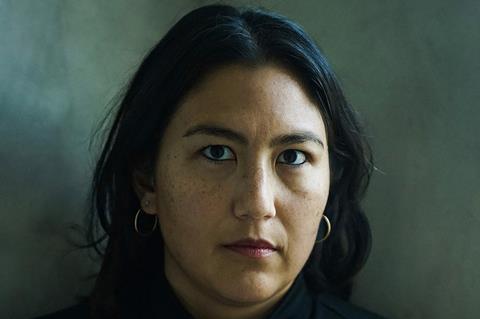
For the first time, American filmmaker Beth de Araújo is arriving in Brazil for professional reasons rather than visiting her father’s family in Goiânia. She chose the 28th edition of Festival do Rio (October 1-11) for the Latin American premiere of her new film and awards season hopeful Josephine.
The daughter of a Brazilian athlete and a Chinese-American ballerina, de Araújo based her film on a childhood trauma. At the age of eight, while jogging with her father in San Francisco’s Golden Gate Park, she witnessed a sexual assault. Her father gave chase and helped the police capture the perpetrator.
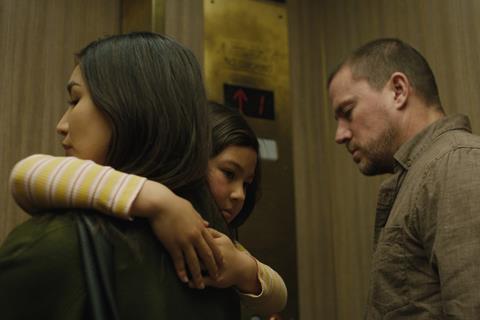
De Araújo revisits the incident in Josephine, in which a young girl (newcomer Mason Reeves as the title character) becomes the key witness in a case while she tries to process what she saw. Too innocent to fully grasp the events, Josephine grows increasingly frightened of the world around her while her parents (Channing Tatum and Gemma Chan) try to protect her but are unsure of the best way forward.
Audience connection
Filtering the crime through the gaze of a child creates an unsettling effect without ever being gratuitous. Josephine premiered at Sundance where it won the U.S. Dramatic Competition grand jury prize and the audience award. Around the time it screened in competition in Berlin, Sumerian Pictures announced it had snapped up US rights. The distributor will open the film in limited release on November 20 and expand nationwide on December 4 and will push for Oscars in acting, picture, director, and original screenplay categories.
“Cinema is such a beautiful medium of visual poetry,” de Araújo says in the days running up to the festival screening on October 9 in Rio’s World Cinema showcase, as she tries to explain the film’s resonance with audiences. “You don’t know what you’re not supposed to look at as a kid. We learn that staring is considered rude, but you stare because something is catching your eye in beauty or in terror and for so many reasons.”
De Araújo continues: “Probably the audience was also craving being able to speak about this subject, since there is no space for it in society. Women have no place to digest or openly share their stories about the violence that has happened to them. At least in my experience, you are quite silenced.”
According to the latest survey by Brazilian Forum On Public Safety, 1,568 women were victims of femicide in 2025, marking a 4.7% increase over the previous year. Given the high incidence rates, does de Araujo expect Josephine to have a greater impact in Brazil?
“Unfortunately, there is violence against women across the board in every single country,” she says. “You would think that if there is more crime in certain places that would mean higher rates of crime against women. But it is the same in Northern America. It is atrocious. If you look in the UK, per trial there is the least amount of convictions compared to other countries, which is an astonishing statistic.”
The plan is to make the Rio screening a family affair, says the director, whose first film was the 2022 psychological thriller and SXSW selection Soft & Quiet, which went on to earn a Bingham Ray Breakthrough Director Award nomination at the Gotham Awards. “I have five uncles, one aunt, and many cousins in Brazil,” de Araújo says. “One lives in Rio, so she is coming to the screening. And a couple of them are flying in.”
Strengthening ties
She continues: “Brazilian cinema is having quite a moment, which is remarkable. I’ve always followed Wagner Moura very closely. I also love the work of Carolina Costa,” the filmmaker adds, referring to the cinematographer of Fancy Dance (2023), The Graduates (2023) and The Chosen Ones (2015). But I haven’t followed Brazilian filmmakers as much as I wish I did,” says the UC Berkeley graduate, who holds a degree in sociology and earned an MFA in screenwriting from AFI Conservatory. “When I first moved to LA, it was a bit like my dad described moving to America. He felt he had to absorb this world, assimilate and engross himself as much as possible.”
De Araújo hopes to strengthen her ties – personal and professional – with Brazil, and acknowledges she does not yet have a strong connection with the country, despite holding dual citizenship. “My dad has had a very tough and complicated relationship with his home country. And I think that has partially come onto me,” she says.
Her father was born in Mato Grosso and became an athlete and ended up securing a university scholarship in the US, where he met his wife, an American ballerina of Chinese descent. “He had to run away when he was eight from a very abusive home,” the filmmaker recalls. “I won’t go into the details between eight and 15, when he was finally adopted by a family in Goiânia.”
There was a period, after de Araújo graduated from college and thought she was “done with America,” when she spent six months in Brazil. “I lived with my grandma in Goiânia. But it was really hard to try to make friends and get a job in Portuguese. Then I went back and I started pursuing filmmaking in LA,’’ says the director, who has yet to master the Portuguese language.
“I am never Brazilian enough for Brazilians and I am never American enough for Americans’’, de Araújo notes with a smile. “That is where I live in my life. My home is a place with a sense of belonging with outsiders and people who feel ostracised in this world.”
Josephine will receive a gala screening on October 9 at the historic Cine Odeon. Retrato Filmes will release the film in Brazil nationwide on November 19.






No comments yet