














Ten years after the UK voted to leave the European Union, key British industry figures reflect on the ongoing ramifications of Brexit – and the shoots of enhanced cross-border collaboration that have developed as a result.
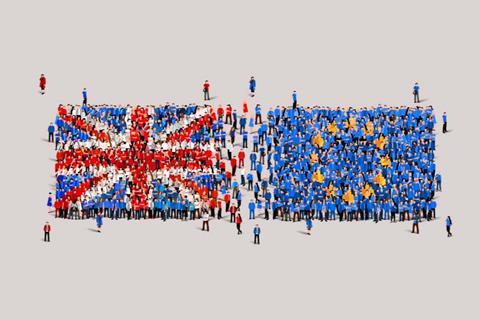
UK film industry figures respond to questions about Brexit as if they were being asked about events from a lifetime ago. The sector has faced so many other challenges since the 2016 referendum, which saw the UK vote to leave the European Union, that, according to UK Screen Alliance/Animation UK CEO Neil Hatton, “Brexit feels like ancient history, to be honest.”
“I don’t think Brexit has materially affected our business, even if my personal view is that we should not have left the EU,” says Stephen Kelliher, director and head of sales & marketing at Bankside Films. He says the company has been “fortunate enough to work on a number of films that have been ‘must-haves’ for international distributors”, and therefore the company had not missed EU distribution support as much as rival UK sales outfits.
Nonetheless, Brexit has had a seismic effect, points out Mia Bays, who is coming to the end of her five-year term as director of the BFI Filmmaking Fund. She describes it as the first in a “sequence of shocks that together have completely reshaped our entire environment”.

Bays continues: “Brexit removed funding and business mobility and then Covid shut down production and changed audience behaviour. Mid-budget commissioning has fallen away, and then there was inflation and our own structural issues on top of that, increasingly fragile distribution and under-capitalised producers. Brexit was part of a much larger decade of disruption.”
Veteran UK producer Paul Webster agrees: “We know that the UK’s economic growth has been stunted and is diminished. We have to lay some of that at Brexit’s door. Knock-on costs – catering and all that sort of stuff – hits film as well.”
Webster also points out that UK economic growth is among the lowest in western Europe. Reuters estimated earlier this year that Brexit reduced UK GDP by 6%-8% by 2025, compared to Britain having remained in the EU.
Inward investment
No-one is pretending that being outside the EU has ushered in a new era of plenty for film. However, key parts of the industry have remained largely unaffected. “It had, frankly, very little impact on us attracting inward investment from the US. I would say that was negligible,” observes Adrian Wootton, chief executive of the British Film Commission and Film London.

Last year saw a spend of £6.8bn ($9.2bn) on film and high-end TV production in the UK, one of the highest figures recorded. Veteran producer David Puttnam recently commented that “the content industry in particular has been less affected by Brexit than most”, and acknowledged that his 2016 warnings that leaving the EU would impoverish the film, TV and creative industries were wide of the mark.
Nonetheless, the Brexit sting for many remains as painful as ever, even a decade on. In particular, UK producers, sales agents, exhibitors and distributors are still smarting after being forced to leave the EU’s Creative Europe Media Programme. Between 2014 and 2018, it was estimated to have pumped €89.5m ($104m) into 376 UK-based cultural and creative organisations and audiovisual companies, at an average of €18.4m ($21.3m) a year, and helped distribute 190 UK films in other European countries.
Many sales agents now look on enviously at their rivals across the Channel. “When it comes to film sales, it has been a terrible time because of Covid, the streamers and everything else, but Brexit does still lurk in the rearview mirror because there is no real access to European funding,” says Grace Carley, chief executive at Film Export UK.
One sales veteran reflects ruefully: “UK companies are missing out on a lot of films, including from Ireland, to European sales agents exactly for that reason that we cannot apply for European subsidies. As a result, there’s no advantage for a European production, produced by European producers, to consider us as the sales agent.”
Independent UK distributors likewise lament the loss of EU support. “It allowed us to take risks on European films and be a bit more adventurous in cultural acquisitions,” says Eve Gabereau, whose Modern Films received substantial Creative Europe support to release features such as Alice Rohrwacher’s Happy As Lazzaro (2018) and Erik Poppe’s Utøya – July 22nd (2018) in UK and Ireland cinemas.
For their part, independent UK exhibitors still bristle about being ejected from Europa Cinemas, the network of close to 1,300 theatres that focuses on European films and provides funding and training for its members. Departure was inevitable once the UK left the Creative Europe Media Programme, which had created the network in 1992.
“Being a member of Europa Cinemas was being part of a Europe-wide network that was sharing intelligence about developments in exhibition,” says Mark Cosgrove, cinema curator at the Watershed in Bristol. “We were part of that conversation.”
One insider points out “the real value” of Europa Cinemas to the UK was the platform it gave to British films in cinemas across the continent when European exhibitors could still receive programming incentives for showing them. Before Brexit, British films accounted for 15% of total admissions across the Europa Cinemas network.
Meanwhile, producers remain as indignant as ever over the loss of the EU slate funding support. “Even with the enhanced tax credit, which we are very grateful for, I feel Brexit has made life more difficult,” says Sixteen Films’ Rebecca O’Brien, whose many films with double Palme d’Or-winning director Ken Loach were all made with strong European support.
“Slate funding was invaluable,” agrees Julie Baines of Dan Films, a producer and council member at Pact, the organisation representing the interests of UK indie producers.
In the VFX field, according to Hatton, “the difficulties around access to the best talent is the most tangible downside.” Fewer EU nationals are employed because they now need a visa. Around 33% of the pre-Brexit workforce in the UK’s bigger VFX companies were EU nationals. That figure has fallen to 25% because the cost of visas is “prohibitive”. This has meant more opportunities for UK talent, but has also weakened the sector – especially when it comes to junior level talent.
“While the output of UK universities in some cases is still very good, there is an awful lot of them who are not up to standard, who are not work-ready,” reports Hatton.
Healing wounds
One positive outcome of Brexit is that UK industry leaders are now far more actively engaged with their EU partners than they were before 2016. “There was a dip when we took all this time to decide how we were going to leave, whether we were going to leave. Europe was very patient with us but also very hurt, but we’ve healed those wounds,” says one observer of the awkward transitional period between the referendum and the UK’s actual withdrawal from the EU at the start of 2020.
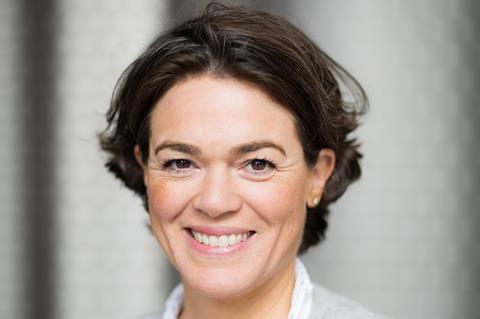
“We worked hard to maintain strong relations,” declares BFI deputy CEO Harriet Finney of the charm offensive that was launched by UK public film bodies to reassure their European partners that they could still collaborate successfully.
“The last five years have been productive in terms of a renewed creative and industrial dialogue with our partners in the EU,” says Wootton.
The BFI and France’s CNC are arguably on better terms than ever following last year’s Moving Image Cooperation Agreement, signed by BFI chief executive Ben Roberts and CNC president Gaëtan Bruel. The BFI was instrumental in setting up the European Film Agencies Directors Association in 2014 and has remained influential within the organisation, albeit now as one its non-EU members (which also include Ukraine, Norway, North Macedonia and Serbia).
In recent years, the British Film Commission has signed multiple new memorandums of understandings (MOUs) with European partners including Spain, Germany, France, Malta, Austria and Italy.
“We went out of our way to say to our partners, yes, Brexit happened, but it’s in both our interests to carry on working with each other,” says Wootton. “The MOUs were all based on how can we unravel the red tape that has come in.”
Before Brexit, the UK was included in the European Economic Area (EEA), which allowed free movement of goods, services, people and capital. What the MOUs have essentially done is to restore to the UK the old privileges given to EEA countries around visas, work permits and access to tax credits.
As Brexit loomed, the BFI set up the Screen Sector Task Force all-industry group to address anxieties around separation from the EU. “The entire sector comes together with one voice. Having a sector that can pull the very smallest to the very largest together on a single issue is incredibly valuable,” says Finney of the taskforce, which went on to play a vital role in the UK film and TV industry’s response to Covid.
Thanks to the BFI’s UK Global Screen Fund (UKGSF) and the enhanced 40% tax credit for limited budget films, the UK is finally becoming more desirable as a co-production partner; official UK co-productions rose from 29 in 2024 to 39 in 2025. The fund was set up in 2021 as a £7m ($9.5m) pilot programme under Denitsa Yordanova, with a remit partly to mitigate the Brexit effect. Insiders point out, however, the fund supports UK film in markets around the world, not just in the EU, and has a very different footprint to the Creative Europe Media Programme.
A range of initiatives to galvanise the sector have been introduced this summer. In early August, UKGSF slate development funding came on stream: independent producers can now apply for grants of £45,000-£150,000 ($61,000-$203,000) for between three and five feature film projects, including scripted live action, animation and documentary, and for television programmes in animation or documentary.
On August 19, a new minimum guarantee fund was launched to help UK sales agents. This offers up to £100,000 ($135,000) as a non-recoupable grant, which can be assigned to any number of UK projects over 12 months. Supported minimum guarantees will need to be matched by sales agents’ own contribution and can be used towards completed or pre-sale titles.
On the production front, UKGSF will, from September onwards, support majority UK co-productions (animation and documentary) as well as continuing with its minority co-production support.
Draw of Eurimages
All this activity shows the UK’s desire to cleave as closely to the EU as to the US. The newly expanded £18m ($24.4m) UKGSF annual budget is not far short of the amount the UK was receiving through Creative Europe – but many still believe the money is not enough and is being spread too thinly. For instance, UKGSF can provide grants of up to £300,000 ($407,000) to minority co‑production projects, “but that’s not a lot in the great scheme of things”, says one leading producer.
There is therefore yet again serious talk about the UK rejoining Eurimages, the Council of Europe’s cultural fund, which the UK left in 1995, long before Brexit, and which has several non-EU associate members including Canada and Ukraine. Eurimages offers three or four funding rounds each year, an annual budget of approximately €27.5m ($32m) for co-production support and backs around 35 films a year, giving up to €500,000 ($580,000) per project. If the UK was to rejoin, it would have to pay a subscription fee based on GDP, population and volume of co-production. The fee is difficult to calculate but might initially be around €2m ($2.3m) annually.
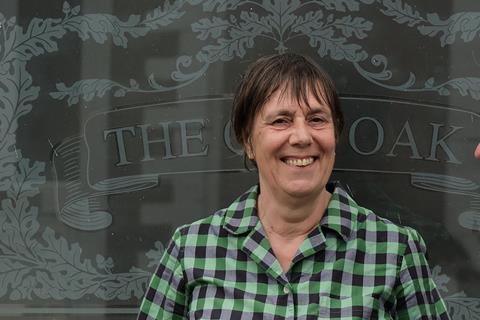
“We could easily join and it would make a difference,” says O’Brien. “It would make it much easier to co-produce with Europe. It needs to be properly on the agenda.”
Baines confirms that rejoining Eurimages is under active discussion by Pact members: “There is nothing formal but they are seriously considering it.” Observers also note that Isabel Davis, the current executive director of Screen Scotland who will take over as director of the BFI’s £20m ($27m) annual Filmmaking Fund in October, has previously spoken in support of Eurimages.
Next steps
Could the Creative Europe Media programme be next? The BFI made what Finney calls “a very robust case” for the UK to remain within the programme post-Brexit but the decision to leave was still taken by the then-Conservative government. Subsequently, the UK has successfully rejoined the EU Horizon Europe Science Programme and the Erasmus+ scheme, and some industry figures see encouragement in the make-up of the Labour government. The new prime minister Andy Burnham is a former secretary of state for culture, media and sport, and his chief of staff James Purnell is a former BFI board member.
“For the first time in a long time, we have people at the heart of government with a clear-sighted understanding of the creative industries,” says Finney.
The BFI deputy head is predictably non-committal about rejoining Eurimages. “We are always keeping an eye on how funding programmes are evolving across Europe,” is all she will say. However, the UK may now be able to rejoin at least part of Europe’s fund for culture, media and democracy. The AgoraEU Programme proposed for 2028-34 is, as Finney describes it, “modular”, and will have three strands: Creative Europe — Culture; Media+; and Democracy, Citizens, Equality, Rights and Values (CERV+).
“The way it is being built feels like there are going to be different programmes within it that countries may be able to join on a piecemeal basis,” continues Finney. “That is what we would love to look at. There is a cost to rejoining the programmes but we also know the mood music from the government, [and] it feels Europe is on the agenda.”
“When Brexit happened, the overwhelming majority of the creative industries were definitely pessimistic and negative about it, but the last five years have been productive in terms of a renewed creative and industrial dialogue with our partners in the EU,” says Wootton, summing up the paradox of Brexit and how it may actually have pushed the UK film industry closer to Europe.
“We have found pragmatic routes and partnerships,” adds Bays, noting the sizeable UK presence at most markets and festivals across the EU these days. “We are still a crucial part of the European ecosystem.”






No comments yet