







Cypriot director Tonia Mishiali returns to Karlovy Vary International Film Festival (KVIFF) this year after her debut feature Pause premiered in the festival’s East of the West competition in 2018.
Pause, which went on to screen at festivals including Stockholm, Cairo and Thessaloniki where it won the Fipresci prize, established Mishiali as an important female voice in both Cypriot and international cinema and was followed by several well-regarded shorts.
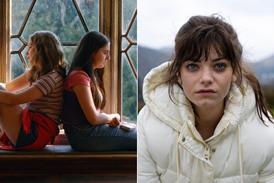
Her return to features, The Lion At My Back, will screen at this year’s KVIFF as part of the Crystal Globe competition. The film explores the relationship between Mariama (Sokhna Diallo), a teenage Senegalese asylum seeker, and Stella (Elena Kallinikou), a Cypriot recovering drug addict as both women try to rebuild their lives.
The Cyprus-Luxembourg-Greece co-production is produced by Mishiali’s own Nicosia-based Bark like a Cat Films, Luxembourg’s Iris Productions and Greece’s Avaton Films. The Yellow Affair is handling international sales on the title, which has its KVIFF premiere on July 6.
Can you tell us more about where The Lion At My Back came from?
I wanted to write a film about motherhood. When I started writing this, my daughter was becoming a teenager and I realised that there’s a very special and complex bond between mothers and daughters. At the same time, because I’m a refugee in my own country, I have met a lot of asylum seekers, especially from Africa, when they started arriving inside Cyprus. I felt the resilience they had was very impressive and I wanted to explore that. So I combined these themes.
You’ve said the film is part of a trilogy that began with Pause. Can you expand upon that?
The idea behind the trilogy was actually pointed out to me by a film critic who follows my work, who said your focus is on women’s issues. As a woman filmmaker, I do like to focus on women characters, especially women living on the sidelines who are trying to establish themselves in society while struggling with patriarchy and dealing with inner demons. In Pause, it was a middle-aged woman; here it’s a combination of a 40-year-old woman and a teenager; and the next one will be a woman around 30. So I’m going down in age.
How difficult was it to fund your second feature?
I wouldn’t say it was difficult but it was lengthy because of Covid and some other issues. I was part of Producers on the Move in Cannes [in 2024] and I met this Luxembourgish producer [Katarzyna Ozga], and as soon as I pitched it to her she loved it. After Cannes, we got the [Luxembourg] funding immediately and then Greece came after that. I did try France and we didn’t get it unfortunately, but the French producer Antoine Simkine stayed on board and he helped a lot.
We also tried Eurimages and didn’t get that either, which I found out two days before we started shooting. But we couldn’t delay the shoot so with my co-producer and my line producer, we worked around the budget and managed to do it with some restrictions.
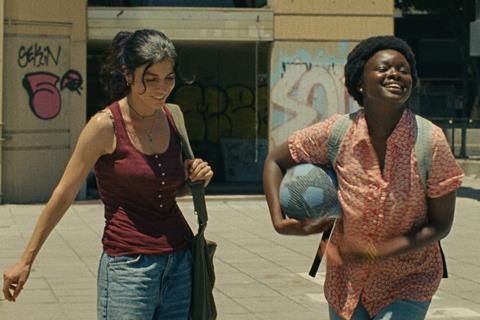
How did you cast your two leads, Sokhna Diallo and Elena Kallinikou?
I cast the role of Stella first – Elena is amazing and gave me inspiration for the character. For the part of the African girl, I decided I wanted to cast a non-professional who is an asylum seeker now in Cyprus and then work with her in the months leading up to the start of shooting. I found this amazing girl from Somalia who had been in Cyprus for five years, who had her status here and was a Cypriot citizen, and who had gone through a lot of the same things that Mariama went through.
One-and-a-half months before the shoot, she disappeared. I was worried about her first and not so much about losing my actress. She called me a week later and said, “I’m sorry, I left the country; my family were running after me.” I’m not going to go into detail about why but it was life-threatening, and she had to keep changing countries.
In the meantime, I had to cast somebody else, so I called this casting director in Greece and spent weeks watching so many casting videos of girls from Athens, Austria, Belgium, France… I did casting calls on Zoom, and then I travelled to France, Italy and others. I ended up casting Sokhna in Paris – she had some professional experience but it was risky because I hadn’t seen how her and Elena would fit together. Fortunately, it worked because they have great chemistry.
Why did you decide to shoot the film on 16mm?
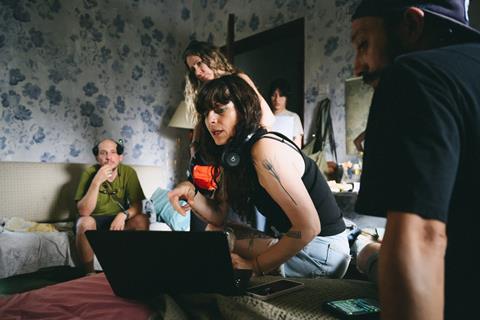
The film has this rawness that fits 16mm. Practically, it was difficult and more expensive – my line producer was not very happy. Our lab was in France and we did some tests in Athens first to find the look. Then we did three days of shooting and sent the first three days to the lab. We hired a person who went every five or six days to France to deliver the material because we didn’t trust that it would go through scanning. We wanted to keep checking if everything was okay.
It was a different process that I loved, but at the same time it was very scary; ultimately, we only had to reshoot one scene.
Is the third film in the trilogy going to be your next project?
Yes, the working title is Maya and it’s a dark fairytale about a woman struggling to find herself.



No comments yet