Prague-born filmmaker Šimon Holý has a long and storied history with the Karlovy Vary International Film Festival.
After studying directing at the Czech film school FAMU, his debut feature Mirrors In The Dark premiered at Karlovy Vary in 2021 in the festival’s East of the West competition, while his sophomore feature And Then There Was Love debuted the following year in the Proxima competition.
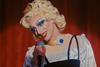
His latest feature Chica Checa will see Holý take part in the festival’s Crystal Globe competition. The film, which has its festival premiere on July 4, is a gently comedic affair that follows Zdena, a widow living a sedate life in a small Czech village whose son returns to say goodbye to his ailing grandmother. But as they deal with her impending demise, Zdena also must confront the queer life in Paris that Lukas lives and his drag queen alter ego, Chica Checa.
Chica Checa is produced by Alžběta Janáčková for Prague-based Silk Films with co-production companies Arinafilm from Slovakia, Paris-based The French Connection and Czech Televison. World sales are handled by Pluto Film.
As both the writer and director of Chica Checa, can you tell us more about what inspired the film?

I was inspired by the time I spent in villages, where I observed how society expects women to fulfill the roles that the village has assigned to them. My mother, who also lives in the countryside, chose at one point to challenge those stereotypes and now lives happily on her own, despite the expectations of others. In recent years, we have become increasingly afraid of people who are different, and I felt it was important to show that otherness is not only about queerness, but also about the desire to live life on one’s own terms rather than according to patriarchy.
You also worked with lead actress Pavla Tomicová on your previous film And Then There Was Love – did you always have her in mind for the role of Zdena?
Pavla is a wonderful actress. Our previous collaboration was very successful, and in the Czech Republic, she was nominated for virtually every major award. For that reason, I didn’t want to immediately repeat the same casting combination. Together with Jan Cina, who plays Lukas in the film, we spent a long time looking for his “mother”.
However, Pavla was convinced that she understood the role and that she should play it. When we were unable to find anyone suitable for quite some time, we decided to invite her to audition and it instantly became clear that she had been the right choice all along. Her combination of expressiveness, naturalism, and deep understanding of the story and its characters proved to be essential for the film.
As a director and writer, does comedy feel harder to do, especially when you’re trying to appeal to audiences outside your own country?
Comedy is incredibly difficult, especially when it draws on something regional or local. Every time, I feel that I’m working with something universal, but it is only later, in the editing room, that it becomes clear how much of the humour is rooted in the Czech language or in a Central European context. That said, I think I’m getting better at it. The French co-production helped a lot with that this time as well.
Given the success of your previous films, how easy or difficult was it to get the funding and put the film together?

It wasn’t easy this time either. Securing funding for a film seems to be an increasingly difficult discipline. In the Czech context, it is also connected to the current government’s attacks on public service media, which it is trying to bring under state control, thereby reducing their budgets and, to some extent, dismantling the current state of national audiovisual culture. I am saddened by the way our government approaches culture.
You and your films have had a close relationship with Karlovy Vary over the years. What are your thoughts about the festival in light of its 60th anniversary edition?
The films shown here often represent the most interesting work being created in this region, and it is definitely worth following the growing quality of domestic cinema. You can see it at other major festivals as well, where Czech films are now attracting the attention of selectors.
For Chica Checa, Karlovy Vary is the ideal launchpad because the film is accessible to international audiences while at the same time communicating something very important to Czech visitors and viewers: in the years ahead, we will have to fight for the right to live the lives we want, and we must not give in to the pressures of a conservative society in which we will ultimately all suffocate.
What’s coming up next for you?
There is a lot going on right now. Together with Marek Novák [of Xova Films], we are starting production this year on a meta-romantic comedy with the working title First Dates, about a woman whom we follow over nine years through eight first dates. And with Pavla Klimešová and Jan Syruček [of Helium Film], we’ve been developing a film for almost ten years that’s now titled Mazel Tov, David! and is about the disintegration of Jewish communities after October 7.
Through my own production company První řada, we’re developing my next film, Miracle, and we are also producing Pavel Nosek’s debut feature Scars and Natalie Golovchenko’s debut feature Motya. We also hope to start shooting the queer TV documentary series We Are Here this year.


No comments yet