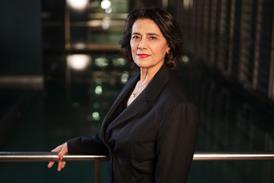
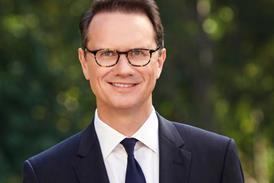
Juan Alía and Samuel Castro

Source: Courtesy of Iberseries and Platino Industria

Juan Alía and Samuel Castro

The sixth edition of Iberseries & Platino Industria is taking place in Madrid this week, overseen by co-directors Juan Alía and Samuel Castro.

Iberseries was conceived in 2020 as an initiative of Fundación Secuoya, led by Samuel. It was due to take place in Granada [in 2020] but the pandemic forced its first edition online.

As the head of the long-running Platino Awards, Alía saw the event increasingly becoming a meeting point for the Latin American and Spanish film and TV industries and began considering a collaboration with the nascent Iberseries on a market-focused event.

“We realised the two initiatives were complementary and could combine their institutional support,” Alía explains. “It also made sense because the Platino Awards had expanded beyond cinema to include television series.”

The first joint Iberseries and Platino Industria took place in Madrid in 2021. 

Alía, who directs the Platino Awards and oversees Platino Industria, works in international relations at Spanish and Latin American rights society Egeda Castro previously ran Film Madrid, the promotional filming office of the Madrid regional government. He joined Secuoya Content Group in 2019 and now heads Fundación Secuoya, the group’s non-profit arm, and supports training, research and the development of Spain’s audiovisual sector.

Alía and Castro tell Screen how their turbo-charged joint venture is working to bring the European and Latin American markets closer together.

What is the main obstacle in the partnership between European productions— particularly Spain — and Latin America?

Castro: They are completely different markets. The main obstacle is sales. Co-production can sometimes be straightforward, but major platforms operate through separate divisions,  Amazon Mexico or Latin America, for example, and Europe.

I miss the international sales agents who previously handled quality Latin American films. With series adopting new financing models, there could now be a valuable opportunity both commercially and in terms of circulation. There is high-quality Latin American content that I simply cannot access on platforms. 

Alía: Giving an Argentinian series the opportunity to be seen in Spain, and vice versa, has helped create an Ibero-American star system. But sales remain decisive. Major crossover successes are harder to achieve in film, while platforms’ acquisition of Latin American content often retains a mainstream preference. Europe still lacks platforms offering a more curated selection of Latin American audiovisual works.

Who typically attends Iberseries and Platino Industria?

Castro: Primarily producers, but also creators. From the beginning, we have focused on financing and producing Spanish- and Portuguese-language audiovisual content, whether series or feature films. There has never been a barrier between the two. Producers and filmmakers have always moved fluidly between them, perhaps more so than in other film cultures.

We have also expanded our focus to screenwriters and showrunners, adapting the programme to their demands.

Is it easier to close deals for film or for TV at Iberseries & Platino Industria?

Alía: Feature film projects remain easier, in our experience, because they are generally open to co-production, financing, pre-sales and different kinds of partnerships. However, series are now adopting co-production and international sales models increasingly similar to those used in film. ‘Second-window’ deals can be easier to close, supporting a boost for a greater international circulation of audiovisual productions. 

What makes Iberseries & Platino Industria stand out in the industry?

Castro: Training is one of our strengths. We respond organically to industry demand and have introduced strands including showrunner training and legal workshops. This year’s Clearance in Audiovisual Production, a practical legal and business affairs workshop for producers and creators, has been a major success. Many mid-sized production companies secure deals with streamers but lack the knowledge to negotiate or manage those contracts.

We were also the first European event to bring in private investment funds interested in financing films and series. Arcano Partners attended in our first year, followed by funds such as Elipsis Capital. Initially, they mainly provided gap financing linked to tax incentives.

We are now seeing funds take equity positions, alongside public instruments such as those provided by the SETT [Spanish Society for Technological Transformation], which is playing a crucial role in Spain now.

How have projects progressed since being showcased in the Co-Production and Financing Forum over the years?

Alía: Since the Forum was launched in 2022, we have identified 14 completed or in a advanced stage projects. Juan Gautier’s The Aspiring began here, as did series Fragile [produced by StoryLab and Flow Contenidos].

Today we are hosting the European premiere of another success story, Lucía Puenzo’s The Gunwoman, which first came to the event as a project. We are doing so at Puenzo’s request and with sales agent Film Factory.

Do you see more filmmakers than ever moving into series?

Castro:  Absolutely. Look at Javier Calvo and Javier Ambrossi, [aka Los Javis], who have directed La Bola Negra alongside outstanding series such as La Mesías. The same applies to Rodrigo Sorogoyen [The Beasts, TV show Riot Police].

The increasing professionalism and quality of series now place them close to cinema’s creative, cultural and, in some cases, artistic standards.

The global model has helped professionalise and industrialise our sector. A series lasting one or two seasons employs substantial crews for longer periods, supporting the industry’s general development.