









The Toronto International Film Festival often serves as a vital platform for up-and-coming homegrown filmmakers. Five Canadian directors with their first or second features in this year’s TIFF line-up – all but one of the films getting their world premieres – show the diversity of talent, genres and stories currently coming out of the country.
Ian Bawa, writer/director – Strong Son (Discovery)

A South Asian filmmaker from Winnipeg, Bawa has more than a dozen short films to his name, among them 2020’s Strong Son and 2024’s The Best, both TIFF premieres, as well as 2023 documentary feature Seeking Fire.
His first narrative feature, an expansion of the Strong Son short, centres on a former South Asian bodybuilder who moves back into his childhood home to become the primary caregiver for his ageing father. “Some shorts are just shorts,” Bawa suggests, “but some feel like they have more to say. Strong Son always felt like that to me.”
For his next project, Bawa is working on ideas including a feature version of his 2024 short My Son Went Quiet. “I also have a couple of other projects that are much more genre-driven compared to the dramas I’ve been making,” he says, “so I’m figuring out which direction I want to go next.”
Ashley Duong, director/co-writer – Ba’s Book (TIFF Docs)

Vietnamese-Canadian filmmaker Duong, originally from Calgary but now based in Montreal, made her feature directing debut with 2017 Malaysia-set documentary A Time To Swim, a prize-winner at the Los Angeles Asian Pacific Film Festival. She has also worked on TV projects for outlets including CBC, Al Jazeera and National Indigenous Television.
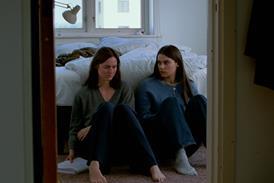
Ba’s Book, Duong’s second feature as a director, is a hybrid documentary that takes her father’s Vietnam war memoir and stages a recreation of it with other family members in Vietnam. “The recreations were my way of encouraging my family to open up and engage in a concrete dialogue about difficult topics,” Duong explains.
Duong is currently writing a narrative project and says she is open to exploring different kinds of filmmaking opportunities. “I’m interested in both narrative and documentary, and everything in between,” she says. “Whatever methods serve the story the best.”
Nyla Innuksuk, director/co-writer – In The Heart Of The South (Platform)

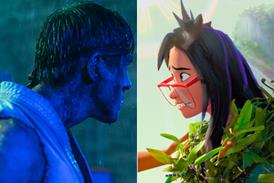
Indigenous filmmaker Innuksuk, born in Canada’s mostly Inuit territory of Nunavut but now based in Toronto, broke through in 2022 with alien invasion tale Slash/Back, her feature debut, which followed shorts including 2015 TIFF entry Kajutaiju. Her second feature is a psychological thriller about a young filmmaker who feels stuck between two worlds.
“The story isn’t autobiographical, but a lot of the discomfort that the film portrays is,” says Innuksuk of In The Heart Of The South. “I know what it’s like to be an Indigenous filmmaker in spaces where people are very interested in your identity.”
The way her work deals with race and representation has evolved since Slash/Back, Innuksuk attests: “I’ve become less interested in dividing everyone into good people and bad people, or enlightened people and dummies. That’s partly getting older and partly realising that being able to articulate the correct politics doesn’t necessarily make you a good person.”
Cody Lightning, director/co-writer – Smudge The Blades (Centrepiece)
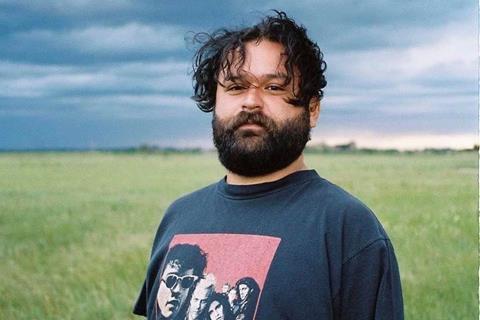
Cree multi-hyphenate Lightning got his start as a young actor on landmark 1998 feature Smoke Signals and other films and TV shows (recent appearances have included a role in streaming series The Lowdown). He made his debut as a writer/director on 2023 comedy (and TIFF entry) Hey, Viktor!.
His second feature is a comedy drama about an underdog Indigenous ice hockey team in northern Alberta. In a recent interview with the Aboriginal Peoples Television Network, Lightning said Smudge The Blades is loosely based on his time coaching hockey on one of Canada’s First Nations reserves.
“I coached for seven years and had some really wild interactions with the players, with the community and the parents,” Lightning said. “In Canada, lacrosse and hockey are the biggest sports and there’s a huge Indigenous presence there. I just want everyone that watches this [film] to see the strength of our community and of our young people.”
Leah Nelson, director/co-writer – Tangles (Centrepiece)
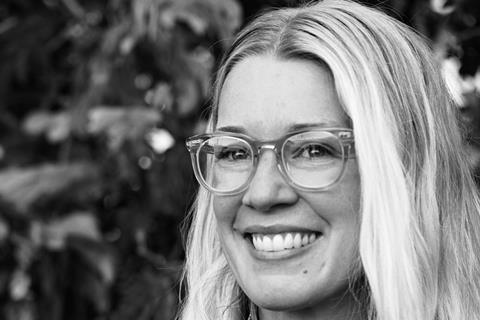
After co-founding Vancouver-based animation studio Giant Ant in 2008, Nelson cut her teeth as a director on two shorts: 2015’s Swiss Chalet: A Helping Hand and 2019 documentary Mavis Staines: Sharing Dance.
Tangles, her feature debut as a director, has already made a mark at the Cannes and Annecy festivals and was recently picked up for North America by Independent Film Company and Sapan Studio. The black-and-white, hand-drawn animated film, based on a graphic novel, goes inside the psyche of a young woman dealing with her mother’s Alzheimer’s diagnosis.
“To me, animation is a medium, not a genre,” says Nelson, “and I believe it to be a wonderful medium for dealing with complex subject matter.”
While she takes meetings about future projects, Nelson is, she says, “working on another adaptation of a wonderful book and looking for the best medium to tell this story in.”



No comments yet