





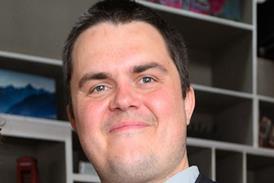



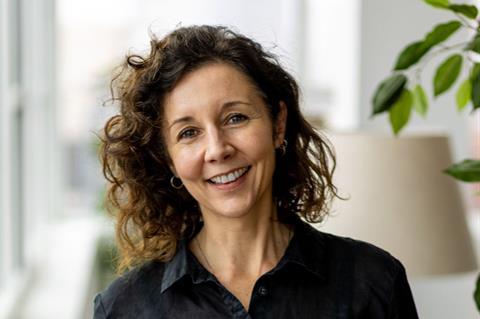
January is a busy time for UK psychotherapist Sarah McCaffrey.
As the founder of Solas Mind, a mental health support service for people working in the film and TV production sector, she says the beginning of a new year can be very difficult for many.
“January is dark. It’s cold. Seasonal affective disorder impacts people. With the pressure of social media, there is this feeling that ‘I should be doing something, I should be pivoting my life’,” says McCaffrey.
“In film and TV specifically, there’s lots of uncertainty around work and employment, with many people out of work, and the fear this is going to be another year of [high unemployment].”
McCaffrey started Solas Mind in 2019, first offering online services to support industry workers during the pandemic. This has evolved to include on-set support, training for companies on topics such as mental health first aid and a wellbeing app, which can be tailored to each production.
With around 70 qualified coaches and counsellors, Solas also works internationally, including with companies and productions in the US, Canada and Australia. In the UK, McCaffrey has collaborated with film teams including Hamnet Mickey 17, Wicked, and Paddington In Peru, and in TV on Baby Reindeer, Adolescence and Heartstopper.
McCaffrey began her career “a million years ago” as an actor, before taking a step back to have children. She later worked with the Production Guild of Great Britain while training to be a psychotherapist. “I really realised there is a real gap in terms of what support is provided for freelancers in the screen industry,” she said. “I always got the sense that freelancers felt they were dispensable.”
McCaffrey spoke to Screen about the work of Solas Mind and the strategies she urges individuals and companies to adopt to create healthy and productive work environments.
What impact can being freelance have on the mental health of screen sector workers?
It’s uniquely stressful being a freelancer, because you have low certainty and low control. You can ping out 100 CVs, but you don’t even know if they are being looked at. It’s not a life that’s for everybody. Some people can manage that and those periods of uncertainty. For other people, especially if you’ve got extra pressures and demands from family and responsibilities, it can be intensely challenging.
What general advice do you give to freelancers to help manage these challenges?
I often talk about circles of control. You have to focus on what you can control. You have your inner circle, which is everything you can control and influence, and everything on the outside is the stuff you can’t. Bring the focus back to those things you can control and have some influence over, whether that’s as simple as your health, exercise, whether you eat well, or connect with others. Community building as a freelancer is essential to maintaining positive mental health.
How do you work with productions and when do you come on board?
If there’s really difficult content being filmed, we will send a wellbeing practitioner, a fully qualified counsellor, to set. Otherwise, engagement [with us on set] is incredibly poor because people are working, there’s no confidentiality, and people don’t want to be seen. The feedback we’ve received is that 87% of people say they prefer our online, remote support.
Most often, for production-specific work, we come on board at the start of prep so that wellbeing is embedded from day one and we’re part of the production team. Support usually runs through to the end of post-production, for up to a year. But we can also join even earlier, working with writers rooms and development teams. The earlier we’re involved, the more impact we can have.
If there is no financial capacity to build formal wellbeing structures into a production, what steps could senior executives take to support teams?
Talk about the importance of mental health support, [saying] ‘We want to be a mentally healthy production or environment. We want to look after your well-being. Please, if you have a problem, come and talk to us.’
Another practical step is having somewhere quiet on set where people can go for five minutes, a reflective space.
Doing things together as a team, having check-ins at the beginning of a meeting. One production we worked on did a Wednesday wellbeing walk. You can embed free self-care practices together as a cohesive team. Lead by example. Manage boundaries. If you’re the head of department or the manager sending emails at nine o’clock at night, ensure your team know they don’t have to respond until the morning.
And what strategies do you suggest to a more junior employee or freelancer to protect their mental health?
Connect so you don’t feel isolated and alone. Reach out, join a group, talk to people, even just a friend.
What do you suggest a struggling employee can do who has not yet been met with a supportive response?
It’s about going above that person, or it’s talking to somebody else in your team.
Do you think the UK industry is now taking the provision of mental health support seriously?
There’s been an increase in training. Many of the big studios, and we have partnerships with all the big studios, offer leadership and management training, bullying and harassment training. Trying to embed those leadership qualities across the team is really important. It comes from the top down. Resilient leaders create happy and healthy workplaces.
What could the industry do better?
Sometimes, [mental health support] is overlooked in the budgets, even with big shows with big leading stars. [But] the weekly coffee run is probably more than it would cost.
What would you like to see change or improve in 2026 in the screen sector regarding mental health support?
I would like it to be seen across the board as a need to have, not a nice to have. I would like [the screen sector] to be a healthier and kinder environment where we consider the human cost over the financial cost.
In the long run, what we’ve seen time and time again is [mental health support] saves productions money, [rather than] losing crew because they are burnt out, overwhelmed, and have no one to reach out to.
Ensuring we talk a lot about diversity and inclusion – making sure in any support service, the global majority is represented, and people can pick somebody that looks like them, and speaks their language.





No comments yet