



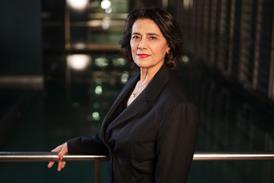
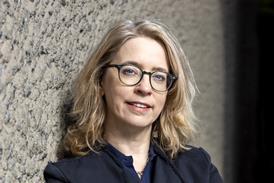




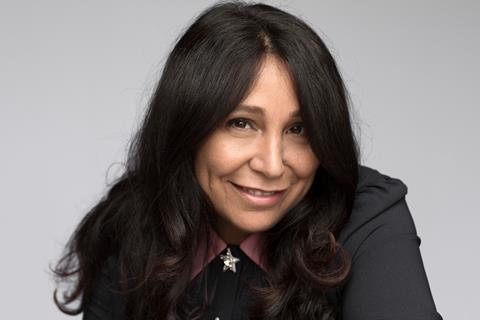
Haifaa Al Mansour is the pioneering Saudi filmmaker who inspired a wave of directors from the region with her acclaimed 2012 debut feature Wadjda.
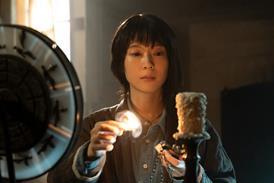
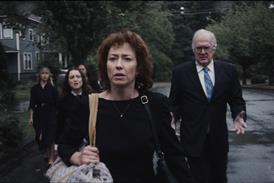
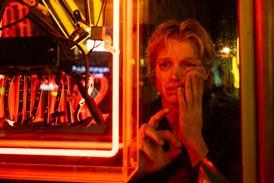
After directing US features Mary Shelley and Nappily Ever After, she returned to Saudi in 2019 with The Perfect Candidate and reunited with that film’s lead actress Mila Alzahrani for her fifth film Unidentified. The crime-thriller premiered at Toronto and plays at Red Sea International Film Festival in the Arab Spectacular section.
What inspired the story of Unidentified?
I’ve always been drawn to stories that converge at the intersection of personal identity and social pressure. Unidentified began with a simple, unsettling question: What happens when the truth is inconvenient for everyone except the one person who refuses to let it go? In Saudi Arabia, we’re still in the midst of a cultural shift—women stepping into roles once considered unimaginable. I wanted to explore that tension through a character who becomes obsessed with answers in a world that prefers silence. The mystery around the girl’s death became a way to examine the shadows that still linger beneath rapid change.
Why did you want to make a thriller?
I liked the idea of using a thriller to probe uncomfortable truths without preaching. They immerse the audience in suspense while quietly revealing the emotional and social layers underneath. I loved the idea of using genre to explore themes of guilt, honor, and female agency. For me, a thriller was the most dynamic vessel to hold a story about a woman who won’t look away—even when everyone else does.
What did you want to say about Saudi women with this complex character?
Saudi women are not monolithic. They can be ambitious, contradictory, flawed, driven, compassionate, or ruthless—sometimes all at once. With Noelle, I wanted to portray a woman whose determination is both her greatest strength and her deepest vulnerability. She’s navigating a system that wasn’t built for her, yet she refuses to be defined by its limitations. Through her obsession, resilience, and imperfections, I hope audiences see the range and depth of Saudi women today.
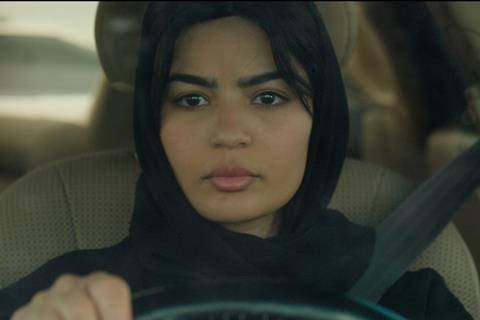
How was the experience of working with Mila Alzahrani again? Did the fact that you’d worked together previously help?
Working with Mila is always a joy. She has an incredible intuition for character and a work ethic that elevates everything around her. Having collaborated before meant we already had a creative shorthand—we trust each other. During preparation and rehearsals, that familiarity made it easy to dig deeper, to try bolder choices, and to push the emotional edges of the role. On set, she brought a quiet intensity that perfectly matched the film’s tone.
What made her ideal for this role?
Noelle is a character with many layers—ambition, insecurity, stubbornness, vulnerability—and Mila can play all of that with remarkable subtlety. She has the ability to communicate inner conflict with just a look. This role demanded someone who could embody both strength and fragility without ever tipping too far in one direction. Mila grounded the character in a realism that makes the entire story feel more urgent and human.
How was the experience of making a film in Saudi again, after working in the US in recent years?
It felt like coming home, creatively and emotionally. Working in the US taught me so much about scale, structure, and the logistical demands of filmmaking, but returning to Saudi gave me the opportunity to apply those lessons to stories rooted in my own culture. The industry here is evolving rapidly—there’s a hunger, an energy, a willingness to take risks. Being part of that momentum is incredibly fulfilling.
What are your thoughts on the health of the Saudi film scene right now? How has it changed since The Perfect Candidate?
The growth has been extraordinary. Since The Perfect Candidate, there has been a surge of new voices, new talents, and new infrastructure. There’s greater institutional support, more training programs, more festivals, and a broader appetite for diverse genres—from intimate dramas to big-scale entertainment. What excites me most is that Saudi filmmakers are telling stories with confidence and complexity. We’re no longer just introducing ourselves to the world; we’re contributing to the global conversation.
What does it mean to bring your film back to Saudi at the Red Sea International Film Festival?
It’s incredibly meaningful. Red Sea has become a central platform for Arab cinema, and screening Unidentified here feels like introducing the film to its true family. Festivals are about community—connecting with audiences who understand the cultural nuances, and sharing the film with the region that inspired it. Bringing it home is always the most special part of the journey.
What are the plans for the film after Red Sea?
We have more festivals planned for Unidentified and then start to roll out it’s release around the world. I’m excited to share it with audiences around the world. It’s a story that, while rooted in Saudi society, touches on universal themes—truth, obsession, justice—so I’m excited to see it play out in the world.
What are you working on next?
I’m developing several projects both in Saudi and internationally. Some are genre-driven, others more character-focused, but they all explore themes of identity, belonging, and the courage to challenge expectations. I’m particularly excited about stories that amplify women’s voices in unexpected ways. It’s an incredibly rich moment for storytelling, and I want to keep pushing into new terrain.




No comments yet