











Denmark’s producers are eagerly anticipating the inaugural round of projects selected for the country’s production incentive, the introduction of which could make the local sector a highly attractive international partner.
When the Danish Production Incentive Scheme opened at the start of the year, Denmark became one of the last European countries to bring in such a mechanism, after years of campaigning from leading producers. The cash rebate scheme offers up to 25% value on eligible spend, with an annual budget of $19.5m (dkk125m) and $3.1m (dkk20m) per-project cap.
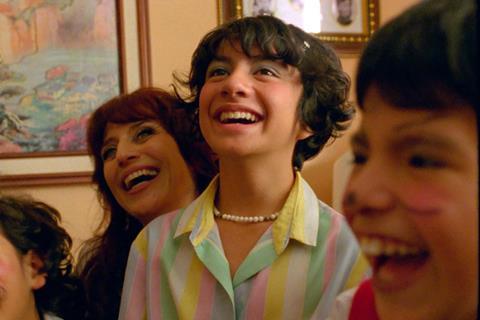
“It will make bigger parts of productions shoot in Denmark, because we can actually afford it,” says producer Katrin Pors of Snowglobe. She has a strong Cannes presence this year, as co-producer on Competition entry Fjord, Directors’ Fortnight title Low Expectations and Critics’ Week selection Six Months In The Pink Building.
The incentive will run two application rounds per year and is administered by the Danish Film Institute (DFI), which is aiming to announce selected projects for the first round in the latter stages of Cannes. Pors has applied with “a big Danish-language project”, and is hopeful the incentive will boost local and incoming work.
“We have tended to go somewhere [else] where you can get a production rebate and extra financing,” admits Pors. “But if we can get that money and stay in Denmark, we would all prefer to shoot Danish films in Denmark.”
Profile Pictures producer Jacob Jarek has made international co-productions including Ali Abbasi’s Holy Spider and Oscar-nominated The Apprentice. He is now shooting season two of Netflix crime series The Asset, which was already in production ahead of the incentive, but is looking to submit to later rounds with feature films on the
Profile slate.
“It will hopefully benefit producers who work internationally and co-produce,” says Jarek. “It will mean we can bring more finance to the table.”
Culture development
The incentive is designed to both support the international industry and to develop a strong national film culture, according to DFI CEO Tine Fischer.
“We are here to strengthen the ambitious European co-productions, attract international financing and showcase a national industry defined by high-level artistic skills, new talents and leading production companies,” she explains. “We are a country famous for our ambitious cultural and social policies.”
Prior to taking on her DFI role in 2024, Fischer was director of the National Film School of Denmark, and hopes a new generation of Danes will benefit from a more international production offering.
“We are experiencing a proper post-Dogme generation,” says Fischer, citing companies including Snowglobe and Manna Film, where producer Maria Moller Kjeldgaard has a slate made entirely of arthouse international co-productions. “They see themselves as part of an international and European arthouse culture.”
Fischer acknowledges a high level of interest in the long-awaited scheme. “We understand that we are in a time when it has been increasingly difficult for projects to finance sustainably,” says the CEO. “It’s difficult to create the perfect system, but there has been cross-industry collaboration to make it as good as possible, and to draw on experiences from other incentives around Europe.”
Alexander Payne’s comedy drama Somewhere Out There, starring Renate Reinsve, was shot earlier this year in Denmark, produced by Birgitte Skov at Scanbox Production. The Danish-language, Danish-produced film, directed by an American, featuring a Norwegian star, with worldwide distribution via a Hollywood studio in Searchlight Pictures, is the template for the kind of international productions Denmark wants to make.
“The film industry tends to follow the money, so [the incentive] will naturally make Denmark more attractive to international productions,” notes Skov, who says she will apply to future rounds with other titles. “It will also benefit high-budget Danish productions with strong international financing. It’s hard not to be excited.”
The incentive is open to fiction features, series, documentaries, and animated titles, such as those made by Claus Toksvig Kjaer at Norlum. “There is no question how important this is,” said Toksvig, who has applied to the incentive with Fleur, the upcoming feature from French director Rémi Chayé, boarded by mk2 Films in January. “It makes us more competitive.”
Toksvig is especially pleased that, of the $19.5m total, $3.9m (dkk25m) has been ring-fenced for animation and series projects. “In some countries animation is regarded as not as important as live-action,” says the producer. “[Now] we have money that live-action can’t touch.”
Norlum has made animations including Chayé’s Long Way North and Calamity, and Tomm Moore’s Oscar-nominated Song Of The Sea. Toksvig says the company has also previously lost out on big projects due to the lack of a Danish incentive.
“When we got into negotiation, the [lack of] tax incentive was always a problem,” says the producer. “We were told there’s a list of countries that can both deliver the job but also give you something back, and since we didn’t give something back, we were off the list. I hope that we can now get back in the game where we can compete for international projects.”
Generating ambition
Producer Helle Faber of Made In Copenhagen is fresh off an Oscar win for best documentary with David Borenstein’s Mr. Nobody Against Putin.
“This incentive allows us to be part of more ambitious, much larger projects,” says Faber, who is in the early stages on “a huge documentary series and a fiction series”, and will be looking for co-production partners on both.
While feature films and series must apply with eligible costs of at least $467,000 (dkk3m), documentaries have a lower threshold of $156,000 (dkk1m). DFI has pledged to evaluate the incentive after its first year to see what is working.
“We have to test it out and see if we can make the cut,” says Faber. “If we’re not able to make the cut, we will have to look at the rules again.”
It is too early for DFI’s Fischer to speak definitively on the type of projects the incentive will support. “That said, the incentive is created with minimum and maximum thresholds that are aiming to make it possible for a diversity of projects to have access,” she says. “It is designed to award not only on the size of budgets and international financing, but equally with a cultural test.”
Applicants can apply simultaneously for other financial schemes, such as the new Eastern Denmark Film Fund, which also launched in January. As one of Denmark’s three regional funds, it covers a region including the capital city, Copenhagen, where many projects choose to shoot. Producer Kim Magnusson is leading the Eastern fund’s initial phase and is an advocate for the incentive, creating more inward investment in the country.
“Bringing international productions is helping our industry grow, become better, get more educated and work with other countries,” says Magnusson, who is an executive producer on Nicolas Winding Refn’s Out of Competition title Her Private Hell, which created its Japan setting on Copenhagen soundstages.
“This is a great opportunity, and I’m curious as to how it will work,” says Louise Vesth, producer at Zentropa, which has applied for the rebate with Nikolaj Arcel’s upcoming Hans Christian Andersen biopic My Fairytale Life (working title).
“We might be one of the last ones to have an incentive, but that’s a huge advantage, because we took the best from all the others — and created maybe the best incentive in the world,” notes Vesth.




No comments yet