






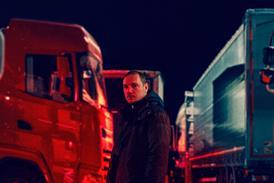










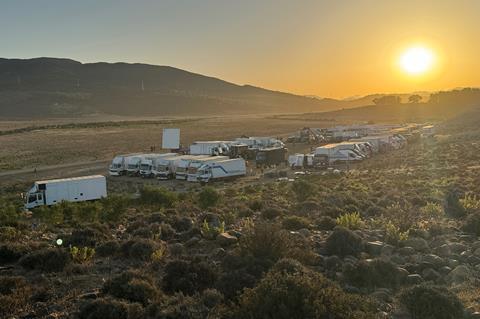
Morocco is attracting significant numbers of international film and TV projects, some on a very large scale. Big projects to have shot recently in the country include Pathé’s De Gaulle: Tilting Iron, directed by Antonin Baudry and screening Out of Competition in Cannes; Christopher Nolan’s blockbuster historical epic The Odyssey, released by Universal this summer; and Andrew Niccol’s Lords Of War starring Nicolas Cage, sold by FilmNation, which will be released in the US by Vertical in 2027.
Karim Debbagh of Morocco’s Kasbah Films was the country’s line producer on Lords Of War. He points to Morocco’s many attractions for international producers, ranging from the 30% cash rebate and VAT exemption to the seasoned crews and spectacular locations.
Lords Of War shot for more than six weeks in Morocco, as well as in Belgium. One small irony is that it rained unexpectedly in Morocco, rather than in Belgium. “It turned out to be a very, very rainy season,” recalls the producer. “That was the main challenge, but that didn’t make the production stop. It made the team work more together, fight more together.”
In the end, the production kept to schedule, and the filmmakers incorporated the rain into the storytelling.
Locations included Casablanca, Marrakesh, Kenitra and Rabat. In Kenitra, the film used the military airport for some of the action sequences. “We got the planes, we got the Hercules [aircraft], we got all the Moroccan army hardware. The royal army is very helpful in terms of whatever they can give you,” says Debbagh.
One of Morocco’s enduring attractions is the country’s ability to double for other countries. In Lords Of War, Casablanca and Marrakesh stood in for scenes set in various African and Middle Eastern countries.
Debbagh also worked on the second series of Prime Video thriller The Terminal List, starring Chris Pratt, for which Morocco doubled as several countries including Ukraine. Another recent highlight is Sam Hargrave’s Matchbox, starring John Cena and Jessica Biel, for Apple Originals, which Debbagh describes as “a huge action [movie] with cars flying”.
Swift reimbursement
To access the cash rebate, producers need to spend around $1m (mad10m) before tax in local spend in Morocco and commit to working 18 days. That period can include set building and costume making.
Producers say that under Mohamed Reda Benjelloun, the new head of the Moroccan Film Centre, the cash rebate is being paid far more quickly than in the past. Some productions had to wait for up to a year for the rebates to come through, but that has been whittled down to six months. It is hoped the timeframe will shorten to three or four months.
Moroccan crews work six days a week and are less expensive than their western counterparts. “They don’t make a big fuss if you’re a little bit over hours,” says Debbagh. International producers do not have to make social security payments on their behalf as the government takes care of these elements.
“We are picking the fruits of the past 50 years,” he reflects. “Morocco has always been beautiful and diverse in terms of location… it’s a safe country. Through the years, we have [built up] a lot of experienced people.”
Local technicians have learned from working on big international projects such as Gladiator, Spectre, Indiana Jones films and Men In Black. Debbagh reels off areas of expertise that include producing, production management, accounting, construction and the art department. “Moroccan people are making props for Saudi Arabia, Jordan, Germany and Korea,” he says. “If you want to do an epic or biblical drama, you come to Morocco because the craft is here.”
Film schools are also beginning to open across the country. The Moroccan Film Centre and the Ministry of Culture are trying to attract a younger generation into the industry.
There are plenty of strong service companies, not least Agora Films, Mont Fleuri, Dune Films, Zak Productions, K Films and Kasbah itself, and the locations — for which most productions travel to Morocco — are spectacular. In addition, there are decent studio facilities, including Oasis Studios in Ouarzazate and Atlas Studios, while plans are afoot for a new studio development, Argan Studios, between Rabat and Casablanca.
Although Morocco is considered film-friendly, its general infrastructure is being further improved in advance of the 2030 men’s football World Cup, which is being co-hosted in the country.






No comments yet