







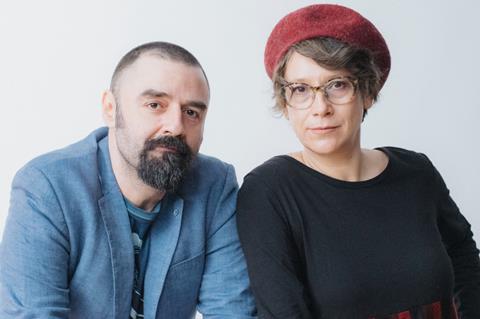
Colleagues since film school, Bulgarian directors Kristina Grozeva and Petar Valchanov already have a string of successful features behind them.
These include their 2014 debut film The Lesson, which premiered at San Sebastián and netted the duo the festival’s New Directors award, 2016’s The Glory, which bowed in international competition at Locarno, The Father, which saw them win Karlovy Vary’s Crystal Globe in 2019, and Triumph, which debuted in Toronto’s Platform section in 2024 and won three Bulgarian Academy awards.
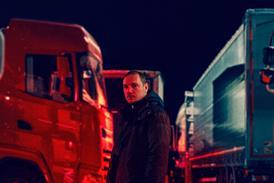
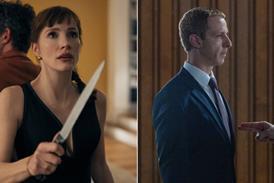
They are back in Karlovy Vary’s main competition this year with their fifth feature Black Money And White Nights. The film centres on pensioners Marina and her husband Gosha who have been squirrelling away money for years to afford a trip to St. Petersburg and enjoy the ‘White Nights’. But when Russia invades Ukraine, the money and trip disappear, and they find themselves confronting their own pasts as secrets and lies start to reveal themselves.
The Bulgaria-Greece co-production is produced by the duo’s Sofia-based Abraxas Film and Greek outfit Graal Films. Cercamon is handling world sales.
Your latest film had a long gestation period. What was the original inspiration and how did world events shape it into the film we see today?
The idea came to us while we were rewriting The Glory. We started talking about a couple of petty corrupt people who admire Russia and came up with the title Black Money For White Nights, which is a reversal of the Bulgarian saying “Save money for rainy days”.
When the first Covid lockdown came, we had a lot of free time and decided to return to the idea. That was when we wrote the script that later received funding from the Bulgarian National Film Center.
When Russia invaded Ukraine, something clicked and we made a few small adjustments to bring the story into sync with the new reality. The characters remained the same, but the war stripped them bare and gave them sharper contours. Before the war, these characters seemed slightly comic. After the war, they didn’t seem so comic anymore.
Your films have always contained elements of comedy, but this one definitely feels darker.
Looking back now, it probably had more to do with the times we were living through than with any conscious decision to make a darker film. What guided us was the idea of tragicomedy in its classical sense – not simply mixing the funny and the sad but bringing together opposites: the high and the low, black and white, dreams and reality, ideals and compromises. That tension is contained in the title itself and it felt like the most honest way to talk about the world we live in.
As filmmakers who now have a strong body of work behind you, how challenging was it to pull the funding together?
This was one of the easiest financing processes we’ve had. For the first time, one of our projects was approved [by the Bulgarian National Film Center] on the first attempt, even though it was in their low-budget production scheme. That gave us confidence that the story had stood the test of time.
We have been working with the same Greek partners since our first feature The Lesson and, over the years, it has grown into a genuine creative partnership and a close personal friendship. We have built deep mutual trust with Konstantina Stavrianou and Rena Vougioukalou from Graal Films, which allows us to speak openly and honestly about every stage of the filmmaking process.
How did you come to cast Ivan Savov and Tanya Shahova in the lead roles? Their performances are morally complex and the audiences ends up rooting for them without judging them as right or wrong.
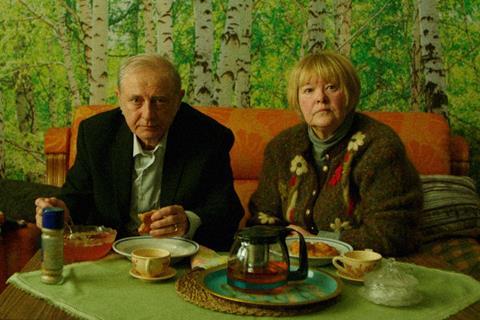
We have known them both for many years. Ivan played the leading role in The Father, while Tanya has appeared in small but important parts in almost all of our films. They also share a long history together. They were classmates at the National Academy of Theatre and Film Arts, and as young actors they worked in the same provincial theatre, where they played Romeo and Juliet. Their performances are still remembered in Bulgarian theatre circles. It felt strangely moving to reunite them years later as another couple, only this time as an ageing Romeo and Juliet.
Can you tell us about the filming style, which has an underlying sense of documentary but also a realism that the world is passing these two characters by?
We wanted the film to feel as if it were unfolding inside real life. In two scenes, we deliberately placed these fictional characters into completely documentary situations instead of recreating reality for the camera. The world around Marina and Gosha is changing faster than they are, and that creates both comic and painful situations. We wanted the audience to feel that tension without underlining it too much.
Do you have an idea of what your next project is likely to be?
At the moment, we are developing two new feature films which are both inspired by true stories. The first is Love In The Time Of Communism, which is based on the true story of Freddy and Raina Foscolo, who risked everything to escape communist Bulgaria. We don’t want to make a conventional period film; our aim is to explore how the legacy of the former state security services continues to shape Bulgaria’s political reality and influence the country’s democratic development.
The second project is inspired by the recent case of the Bulgarians convicted of spying for Russia in the UK. It is conceived as a spy comedy-thriller because reality itself often becomes so absurd that satire feels like the most honest way to approach it.





No comments yet