





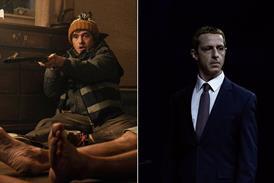



Baby Reindeer was a critical darling and made creator Richard Gadd a star. His follow-up Half Man is even more harrowing. “Nobody in it is based on anyone,” he tells Screen. “But there are themes…”
On Thursday April 11, 2024, all seven episodes of Baby Reindeer dropped on Netflix. By Sunday, Richard Gadd was a star. A semi-autobiographical account of Gadd’s real-life experience of being stalked by a woman, and of the sexual abuse he endured from an older male industry figure early in his career, Baby Reindeer became one of Netflix’s all-time biggest shows, amassing more than 85 million views.
It was a critical darling, too, winning six Primetime Emmys, three Baftas and two Golden Globes. Which begs the question: how do you follow up such a resounding success?
“I felt this strong urge, like I had to get on to the next project straight away, otherwise I’d be too scared to do anything ever again,” says Gadd, a 2024 Screen International Star of Tomorrow. “Once I was in the process of Half Man, the pressure became just trying to make it as good as possible with the limited time we had. It’s been two years since Baby Reindeer came out. That’s a very quick turnaround.”
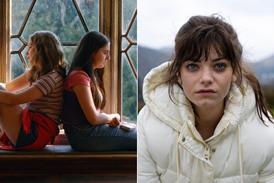
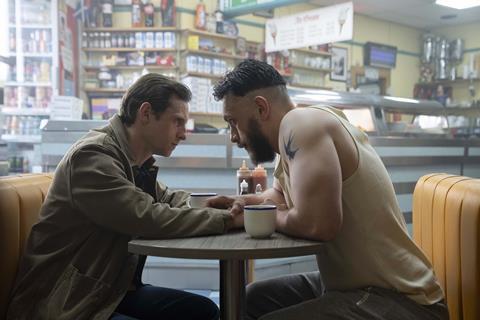
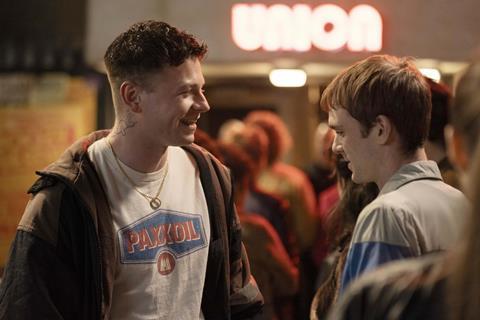
Gadd had written the pilot episode of Half Man before he wrote Baby Reindeer. In it, the wedding of Niall (Jamie Bell) is interrupted by the arrival of his estranged brother Ruben (Gadd), whose towering, glowering presence triggers alarm. The action then winds back to the late 1980s, as 15-year-old Niall (now played by Mitchell Robertson) and 17-year-old Ruben (Stuart Campbell) become brothers, sharing a room, when their mothers get together. Niall is timid, bullied at school, unsure of his sexuality; Ruben, fresh out of a young offenders institute for biting off a boy’s nose, is an alpha male powered by charisma and violence.
The BBC were “extremely interested” in Half Man before Gadd changed lanes to make Baby Reindeer at Netflix. The partnership was announced in February 2024, with HBO joining in June. It might have caused complications when Gadd signed a multi-year, first-look deal with Netflix in September 2024, but everything played out amicably. “I said, ‘Look, I’ve got this other thing…’ and they were so magnanimous. I’m as proud to be on BBC and HBO as I was on Netflix.”
Shooting in and around Glasgow from February to July 2025, the six-part series toggles between Niall’s wedding and key moments in the brothers’ 40-year, co-dependent relationship. They are inextricably bonded by love and hate.
“Half Man is a fictional piece of work – nobody in it is based on anyone,” says Gadd, whose real-life inspirations for Baby Reindeer became the topic of heated speculation and saw a $170m defamation suit filed against Netflix. “But at the same time, there are themes…” He pauses to find the right words. “You can probably tell my DNA – identity, sexuality, struggling to come to terms with the past. I guess every TV series is autobiographical because [it comes] from a writer’s understanding of the world, or character traits they understand.”
Blurred lines
Gadd is a former stand-up comic whose material dealt with addiction, sexual violence and mental illness. Baby Reindeer began life as a one-man stage show that won two Edinburgh Fringe awards before migrating to the West End and bagging an Olivier Award.
Half Man is his most harrowing work yet. In one remarkable scene, young Ruben ‘helps’ Niall to lose his virginity by sneaking Mona (Charlotte Blackwood) into their bedroom and whispering encouragement in his brother’s ear during the act, which is all over before Niall, who was sleeping, really knows what is happening. In what is now becoming a Gadd trademark, it blurs the lines between desire, coercion and abuse.
“The amount of different responses we’ve had to that scene is crazy,” he says. “You have people calling it the sex scene; people calling it the abuse scene or the rape scene; people saying they find it humorous; people saying they find it shocking; people saying it’s arousing to them; people saying they couldn’t even watch the screen. It’s a grey area that I think is artistically interesting for people to explore and discuss.”
‘Discuss’ is a word often used in conjunction with Gadd’s work. Baby Reindeer caught the zeitgeist because it sparked passionate debate, and now Half Man, like Netflix’s 2025 miniseries Adolescence, is inviting discourse on toxic masculinity. Gadd sees his show as more an examination of trauma and repression, but welcomes the thought that it might be shown to teenagers for the benefit of society.
“It’s nice to be part of a conversation where people think something might give them learning around certain things,” he reflects. “I never set out to change people’s opinions. I just write something innately complicated, and people are to take what they want from it. And if people want to put it in schools, or show men, that’s great. Equally, if people just want to enjoy it or say, ‘I thought it was thought-provoking,’ or ‘I had to turn away…’” He shrugs. “Every sort of response is right for me.”
Talking to Screen International just four weeks after finishing Half Man, the writer is engaged but exhausted. He gives everything to his work, at every stage: young leads Robertson and Campbell, both of whom deliver riveting performances, were found in the first two days of auditions, but Gadd went on to “see every young Scottish actor, and every young actor that could do a Scottish accent, in the whole of the UK”, just to be sure.
To play the grown-up Ruben, Gadd bulked up from 69kg to 110kg. “I was working out six days a week, sometimes twice a day,” he recalls. “But I wanted Ruben to be burly, not like he goes to the gym all the time. I wanted him to look naturally big, like someone throwing kegs around. A lot of it was putting on fat over the muscles. Carb-loading. I could not believe how much I was eating. It was gruelling.”
Right now, Gadd is determined to take a break. He already has an acting role in the can, working opposite Juno Temple in Apple TV show The Husbands, based on Holly Gramazio’s satirical bestseller, but that will be it. Definitely. Maybe.
“I’m always, like, ‘I’m going to take six months off,’ but I’m already feeling an itch to work,” he concedes. “I’ve got lots of plans, nothing concrete. It’s about seeing what takes me. I love TV, long-form storytelling. I hope it’s a part of my life forever. But I would also love to direct and to make features. And I would love to get back to the live space. Maybe do a play.” He grins. “I have so many ideas, I almost don’t have time left to do them.”





No comments yet