









Icelandic composer and classically trained cellist Hildur Gudnadottir released her first record at the age of 13. She won a Primetime Emmy, a TV Bafta, a Grammy and a World Soundtrack Award (WSA) television composer of the year award for her work on the HBO miniseries Chernobyl, while her score for Todd Phillips’ Joker saw her pickup an Oscar, a Bafta, a Golden Globe and a WSA for film composer of the year in 2020.
Other credits include Mary Magdalene (in collaboration with Jóhann Jóhannsson), Sicario: Day Of The Soldado, Tár, Women Talking and Joker: Folie à Deux. In addition to her WSA nomination for film composer of the year for Maggie Gyllenhaal’s The Bride!, horror sequel 28 Years: The Bone Temple and Henrik Ibsen adaptation Hedda, Gudnadottir is this year’s guest of honour.
You already have two World Soundtrack Awards and are this year’s guest of honour, with a selection of your work due to be played by the Brussels Philharmonic at the closing ceremony. How important are these awards for composers like yourself?
Well, the World Soundtrack Awards, more than any other awards I’ve been to, are focused on the music and it’s set up in a way that you manage to meet other composers, which is so wonderful because a composer’s job is quite lonely. And it’s a real honour to have your music played by this wonderful orchestra. A lot of my work is non-orchestral, so my selection is focused on the orchestral work; there are some new arrangements that have never been performed live.
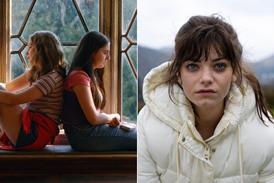
Let’s talk about the three scores you’re nominated for this year, starting with Nia Da Costa’s Hedda, which was a fusion of jazz percussion with experimental breathing. How did that come about?
Nia and I had been in talks for a while. I think she’s an exciting voice in the contemporary director scene – she’s unafraid to take risks. Hedda is a story I knew well and I was excited about doing this adaptation, knowing Nia wanted to place the film in England in the ’40s.
I always think it’s interesting musically when you’re doing a period film to try to understand what was happening in the music of that time. One of my favourite English composers of that period is Cornelius Cardew, who had an orchestra called the Scratch Orchestra which combined amateur and professional musicians. He would do these large-scale performances where all kinds of people came together to create a crazy and wild sound world. And because the film happens in one house during one party, I imagined he was part of the group of artists at the party. This would’ve been at the time where he was starting out, and if he was putting together a performance, it would probably just be voices. So all the voices you hear in the film, all the breathing and singing, we made up on set. People were a bit nervous because a lot had never sung before in the crew. But it was so beautiful.
The band is also a big part of the story so I wanted the rest of the score to be rooted in that sound world. I wanted to feel like we were still in the house. Percussion was a good way of keeping the pace going, basically.

You reunited with Nia for 28 Years Later: The Bone Temple and used bone instruments for much of the score.
One of the most exciting things about starting to work on a score is what goes off in my inner world as I’m reading a script – what kind of pulses I’m feeling, what kind of sounds I’m feeling. Then I try to find ways of translating those feelings into sounds.
Obviously, one of the most magnificent things about The Bone Temple is exactly that: The Bone Temple. When I saw early sketches of what it was going to look like, and just being totally on the nose with it, I wanted to work with bones as a core material of the sound world. They’ve been used a lot as musical instruments and have a very warm sound to them. All the percussion and most of the instruments in the film are made from bones. I made a little bone ensemble of instruments. Even if you’re not aware of that [as an audience member], I think the texture of those materials seeps into the film’s sound world in an interesting way.
When you decided to use bones as the musical template, how did you go about doing that?
I contacted a friend who owns a burger place and made a deal with her butcher. I got an enormous number of leftover bones and started building. I boiled the bones and tried as best I could to get the marrow out and just started experimenting from there.
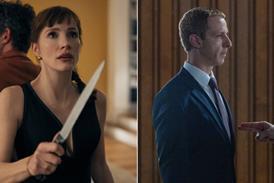
Let’s talk about The Bride! which mixes classical with punk rock and Irving Berlin. Is it true that you were a last-minute replacement for Jonny Greenwood?
I was, yes. I came in quite late and I was supposed to have three or four weeks to do the whole score, but the film got pushed back and it ended up being six or seven months. The Bride! was so wild because Maggie wanted the score to be everything all at once. She wanted it to be very orchestral and dramatic and to be able to carry the love story and the delicacy of their connection, but also the wild side, what they’re doing and who they are, being monsters and all that. She also wanted it to be very punk and rocking and exciting at the same time. It was a crazy mix of things to be working on and it was a wild process of diving in and making that happen by whatever means possible.
I was lucky to have an incredible team of guitarists with me, because it felt like the guitar was one of the main instruments of this wild side. I put together a band of legends: Amedeo Pace, Lee Ranaldo, Marc Ribot and Steve Shalatay on drums and my wonderful brother, who is a bit younger but a fantastic guitarist and great musician. It was a band of screaming guitars and totally rocking. I was in bands my whole teenage years. I’m still in a band. I play with a few different metal bands. It’s very much in my blood.
It was a wild score. There’s a lot of everything in this film.





No comments yet