






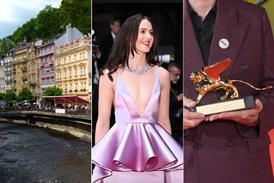




The Norwegian filmmaker explores generational trauma, compassion and connection in his sixth feature
After six features, Joachim Trier has travelled to festivals and awards ceremonies in hundreds of different cities across the globe over the past two decades. Yet his latest movie Sentimental Value has been stirring up audience feedback even he did not anticipate.
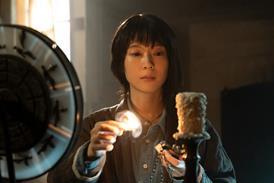
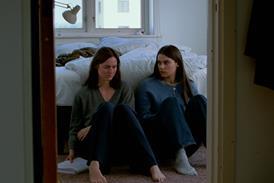
“Out of all my films, this one has seen the most people come up to me after screenings telling me about their families, sharing personal things with me, talking about their feelings,” he says of his Cannes grand prix-winning feature. Stellan Skarsgard stars as Gustav Borg, a once-famous filmmaker trying to repair his relationship with his estranged adult daughters Nora (Renate Reinsve) and Agnes (Inga Ibsdotter Lilleaas), as he prepares what he hopes will be his comeback film.
“I feel seen,” explains Trier. “Things I couldn’t say in social settings about inherited grief and the dynamics of non-communication in a family, things that are very hard to talk about, I’ve been able to express in a different language, which is making movies. So, to hear people in their own words talking to me about their own personal stuff relating to that is incredible.”
After declaring in Cannes that “tenderness is the new punk”, Trier, best known for his Oslo trilogy (Reprise, Oslo, August 31st and Oscar-nominated The Worst Person In The World), doubles down on that maxim.
“I come from a counter-culture punk background,” he says. “I was rebellious and pissed off. Yes, the world is complicated, and people are allowed to yell and scream right now, but what I also want to nourish is a different idea of listening to each other, of being tender. Maybe we can reconcile. Maybe we don’t have to hate each other, even if we disagree.”
Sentimental Value – released by Neon in the US and Mubi in the UK and multiple international markets – is set largely inside the home of the central Borg family, a multi-level storybook structure in the ‘dragestil’ style of architecture that was the starting point for the film.
“My mother was selling the family house built by my great-great-grandfather in 1905 and I was drawn to the idea of inherited grief, family trauma and the Second World War,” explains Trier. “Then we smuggled into that the idea that the house has seen some things maybe the humans themselves have not.”
Through flashbacks, the home reveals a century of memories that range from Nazi torture to suicide and fraught family dynamics, beginning on a lighter note with an opening montage and a voiceover narration from a young Nora telling the story of the house from its perspective.
“It is through the innocent childlike lens that we learn about the true dysfunction beneath the surface,” says Trier. “Nora is revealing that her family is far from perfect, but she’s trying to turn that pain into something entertaining, which is something I think all artists do.”
The century-old home, says Trier, serves as the foundation for “a story not only of this family unit, but as a microcosm of Norway as a nation and, collectively, the history of humanity through the decades. Here we have rooms that have seen both trauma and joy, and we contrast those things to create the story. It all happens in the same space, only with different light and different seasons.”
After a months-long search to cast the crucial role of the house, the film was shot inside an Oslo home for all the scenes set in the modern day. For flashbacks exploring the family’s transgenerational trauma spanning 1918 through the 1990s, the production crew built parts of the house in the studio and matched the lenses and film stocks to the look and feel of each era.
“I was very affected by the war,” reveals Trier. “My grandfather was captured and sent to a war camp because he was in the resistance in Norway – we come from Jewish ancestry on my Danish side. Reconciliation of family can also be an image of a bigger philosophical discussion on memory, specifically the collective memory of Europe when it comes to this period.”
He points to two central yet opposing themes in the film: “The national archive, which is the left centre of the brain, and the national theatre, the right centre – the two big institutions that define our democracy in Norway.
“On one side, we try to understand ourselves through fiction, like Nora, who works to find ways of mirroring herself in an inventive world. The other is the official account, the facts, that are all in that archive where the other sister, Agnes, seeks answers.”
Support system
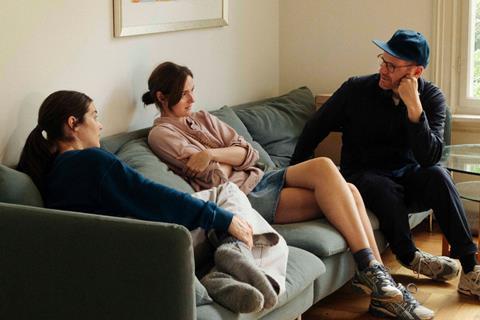
Trier’s own process is also a balancing act between left-brained precision and right-brained imagination. “I’m extremely structured and exact around pre-production to achieve the feeling of trust and freedom when we shoot,” he says. “I tell everyone on my team every day, ‘When the actors are out, we’re changing wheels on a Formula 1 car.’ Quiet, effective and we take pride in our craft.”
He keeps his set “very peaceful and controlled because I think that creates guts for the actors to take a chance and feel they can be caught if they fall. We need guardrails and structure to have ease and life. I let parts of the actors become the characters.”
He wrote the role of Nora with Reinsve in mind and, to play her father, he went straight to Skarsgard. “I pitched and begged. I’ve never been so desperate to get anyone in my life, and thankfully he accepted. The fact that he was able to pull such an asshole father out of such a sweet human being is what I call a good actor.”
The scripting process – with regular writing partner Eskil Vogt – took about a year. “Eighty percent of the time, Eskil and I sit there from 9am until 5pm and drink coffee, listen to music and discuss the scenes, take notes. We act things out, then we structure it with characters and the full plot. Then Eskil writes it all out in a period of six weeks and I edit every evening, and we call each other and go back and forth.”
From there, Trier brings in actors for filmed rehearsals. “The rehearsal is about getting them to share and connect so they can bring something to the character that is beyond the writing.” He and Vogt then “readjust the script accordingly”.
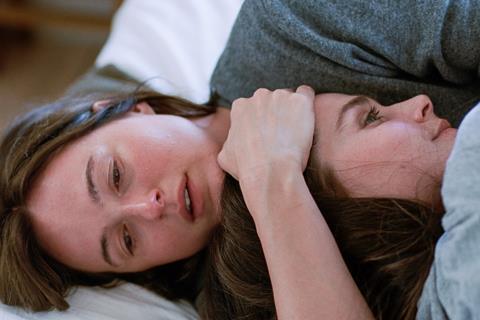
For one key exchange between the two sisters in the film, “Inga came up with the line, ‘I love you,’ which wasn’t in the original script. We wouldn’t have been brave enough to write it because we thought it was cheesy. Spontaneously, I said, ‘Get in bed and hug your sister.’ She did, then said, ‘I love you’ in the most honest way that she could because she felt it in that moment. And Renate, completely in character, replied, ‘I love you too’, with no reservation. After six films, I’ve learned to try to stay open to the moment and at best something surprising happens.”


No comments yet