











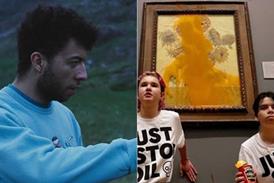


In the coming days, Charades and UTA Independent Film Group will start sales talks on Un Certain Regard entry Club Kid, while nearby on the Croisette, Mister Smith Entertainment will show footage from All That She Wants. As Cannes gets underway, the filmmakers behind Jordan Firstman’s drama about a washed-up party promoter are taking a very different approach from those backing the romantic comedy from Scarlett Bermingham and Andrew Rhymer.
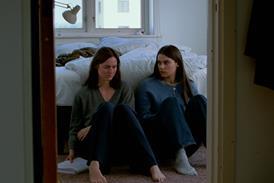
Determining the right time to hire a sales agent is one of many factors calculated by US producer-financiers when they target profitability for their latest features. For Ryan Heller, Club Kid producer and head of film and documentary at Topic Studios, which invested the majority of equity into the drama starring Firstman and Cara Delevingne, and partnered with co-financier and co-producer Stay Gold Features, the decision to start sales on the completed film comes from an ongoing process of “having a balance of risk that makes sense for us”.
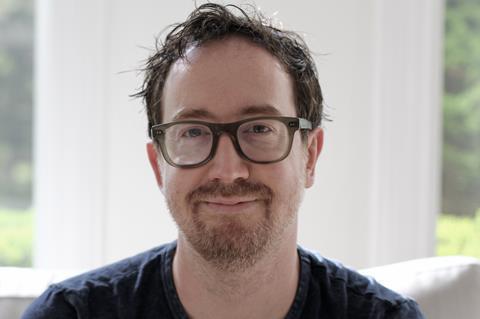
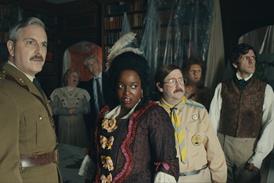
Meanwhile, Ley Line Entertainment principal and All That She Wants producer Theresa Steele Page opted to tease her Annie Murphy and Cooper Raiff starrer in Cannes and will sell it after a festival premiere. Production has wrapped in Toronto.
Sophisticated US producer-equity players such as Topic, Ley Line and a host of established financiers deeply attuned to the ebbs and flows of the market are at the heart of so much of the independent film world’s best output — dominating market slates, winning festival awards and championing projects in need of backing.
The industry will be familiar with power players such as Black Label, FilmNation, AGC Studios, Black Bear, 30West, Fifth Season, Macro, Department M (which is said to be lining up an investment in Neon), and the Hollywood agencies’ in-house sales and packaging divisions.
Yet there is a cadre of under-the-radar, albeit no less impressive, investors. Some are well-entrenched, while others are emerging as potentially significant new champions of eye-catching features. Among the newer producer-investors are musician Moby’s Little Walnut, Bow And Arrow founder Michael Sherman’s March 13, Unapologetic Projects (Stop! That! Train!) and Working Barn (The President’s Cake), led by Peter Richards and former Walden Media executive Naia Cucukov.
Film investors have been making promises and vanishing for decades. The trick for producers is to find the committed capital source that loves film and is realistic about the risk. “Money partners tend to be naïve and get seduced by the glamour,” says one veteran independent source. “They don’t know the business is execution-dependent and buyers are extremely picky these days. When the first or second movie flops and they lose money, they go away and the company folds. You want reliability.”
Unicorn investors
The independent business needs unicorns like Black Label’s Molly Smith, whose company has backed films including Sicario and La La Land; Megan Ellison, sister to Paramount CEO David Ellison and daughter of Oracle co-founder Larry Ellison, whose resurgent Annapurna is known for funding Zero Dark Thirty and American Hustle; and Zhang Xin, the Chinese real estate billionaire and Closer Media founder whose investments include The History Of Sound and Orwell: 2+2=5.
Investing money in the expensive and byzantine world of independent film financing is not for the faint-hearted. Recoupment is far from guaranteed and can take years. When it comes, the investor can expect to recoup fully and earn a 15%-20% premium, plus a share of the backend — although equity financiers typically sit behind lenders, sales agents, lawyers and an assortment of other fee-collectors in the so-called finance stack.
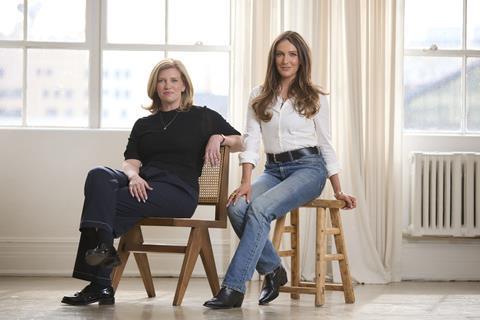
Pinky Promise launched in 2021 after founder and CEO Jessamine Burgum and president Kara Durrett met on the Georgia set of 2022 Sundance selection Honk For Jesus. Save Your Soul. — it was the first film financed by Burgum, the daughter of tech investor and US secretary of the interior Doug Burgum, and Durrett was producing.
Burgum, her brothers and several friends made an initial investment in the company and she corralled mostly North American institutional investors, foundations and private investors from sectors encompassing real estate, tech and farming across two funds. Pinky Promise operates a team of six female-only executives and actively produces most of the films in which it invests — whether they grow from development projects or come into the company.
Burgum acknowledges the punishing US distribution landscape can deter investors, but remains transparent and optimistic with her pool of backers. “They understand the risks of what they’re getting into,” she says. “Sometimes it’s the risks that are the opportunity.”
The first script Pinky Promise optioned and packaged was Scarlett Johansson’s directing debut and 2025 Cannes Un Certain Regard premiere Eleanor The Great, starring June Squibb, which they produced with Maven Screen Media and Johansson’s These Pictures. Sony Pictures Classics and Sony stablemate TriStar Pictures came on board in 2024 and handled worldwide distribution. “We did not put equity into that except for a very small piece of development that got us started,” says Durrett.
Pinky Promise’s subsequent credits include Andrea Arnold’s Bird and the documentary Yo (Love Is A Rebellious Bird) directed by Anna Fitch and Banker White, which was awarded this year’s Berlin Silver Bear for outstanding artistic contribution. “We always try to be the biggest piece, or at least equal with our partners. We never want to be a passive financier,” says Durrett. “We haven’t jumped into the pre-sales game as much as some other people have. Not that it’s not a smart game; it just hasn’t been our main priority.”
International sales agents take up to a 10% commission, although the amount can vary depending on the stage of the film, its quality and the talent elements. Their expertise and connections are often invaluable in guiding a film into the world. The distinction between pre-selling and selling a completed film is critical for producer-financiers as they weigh up risk exposure and their investors’ position in the finance waterfall.
“We ended up selling The Last Showgirl in Cannes two years ago off a sizzle, but there was not a finished film and we got a great foreign sale on that movie,” says Durrett. “You’re looking at every movie and thinking, ‘How would it do best?’”
Burgum adds: “It’s not just about the creatives that we work with, it’s also the people on the business side. When you’re making a project, you’re getting married for years.”
Topic Studios’ Heller says: “We always want to have a nimble approach that’s going to allow us on the financing side to take a responsible amount of risk while seeing the right amount of upside.
“If pre-sales or an international sales component is not right for the project, we have other ways to think about these titles and adjust,” he continues. “We’ve had a healthy mix of titles that have a foreign sales component, titles that are pure equity, titles that go to market finished, titles that we pre-sell. That’s the puzzle we’re in, day-in, day-out.”
Taking the lead
Topic launched around 10 years ago under the First Look Media umbrella, backed by eBay founder Pierre Omidyar. “We’re finding ourselves fully financing or at least being in the lead more often than not these days,” says Heller. The company will fund development and has fully financed films like Jesse Eisenberg’s A Real Pain and his upcoming untitled musical comedy at A24; recent Sundance selection Wicker starring Olivia Colman; and last year’s Cannes Premiere title Splitsville. “We’re not putting pieces of money into movies that are going as much as we are taking films into the company and making them happen.”
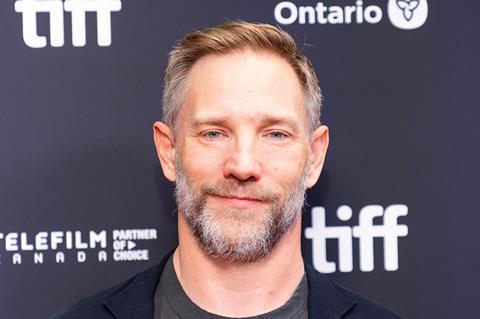
Duncan Montgomery, who describes himself as “a recovering entertainment lawyer” and is a partner with Alex Orlovsky (Lurker, Blue Valentine) at High Frequency, says the company will take a range of financial positions on projects, can operate as a co-financier, and will fully finance smaller features. High Frequency manages a “cash-call fund” of seven high-net-worth North American investors, which is now in its fifth year. The company calls in the money as close as possible to production — it can be several weeks, whereas some funds hold their investors’ money for five to 10 years. High Frequency itself has funds it can use to bridge gaps if needed.
On the Channing Tatum true-life caper Roofman from Derek Cianfrance, with whom Orlovsky has a long friendship, High Frequency acted as co-producer and co-financier, and provided a “significant” bridge loan while the filmmaker team worked to close the bond and financing. Paramount distributed Roofman in North America and Glen Basner’s FilmNation handled international sales.
FilmNation serves in the same capacity on Element Pictures’ Hillside Drive (working title), a 1970s-set Lenny Abrahamson-directed drama starring Tom Burke and Eve Hewson, which has just wrapped production in Dublin.
High Frequency is a passive investor in the project. “The last thing that Lenny or [Element co-CEO] Ed Guiney or anybody needs is us to come over and tell them how to produce a film in Dublin,” says Montgomery. “It’s about recognising that from the outset, and saying, ‘This is where we can add value.’ We helped bring a little more money to fill a gap, and that was what they needed from us. We loved working with them.”
High Frequency was also a passive partial investor in Sundance 2025 hit Sorry, Baby and The Last Showgirl. “We want to do more in Europe,” says Montgomery. “We’ve got a project that’s [with] an American director shooting in Italy that we’ve almost closed on.” The company is open to investing in films not in the English language, but first the partners want to learn more about the opportunities.
“For us, what’s so important is the filmmaker. Script is [first], then director — everything else is further down the road. There are so many great directors around the world that matching a director with great material and then [participating in] soft money opportunities can reduce the pressure on that big North American sale.”
Montgomery adds: “There are also films where we elect to forgo pre-sales — except where they are needed to qualify for tax credits — and/or secure a North American minimum guarantee in order to chase the upside potential. These are usually projects helmed by a director with a unique voice who we believe is going to make something unique.”
For all but the most A-list projects, blockbuster pre-sales that were commonplace have by and large gone. Producers who once relied on a 20% equity plug in their finance models tell Screen International they might now look to equity investors to fill a 40%-50% hole in their budgets.
Camelback Productions CEO Anita Verma-Lallian has spent more than 20 years developing real estate and building AI data centres in Arizona. She launched her company in 2023 with the sex comedy Doin’ It, fully financed through her pool of private investors. “I’m seeing the same trend where the equity plays are larger and there’s less debt because it is harder to get pre-sales,” she asserts. “You’re having to be a lot more selective.”
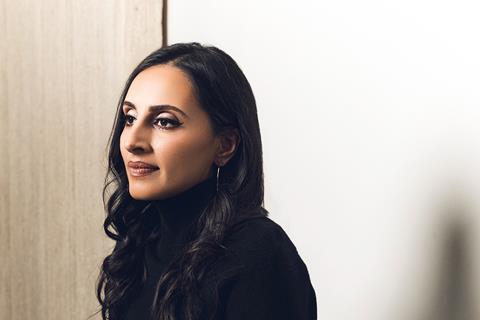
Verma-Lallian is nonetheless bullish about independent film while keeping her eyes open. “Since I started, the environment’s been a little challenging. We had the writers strike early on and there’s been some consolidation, and AI is starting to become more of a discussion,” she notes. “It’s all about relationships. We’re with UTA, which has been connecting us to the right people. Kumail Nanjiani just joined our board. Having those relationships has been very helpful.”
Camelback develops and options projects and is producing and co-financing the stage-play legal drama adaptation Prima Facie, starring Cynthia Erivo, which shot in the UK and is expected to get a festival launch later this year. Embankment Films handles sales. The co-finance pipeline includes Ravi Kapoor’s crime drama Patel, which shot in Los Angeles in summer 2025, and upcoming thriller Runner, starring Owen Wilson and Alan Ritchson, co-financed with 2521 Entertainment.
“We’re trying to create a diversified investment opportunity, where you invest in the fund but then the fund invests in multiple projects,” says Verma-Lallian. “We have some projects where we’re just debt investors and provide loans, we do a lot of equity investing, and we’re doing some development and packaging.”
Bespoke solutions
Ley Line’s Page builds financing models on a case-by-case basis. The company fully financed one of its earliest projects, Channing Godfrey Peoples’ Sundance 2020 entry Miss Juneteenth, and produced and was involved with A24 in the financing of the Daniels’ Oscar winner Everything Everywhere All At Once and David Lowery’s The Green Knight. “I do know a couple of movies that have done fantastic pre-sales,” she says. “Not every project is going to get that though.
“Some of our projects are very American, so we have to wait and see how it is going to be perceived for domestic, and then a lot of times the sales follow that. I love having a US distribution deal in place.”
Ley Line, backed by Texan oil magnate and co-founder Tim Headington, whose other company Tango Entertainment is now led by Neil Shah since Lia Buman departed for Paramount, leans more towards co-financing. “We have fully financed but will probably do so less and less because the market has been so tricky,” says Page. “It is nice to have a partner — at least you have one other person to complain to.”
The development slate includes a London-set feature from writer Maja Bodenstein called Painted Skin. Page is looking to shoot a project in Paris, although she does not see the company making films not in the English language or making passive investments. “I love producing,” she says.
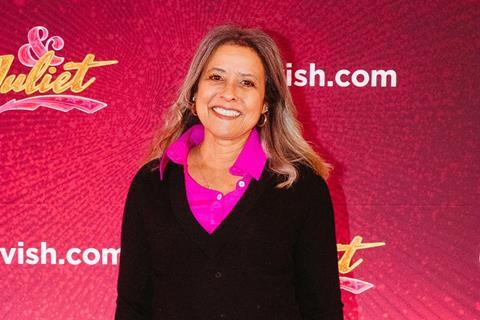
Page is currently location scouting for Enter The House Of Hazard, an homage to Jackie Chan-style martial arts films that Ley Line is producing and co-financing, and developing with Everything Everywhere fight choreographers The Martial Club.
Ray Mansfield and Sean McKittrick of QC Entertainment target genre films, and while they have fully backed features budgeted up to $15m, they are preparing to step up to support budgets in the $30m-$50m range, in collaboration with Manifest Pictures, their wholly owned sales company that launched in January and is headed by Yvette Zhuang and Zach Glueck.
Backed by Hamm’s Beer scion Ted Hamm, QC Entertainment co-financed It Lives Inside with Neon, and has fully financed films such as documentary Vice Is Broke and the upcoming The Casket Girls. QC was committed to fully financing Jordan Peele’s Get Out and Spike Lee’s BlacKkKlansman after funding development, putting the finance plan together, casting and greenlighting, before Universal and Focus respectively acquired the features.
“Our focus has been on fully cash equity productions budgeted at $15m and under,” says Mansfield. “Through our partnership with Manifest Pictures, we are evolving toward a more structured finance model in which we continue to fully finance films, while limiting our direct equity exposure to a portion of the overall financing. In this model, we typically cap our exposure at 20%-30% of the gross budget. That approach allows us to leverage the Manifest partnership in a disciplined way, increasing both production volume and budget capacity.”
“Each film has its own personality and its own needs, and part of our job is pursuing the incentive that puts the most dollars on screen and ultimately makes the film better,” notes McKittrick. “Historically, California has been a challenge for us because it has been difficult for our independent films to secure the tax credit. We received it for Us, but the last independent film we made in California without studio backing was The Oath. With California’s expanded tax incentive, we are hopeful there will be more opportunities to shoot in the state.”
Finding the balance
Los Angeles and Toronto-based Crystine Zhang launched Oval-5 in 2022 and sold three Sundance films this year, each of which she produced, backed through her pool of mostly US and Canadian tech and real-estate investors. Oval-5 invested one-third of the budget in Beth de Araujo’s Sundance and Berlin hit Josephine, starring Channing Tatum and Gemma Chan; fully financed and produced David Wain’s Gail Daughtry And The Celebrity Sex Pass; and has co-financed some of the equity, and will help with China sales, on Stephanie Ahn’s Bedford Park.
Zhang did not arrange pre-sales on any of the films. “If the budget is higher, say $10m to $20m, you can lean into pre-sales,” she says. “Once you’re under $10m, the transaction costs start to eat into things. You may be risking less equity, but you’re also pushing your equity investors further down the waterfall, so it’s about finding the right balance.”
“I don’t have to produce every movie,” says the former CEO of Shandong Film & TV. “If I believe in the team and the project, I’m more like an enabler — you don’t want too many cooks in the kitchen.”
Oval-5 is dipping its toes into films that are not in the English language and will produce and co-finance the latest iteration of Peter Webber’s (Girl With A Pearl Earring) long-gestating The Raft Of Medusa. Producing partners on the French-language feature are Raffaella de Laurentis, Borsalino Productions, and SND.
Zhang is a big believer in matching the right script with a strong team and responsible budget: “It all needs to be thoughtfully structured, including how much exposure equity investors take on each project. The goal is sustainability — to support and retain these investors for the industry as a whole, not just for any one individual. Growing the business isn’t just one person’s responsibility, it belongs to everyone involved.”
CLOSE-UP: US private equity investors
Camelback Productions
Key personnel: Anita Verma-Lallian, CEO
Preferred genres: Elevated, character-driven stories that feel intimate but have commercial appeal
Invested in: Doin’ It, Patel, Prima Facie, Runner
Budgets: $1m-$30m. Have written cheques for $500,000 all the way up to $6.5m
Capital source: Pool of private investors
High Frequency
Key personnel Duncan Montgomery, Alex Orlovsky
Preferred genres: Genre-agnostic
Invested in: Roofman, Lurker, His Three Daughters, Sorry, Baby
Budgets: Range to date — $1m-$25m
Capital source: Film fund backed by seven equity investors
Ley Line
Key personnel: Theresa Steele Page
Preferred genres: Humane, left-of centre, feelgood films
Invested in: Everything Everywhere All At Once, The Green Knight, Miss Juneteenth
Budgets: N/A
Capital source: Co-founder and oil magnate Tim Headington
Oval-5
Key personnel: Crystine Zhang, founder and CEO
Preferred genres: Impactful commercial films
Invested in: Josephine, Gail Daughtry And The Celebrity Sex Pass, Bedford Park
Budgets: $5m-$30m
Capital source: Pool of private investors
Pinky Promise
Key personnel: Jessamine Burgum, CEO; Kara Durrett, president and head of film
Preferred genres: Bold, inclusive storytelling
Invested in: Eleanor The Great, The Last Showgirl, Bird
Budgets: Up to $12m
Capital source: The company’s two funds comprise institutional investors, foundations and private individuals
QC Entertainment
Key personnel: Ray Mansfield, Sean McKittrick
Preferred genres: Genre, horror, comedy, thrillers, sci-fi
Invested in: Get Out, BlacKkKlansman, It Lives Inside, The Casket Girls
Budgets: Will invest up to $15m in equity per project. Can go higher through wholly owned sales company Manifest Pictures
Capital source: Ted Hamm of Hamm’s Beer
Topic Studios
Key personnel: Ryan Heller, head of film and documentary
Preferred genres: ‘Smarthouse’ filmmaker-driven features
Invested in: Club Kid, Wicker, Splitsville, A Real Pain
Budgets: Sub-$2m to $20m-plus
Capital source: Launched under First Look Media banner backed by eBay founder Pierre Omidyar






No comments yet