











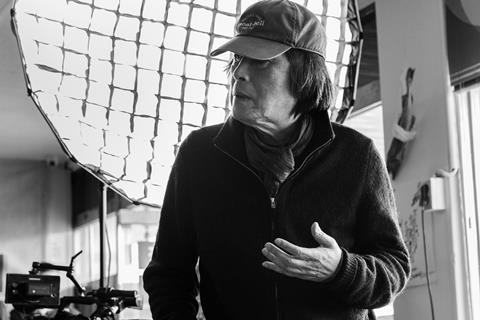
Eight years after winning acclaim and accolades with Burning, Korean auteur Lee Chang-dong is back with Possible Love.
“Before starting a project, I’ll ask myself whether it is meaningful to me, meaningful to the audiences, and meaningful in itself,” says the director of what he considers before embarking on a film. “If I can’t be certain, I find it difficult to fully immerse myself in the project. I’ll stop even when the writing or the preparation has started.”
After long rumination, Possible Love will debut in Competition at Venice before receiving its North American premiere in Toronto’s Special Presentations strand.
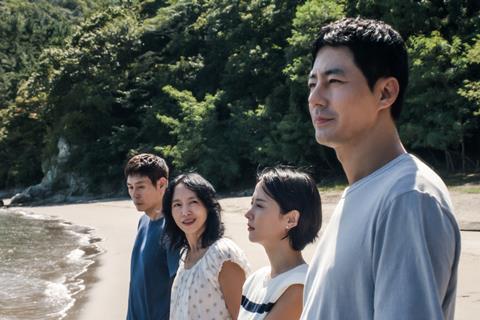
The relationship drama revolves around an unemployed man and his wife whose lives become entangled with a filmmaker and her affluent husband during the making of a documentary about laid-off workers. Repressed emotions arise on and off camera while tensions between the two couples from different social classes flare.
It reunites Lee with Jeon Do-yeon, the first Korean actress to ever win the best actress prize at Cannes for his 2007 drama Secret Sunshine, and Sul Kyung-gu who starred in 1999’s Peppermint Candy and 2002’s Oasis, the latter of which scooped the Silver Lion for best director at Venice. Rounding out the starry cast is Zo In-sung from recent box-office hit and Cannes Competition title Hope, and Cho Yeo-jeong from 2020 Oscar-winner Parasite.
It is co-produced by Lee’s Pinehouse Film with US banner Anonymous Content and Korea’s Nowfilm.
After toiling for several years on the screenplay with his Burning co-writer Oh Jung-mi, casting was completed early in the process. But the project hit a wall in early 2025. “There were difficulties in securing investment for theatrical releases,” recalls Lee. “It was a tough period for the Korean industry.”
At that time, the picture looked bleak for Lee’s local film industry. The first half of 2025 saw Korea’s box-office revenue plunge 33% year-on-year to $354m (KRW480bn), with attendance down 32.5%, according to the Korean Film Council (Kofic).
In stepped Netflix, which had been actively pursuing the acclaimed filmmaker. “Netflix had been wanting to work with me for quite some time,” says Lee. “It was waiting on me for this project when I was looking for theatrical investment.
“Netflix even made a verbal promise for a theatrical release from the start. While there may not be essential differences between the big and small screen, showing in cinemas will allow the audiences to enjoy and understand the film better.”
In a year when Korea’s box office has bounced back for the first time since the pandemic, the streaming giant is keeping its promise. Possible Love will receive a local theatrical release on September 23 followed by Australia, North America, UK-Ireland and Japan in mid-October. It will be made available to stream on Netflix from November 6.
The move places the film firmly in the awards corridor and has already been submitted as South Korea’s entry to the international feature film category of the Academy Awards. It is Lee’s fourth film to be submitted after Oasis, Secret Sunshine and Burning, of which the latter made the shortlist.
Strong contender
It is a strong hit rate for a filmmaker who has only made seven features, having started his career behind the camera later in life. Lee previously worked in theatre and as a novelist, before moving into the film industry in 1993 as screenwriter and assistant director on Park Kwang-su’s To The Starry Island, which was selected for Toronto in 1994.
He was in his early forties when he made his directing debut with 1997 film noir Green Fish, which played a long string of festivals including Busan, Vancouver and Rotterdam.
Despite thinking he has not achieved much over the past three decades, the humble director has been highly lauded, receiving lifetime achievement awards at the Asian Film Awards in 2019 and more recently at this year’s Malaysia International Film Festival. He will receive the TIFF Ebert Director Award at Toronto’s Tribute Awards on September 13 — the first ever Korean recipient of the honour.
He also had a short stint as South Korea’s minister of culture and tourism from 2003-04. Reflecting on the current state of the Korean film industry, he says: “It isn’t exactly great, but people are working hard. There were more cinemagoers in the first half of the year and the trend should continue in the second half. I believe that the Korean film industry will improve, and I hope it will.”






No comments yet