






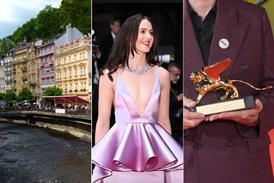


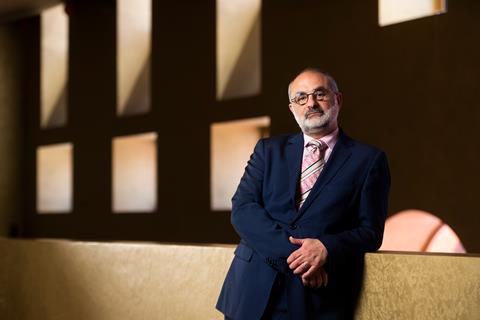
With 103 world premieres secured for the 2026 edition of the Locarno Film Festival next month, festival director Giona A Nazzaro is looking forward to introducing delegates to the “inclusive, creative and open” programme.
“We want to make it worthwhile for the people who take the time to visit Locarno and for them to explore, taste and experience as many new films as possible,” says Nazzaro.
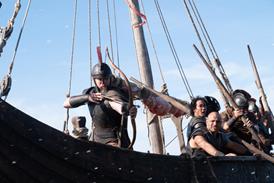
The world premieres range from Albert Serra’s feature doc 16 Moments Of My Life, about singer, actress and Fassbinder muse Ingrid Caven, to Romanian director Florin Serban’s You Don’t Belong Here, fast-rising Nordic talent Maria Back’s romantic drama Brave New Love starring Anders Danielsen Lie, and leading South Korean director Hong Sangsoo’s latest, Nowhere To Lay My Eyes.
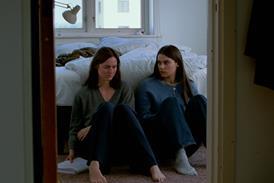
Locarno is also an event at which rising directors can gain exposure and secure international distribution. Nazzaro cites two examples from last year’s Filmmakers of the Present Competition, both debut features: Sophy Romvari’s Blue Heron and Margherita Spampinato’s Sweetheart. The former, a semi-autobiographical drama about a girl from a Hungarian family growing up in Canada, was sold to Janus for the US and to Conic for the UK. After its Locarno premiere, the film, represented by MoreThan Films, went on to win multiple awards at festivals from Toronto to Vancouver.
Meanwhile, Sweetheart, handled internationally by Fandango, sold around the world and won the 2026 Women In Motion Emerging Talent Award in Cannes, worth €50,000 in support for the Italian director’s second feature.
US cinema
As a critic and festival director, Nazzaro is well-known for championing North American cinema. “I do believe there is a collective intelligence in place in the studio system. I am not one who is ideologically against American films, not at all. The studios are welcome in Locarno,” he says.
James Grey’s gritty Cannes competition title Paper Tiger and Olivia Wilde’s Sundance hit The Invite are screening in the vast open-air Piazza Grande. Several modern-day US classics, among them Dances With Wolves, Taxi Driver and Wild At Heart, are also showing.
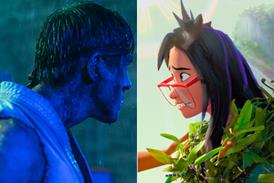
Meanwhile, indie US talent is represented in the programme through titles including Erin Vassilopoulos’ Destroy All Girls, a road movie set against a street-skating backdrop in New York and New Jersey, and Vincent Grashaw’s Florida prison drama Bruton.
“I don’t see European cinema as opposed to American cinema. What is interesting in Locarno’s offer is that different films with different producing strategies can meet in the same place,” says Nazaaro. “It’s not a coincidence that our industry activities, curated by Markus Duffner, are visited by a large number of North American professionals. And Markus and I are every year in LA, visiting the studios, talking to the executives and people working there.”
Piazza Grande screenings attract more than 3,000 spectators and have become the ideal testing ground to see how US films connect with European audiences. “If a studio wants to evaluate how a film can work, Locarno is the right place,” says Nazzaro.
He has also long embraced genre filmmaking. This year, he has selected horror pictures including Bloody Tennis, sold by the Playmaker Munich, to screen in the official selection. Actress-director Asia Argento, best known for genre work, is receiving a lifetime achievement award. There will also be a screening of Roger Corman’s 1990 title Frankenstein Unbound to celebrate the centenary of Corman’s birth.
”Genre films are like zombies. Unless you separate the head from the body, they keep going,” he quips of one sector of the industry that remains almost recession-proof, pointing to how Obsession and Backrooms are bringing younger viewers to cinemas.
Politics
While some European festivals, including the Berlinale and, most recently, FID Marseille, have been roiled by protests and cultural boycotts, Locarno is continuing to programme movies that address political controversy. This year’s programme includes Palestinian-Jordanian director Asmahan Bkerat’s feature doc Concrete Land, about a Bedouin family struggling against urbanisation, and Georgian director Uta Beria’s Tear Gas, a love story set during the raging demonstrations in Tbilisi in 2019.
“We do not shy away from the politics because to shy away would be to shy away from the world,” says Nazzaro. “We present Locarno, not as an ideological festival, but as an open platform that welcomes the voices of the world. Sometimes, the diversity of opinions can be very harsh, but as long as it is non-violent, then that, for me, is a healthy conversation.
“If a producer wants to be part of a strong, motivated, deep cinema community, then come to Locarno.”
The Locarno Film Festival is taking place from August 5-15 in Switzerland.


No comments yet