




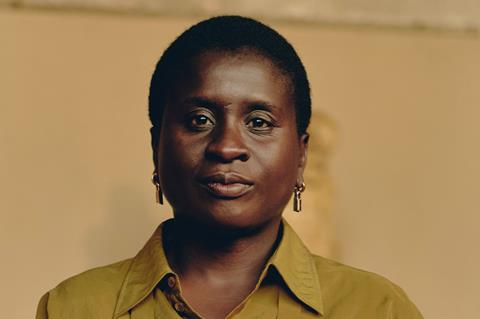
Ama Ampadu was born in Ghana and grew up in north London. She joined the BFI as senior production and development executive at the BFI Filmmaking Fund after working as an independent producer on international films, including Yared Zeleke’s Lamb, the first Ethiopian film to screen at Cannes in Un Certain Regard in 2015.
In her BFI role, Ampadu oversees around 40 projects, many of them debuts, at various stages of development, including Bijan Sheibani’s The Arrival and Babak Jalali’s A Town In Nova Scotia.
Ampadu is attending Cannes as a member of the 2026 Critics’ Week jury.
What is your office like?
It’s a busy, friendly and creative environment where there’s a strong sense of connection and people enjoy spending time together. We have hot desks, which allow us to change neighbours and get to work alongside colleagues from across the BFI. We have a hybrid culture, so we can work from home some days, which is particularly useful for reading scripts, but we come into the office on the same days.
What is the first thing you do when you arrive?
I usually start with meetings, so the first thing I do is grab a coffee and join a Zoom or in-person meeting.
What was your first job in the film industry?
A set intern. Before that, during my university years, I worked in TV at Nickelodeon as part of the audience and production support team. After graduating, I did a variety of freelance production-related roles, including production assistant, researcher and production co-ordinator.
Who helped you most when you were first starting out?
I didn’t know anyone, so I relied on friends. This not only included introductions to their networks, but also support with housing, which helped reduce my living costs. I raised my producer’s contribution to the financing of my first film, Lamb, by renting out my flat and living with a friend for over a year. I’m not advocating that other filmmakers do this, as it’s not ideal. Producers should not spend their own money on films.
What do you like best about your job?
It’s a gift to have risk as a core priority, to support diverse voices and stories, and to work from the understanding that film and cinema are a public good.
What are you most proud of professionally?
All our films. Mark Jenkin’s Rose Of Nevada is out in cinemas in the UK and Ireland and is doing exceptionally well. As a team, we had a grand moment in Cannes last year with three directorial debuts in the Un Certain Regard lineup [Urchin, Pillion and My Father’s Shadow], with all of them winning prizes. On a personal level, I’m also incredibly proud of Lamb and [Mati Diop’s documentary] Dahomey [Ampadu was an associate producer].
What is your favourite festival or event and why?
I have been attending Cannes Film Festival for the past 14 years, and have many memories of world premieres there, including Atlantics [by Mati Diop] and Lamb. It’s a valuable opportunity to connect with the global industry. Our inclusion department also organises an annual lunch at Cannes, celebrating Black women with films in the selection. Past honourees have included Ramata-Toulaye Sy, Rungano Nyoni and, last year, Funmbi Ogunbanwo, the Nigerian producer [of My Father’s Shadow].
With whom would you most like to take a meeting?
Equity financiers who are open to backing diverse, distinctive voices, including debut filmmakers, and championing bold, original stories.
What is the biggest challenge facing the business?
There are many, from securing financing to distribution and connecting great work with audiences. There are many elements across the value chain that are struggling to run sustainable businesses. It can result in a fear of risk-taking, which can ultimately be damaging to our sector in the long term.
What was your favourite film growing up?
Spike Lee’s Malcolm X and Do The Right Thing.
What job would you do if you didn’t work in film?
I would work in an art gallery.
What book are you reading at the moment?
The Source Of Self-Regard: Selected Essays, Speeches, And Meditations by Toni Morrison.
What do you do to unwind, and where do you go?
I listen to a lot of music. At the moment, it’s To Whom It May Concern by Jill Scott. I’m also an avid radio and podcast listener. I visit art galleries, museums, art fairs. I also enjoy restaurants.
Who would play you in the biopic of your life and who would direct?
Mati Diop, if she would agree, and I would let her choose her actress.



No comments yet