













Spanish producers have enjoyed fruitful collaborations with Brazil’s busy audiovisual sector for many years, although administrative issues and the ongoing presidential election raise question marks.
Spain is among the European countries that are signatories to a bilateral co-production treaty with Brazil, alongside Germany, the UK, France, Italy and Portugal. Spain’s agreement dates back to 1963 and data from the Brazilian film agency Ancine shows that 27 projects involving Spanish partners were submitted during the 2024-2025 international co-production call, placing the country third in Europe behind Portugal (90) and France (59).
One celebrated example of the collaboration is Lucrecia Martel’s 2017 period drama Zama led by Argentina’s Rei Cine and Brazil’s Bananeira Filmes that brought together partners from eight countries, including Spain’s El Deseo founded by Pedro and Agustín Almodóvar.
”Brazilian cinema is thriving”
“We’re always open to distinctive, daring projects from anywhere, especially Latin America, a market which we’d like to work with more,” El Deseo head of production Esther García says. “Series are opening markets and making audiences more receptive to linguistic differences. Brazilian cinema is thriving. Its cultural richness, colour, intellectual life and music give its stories a distinctive DNA”.

García, who is chairing the jury at this year’s Festival do Rio, recalls: “Zama was a milestone sample for Latin American cinema. Co-productions like Zama show how films that might have remained small could grow and realise their entire potential.”
The bilateral co-production treaty grants eligible films recognition as national productions in both countries and access to domestic support and benefits, so long as they satisfy the requirements of Ancine and Spain’s film agency ICAA. Third-country participation may also be authorised. In addition, Spain and Brazil participate in the Ibero-American co-production framework, rooted in the 1989 Latin American Agreement on Cinematographic Co-production, and can benefit from the Ibermedia funding system.
Recent multilateral co-productions involving Spanish and Brazilian companies include Marcelo Martinessi’s Narciso (2026) with Spain’s Bteam Prods and Brazil’s Esquina Filmes; Albertina Carri’s White Roses, Fall! (2025) with Spain’s Doxa Producciones and Brazil’s Sancho&Punta; Paolo Marinou-Blanco’s Dreaming Of Lions (2024) with Spain’s Cinètica Produccions and Brazil’s Capuri Films; and Silvina Schnicer’s The Cottage (2024), which involved Spain’s Palmeras Salvajes and Brazil’s Casa Na Árvore.
Going back a little further there have been Olivier Assayas’ Wasp Network (2019) involving RT Features and Nostromo Pictures; Benjamín Ávila’s Clandestine Childhood (2011) with Academia de Filmes and Antàrtida Produccions; and Sergio Oksman’s On Football (2015) produced by Dok Films and RTVE, with participation from Canal Brasil and Superfilmes.
“The films of Kleber Mendonça Filho and Walter Salles have brought enormous visibility through the Oscars,” García says, referring to this year’s multiple Academy Award nominee The Secret Agent and the 2025 best international feature film winner I’m Still Here, respectively.
“Platforms are now also establishing a strong production presence in Brazil. I expect Brazil’s government to follow countries where incentives are helping production,” García says. Government support is critical for public film infrastructure, and as García points out, the outcome of Brazil’s president elections remain to be seen. A run-off vote is scheduled for October 25 after Flávio Bolsonaro, the far-Right son of former president Jair Bolsonaro, narrowly beat the Leftist incumbent Lula da Silva in last weekend’s first round.
Ongoing concerns
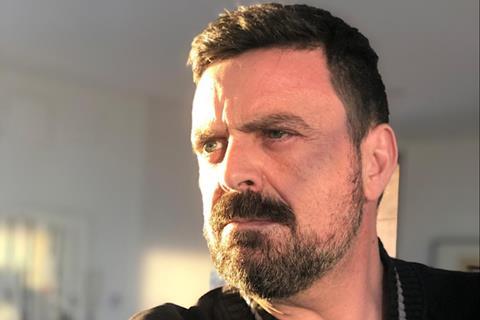
“Brazil is highly attractive for its locations, technical capacity, talent and stories, but considerable administrative uncertainty undermines its competitiveness,” says David Matamoros of Barcelona-based Mr. Miyagi Films. The company’s Brazilian co-productions include Santiago Loza’s Brief Story From The Green Planet and David Bisbano’s animated feature Dalia And The Red Book, and it is preparing Marta Puig’s animated musical fantasy The Day Ewan McGregor Introduced Me To His Parents.
“Cinema do Brazil did an exceptional job between 2010 and 2020. It now lacks some of that drive,” Matamoros says of Brazil’s promotional agency. “Brazil has bilateral agreements with some countries, but limited international integration forces producers to work through several agreements with other partners.”
He adds, “Across Latin America, the relationship with Europe always raises the question [of] which agreement applies. Production is also focusing too heavily on television soap operas and local platform content. That shapes its direction without enabling it to compete in the wider international market. I think that’s Brazil’s biggest challenge.”






No comments yet