






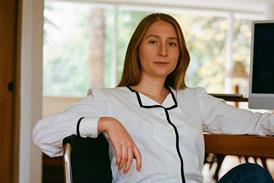





It is early April and Anna Bogutskaya, the head of screen for SXSW London, is deep in the work of curating the film and TV content for the second edition of the festival.
Taking place in venues throughout East London from June 1-6, the festival aims to bring together the film and TV industry with the music and tech sectors in the UK.
Bogutskaya and her team also curate the film and TV-related keynotes, panels and roundtables.
She talks to Screen about the international flavour of the programme, how she works to help rising filmmakers find audiences and distributors, and why Kazakhstan is the territory to watch.
What are you building on for 2026 following last year’s inaugural edition?
The things that worked the most, which was a surprise to me, were the TV screenings and events. They were some of the first to sell out. The conversation with [Industry creators] Konrad Kay and Mickey Down was completely packed. We’re doubling down on that.
I’m really proud of the film programme. It’s international by design. Last year, two-thirds [of the films] were not in the English language. This year, we are also very, very heavily international. And the international stories really worked. We saw audiences, not just pass holders, find these stories, films they would not have seen otherwise,
We found that we’re really connected to local communities, which was exactly what we intended to do. There were screenings that were selling out because they were speaking to some of the London communities that are keen to see stories and films about themselves.
We’re finding it really curious to see in conversations with sales agents and with filmmakers, in both the shorts programme and the features programme, which regions are starting to really make a name for themselves, where filmmakers are doing really exemplary, fascinating work.
Can you give me an example?
Kazakhstan. I don’t know what’s in the water. It’s absolutely incredible. One of the films that just blew us away was Sicko, which is this really almost Tarantino-esque, Guy Ritchie-esque, absolutely fast-paced, insane thriller from Kazakhstan.
How do you connect those films with audiences when most won’t know the filmmaker and won’t have heard of the film yet?
One thing we have finessed is precisely that. Every film we select has a hook for an audience. It’s not just ‘general arthouse film’, it’s not just ‘general genre film’. What we really sought out last year and doubled down on again this year is the multitude of genres that exist in international film. If it’s a coming-of-age film from Singapore, the Singaporean element of it speaks as loudly as the coming-of-age quartet of ’girls in a boarding school’, which is its own narrative expectation.
Similarly, if we have a road trip film, that’s a genre, that’s an expectation, that’s a feeling that you can sell to an audience and explain to them what they’re coming in for. It just so happens that it’s a Saudi road trip movie as opposed to Thelma and Louise again.
What size is the programme this year?
We’re aiming for the same size. Last year, we had 43 features. This year, we’re aiming for around 40. Because we’re two weeks after Cannes, we try to leave a couple of slots, either for overspill screenings, for things that are doing really well, or for last-minute miracles that might fall into our lap as people figure out their release plans after Cannes.
Last year, the festival brought quite a lot of talent over for the films. Are you planning to bring in talent for each film again?
Absolutely. We’re trying to bring in as many filmmakers as we can from across the programme. That ties into the intention of not just platforming the films and helping them find their audience, but also in connecting the talent, not just to each other, but also to the UK-based industry, as well as all of the multitude of people that are coming to South By ..London for different events.
We’re really trying to turbocharge our internal efforts to find meeting points and connections between the three streams of the festival. We’re engineering more networking opportunities.
Most of the films don’t have UK distributors yet. Are you specifically inviting UK distributors?
Absolutely. The distribution landscape and the festival landscape are changing so much and so quickly, but with films like these, a lot of them, if they’re not pre-bought already, need that extra festival support. We know and work with all the distributors around the UK, and there’ll be further titles [announced] that already have distribution.
We do a bit of behind-the-scenes work, trying to invite acquisitions folks and distributors, whose taste we’ve gotten to know. We had two films acquired off the back of last year’s festival. [The Occupant and Plainclothes]. We’re hoping not to do an official market, but rather to play matchmakers where we can.
And do you find the industry’s energy is up for it, even though it’s just post Cannes?
The post-Cannes hangover is a difficult one to get over, but I think in general, the industry is up for it. As we build the festival, we’ll find those synergies, and the industry will see the kind of film that we’re platforming and what we can do for that film, and the taste that we’re developing as a festival.
Can public audiences buy a single ticket to a film rather than a pass?
Yes. If you wanted to see one film, you can buy tickets to one film [for £12]. That also happened last year, and it’s continuing this year, alongside the passes, which give you access to the conference and the breadth of programming on offer.
Do you bring any films over from the SXSW mothership?
It’s never a given. Last year, we had two film crossovers. It’s the same process as with any other festival. We can watch the films, and if we love the films, we’ll invite them, but they’re at liberty to decline.
What makes a South By.. London film?
A South By ..London film is edgy. It’s international. It’s bold. Bold is a word that gets used quite a bit, but when I think of boldness, I look at the films that we consider and try to determine, ‘Does this feel like a film that fits in with us and what we’re trying to build?’
It’s a sort of bravery, both thematic and aesthetic. There are films that can be rough around the edges, but have such a specific, clear point that they’re trying to make. They are looking forward, not backward.






No comments yet