








The Kyoto-born prosthetic make-up artist has won two Oscars and three Baftas for his work in films including Bombshell, Maestro and Darkest Hour
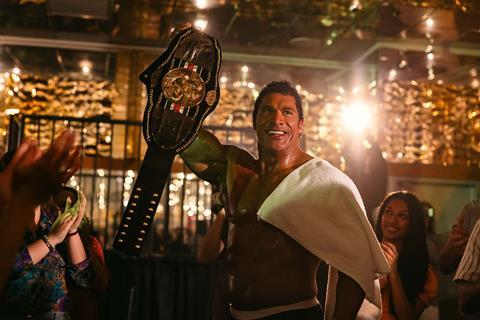
Prosthetic make-up artist Kazu Hiro is Hollywood’s go-to guy when a film requires the transformation of an actor into a real-life person. He won his first Academy Award in 2018 for turning Gary Oldman into Winston Churchill in Darkest Hour and his second two years later for transforming John Lithgow into Fox News’ Roger Ailes and Charlize Theron into Megyn Kelly in Bombshell.
He also won the Bafta Film Award for both features (and has a third Bafta for How The Grinch Stole Christmas), while both academies nominated him for a fifth time in 2024 for transforming Bradley Cooper into composer Leonard Bernstein in Maestro.
“I love character make-up,” says the Kyoto-born artist, who now has US nationality and residency. “It’s more challenging because it can’t be flashy, it has to be invisible. What makes me happy is seeing an actor look at themselves in the mirror and say, ‘Okay, I’m ready.’”
This unflashy approach was Hiro’s guiding principle for Benny Safdie’s The Smashing Machine, transforming Dwayne Johnson into wrestler/mixed-martial-arts fighter Mark Kerr.
“I suggested two versions, a subtle version and one as close as possible to Mark Kerr,” explains Hiro. “We decided on the subtle version because Benny wanted an essence of Mark Kerr. It also meant less coverage, would be more comfortable for the actor and would take less time to prepare every day.
“There were lots of fight scenes, so the more there is to apply, the longer it takes to do repairs on set and since this didn’t have the biggest budget, we had to stick to the schedule.”
One element Hiro also had to consider was sweat. “Humans sweat [differently] and the chemistry of the sweat varies,” he says. “Alcohol will also come out in sweat. After a few days with Dwayne, we learnt how he sweats and where he sweats and which adhesive would work.”
Hiro used brow and nose prosthetics to change Johnson’s face. “Dwayne’s eyes are very big and open so we had to change them because Mark has a prominent brow bone. The brow piece came down very low and sat on Dwayne’s eyelid. Because the eyelid is sensitive and doesn’t have a strong muscle, I made a hollow gap inside the brow piece which moved with Dwayne’s eyelids and allowed him to blink easily.”
The wig was vital to transforming the proportions of Johnson’s face. Hiro collaborated with chief hair artist Mia Neal on the wig work. “Whenever I do prosthetic make-up, I design hairline and hair density too. [Wig maker] Diana Choi designed it but then Mia took care of the daily application work.”
For the scene where Kerr’s head is shaved, Hiro sculpted a silicone scalp into which was punched individual hair strands. Hiro then had to train the barber how to use clippers to avoid biting into the silicone skin. “When Dwayne is bald, he’s much more recognisable [as himself], but because the audience has seen Dwayne for most of the film in the wig, that image of him is kind of burned into their retina,” says Hiro.
Taking the blows
Hiro also had to create the injuries inflicted on the character. “I made swollen face pieces that could be attached to existing brow and nose pieces. We made layers so during the day we could progressively change the look instead of making a whole new face every time.”
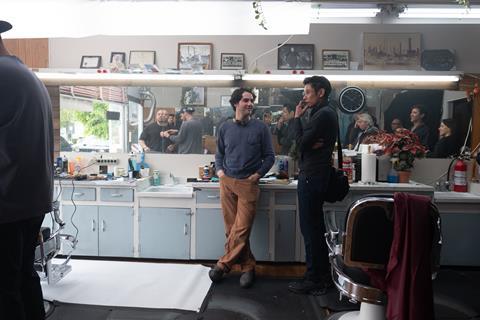
Other elements included cauliflower ear pieces that fit over Johnson’s ears, a prosthetic cut in the beard piece that is stitched up by a doctor after a fight, scars on the arms and knee, and a skin prosthetic for the scene where the character injects himself with opioids.
“I made a 3D printed base with a hard silicone dome that would fit inside the top skin prosthetic,” says Hiro. “We filled it with fake blood so Dwayne could inject the syringe into that and take up blood to mix with the drug to make the scene realistic.”
The actor’s personal make-up artist Björn Rehbein did the work to cover Johnson’s dark body tattoos. Hiro then painted on Kerr’s tattoos: Chinese letters on one shoulder and six-legged spiders on his chest.
Johnson – who Hiro says was one of the most patient and accommodating actors he has worked with – was in the make-up chair every day for between two-and-a-half and four hours. “Dwayne had prosthetics on every day. We used barrier cream as skin protection to make it easier to remove the piece at the end of every day to avoid stressing his skin.”
Hiro has two films due for release next year, although he is not ready to talk about either. His particular contribution to Alejandro G Inarritu’s untitled film – with Tom Cruise, Sandra Hüller, John Goodman and Riz Ahmed – remains a point of speculation. More clear, however, is Kwame Kwei-Armah’s The Collaboration, adapted by Anthony McCarten from his own stage play, starring Paul Bettany as Andy Warhol opposite Jeremy Pope as Jean-Michel Basquiat.




No comments yet