











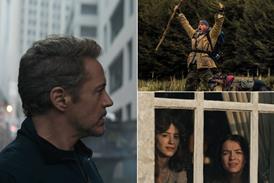

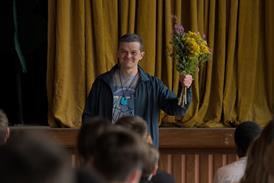



Triggered by I’m Still Here (2024) and sustained by The Secret Agent (2025), the global momentum of Brazilian cinema has been driving the theatrical performance of local films to new heights. Both films contributed to a significant growth in the market share of Brazilian cinema domestically, which jumped from 2.8% in 2023 to 10.4% and 9.8% respectively in 2024 and 2025.
Since last year, when Walter Salles’ drama about the country’s military dictatorship made history at the Oscars, winning the first-ever best international feature award for Brazil, four local films have topped the 1 million admissions benchmark. Kleber Mendonca Filho’s political thriller The Secret Agent — also set in the era of military dictatorship — is one of them, with more than 1.9 million tickets sold at home since its early November release.
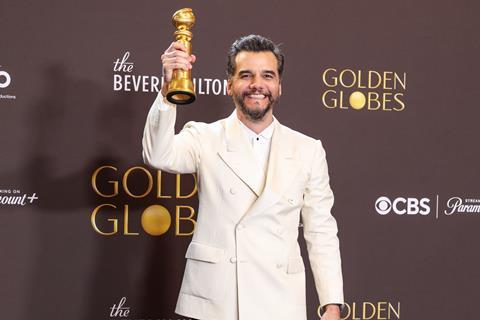
Local interest in the film ramped up further after The Secret Agent won two Golden Globes and received four Oscar nominations, reinforcing a proud moment in Brazil’s cinema history. Wagner Moura secured Brazil’s first nomination for leading actor in his role as a professor caught in a web of corruption and political oppression during the 1970s dictatorship, in addition to The Secret Agent’s Oscar nominations for best picture, best international feature and best achievement in casting.
In the days following its wins for best non-English-language film and best actor in a drama for Moura at the Golden Globes, the box office jumped 216% at home. At time of press, the gross in Brazil stands at $8.2m (brl43.2m), ranking The Secret Agent as the fourth highest-earning film of 2026 so far, behind only The Housemaid, Avatar: Fire And Ash and Zootopia 2.
“The speed made a difference on the awards momentum’s impact. We developed a national campaign to react in real time, with immediate social-media publishing,’’ says Silvia Cruz, founder and CEO of Vitrine Filmes, which is distributing the title in Brazil. “When the [Secret Agent] team shared a samba celebration [from the Golden Globes ceremony after Moura’s win], it felt as if the entire country was dancing with them. The film was no longer perceived as an award winner only, but as a shared cultural moment.”
Social-media blitz

In less than 24 hours, according to Cruz, the conversation around the film generated more than 140 million impressions on X, with “Wagner Moura” and “O Agente Secreto” leading Brazil’s trending topics, and search interest for the film and its talent spiking by over 1,000%. The online fervour helped to drive more people to see the film in cinemas.
Fabiano Ristow, an analyst from Filme B, which specialises in theatrical box office in Brazil, says digital engagement is a factor to be considered in this phase of heightened international visibility of Brazilian cinema. “For the first time we are going through a moment of international projection in the era of social media,’’ he says, recalling that the last films to compete for major awards were Fernando Meirelles’ City Of God in 2004 and Salles’ Central Station in 1999.
Brazilians are highly engaged on social media, consistently placing the nation among the countries with widest online reach. Films that come from the “nation that lives online” end up greatly benefiting from the buzz created on social media. This was also the case with I’m Still Here.
“After Fernanda Torres won best actress in a drama at the Golden Globes in 2025, our box-office admissions increased by more than 100%,’’ says producer Maria Carlota Bruno, who worked on the film in her role at Salles’ production banner VideoFilmes. “After our three Oscar nominations — best actress, best international feature film and best picture — Brazilians not only flooded the academy’s website, cheering passionately for the film, but also returned to movie theatres.’’
I’m Still Here, which like The Secret Agent illuminates a very dark chapter in the country’s history, ended up selling a further 2.8 million tickets in 2025, bringing its tally to 5.8 million admissions since the November 2024 release for a total gross of $22.5m (brl117.9m).
“I often say that the greatest achievement of I’m Still Here was winning over Brazilian audiences after a period of scepticism toward the arts in general, and especially toward actors, actresses and Brazilian cinema,” says Bruno. “Entire families — grandparents, parents, children and grandchildren — watched the film together, deeply moved. It was beautiful to witness that collective catharsis.”
The other Brazilian films to join the 1-million-admissions club in 2025 were A Dog’s Will 2 and Chuck Billy And The Marvelous Guava Tree. The former, a comedy about the habits and spiritual beliefs of the Brazilian northeast, sold 3 million tickets last year to bring its total to 4.3 million following a late 2024 release. The latter, the first live-action film featuring a children’s book character created by Brazilian cartoonist Mauricio de Sousa, attracted just over 1 million admissions.
“A successful Brazilian film ends up helping another, creating a snowball effect,” suggests Ristow. “When you finish reading a book you enjoyed, you want to read all the others by that author. Historically, something similar happens with Brazilian cinema. After enjoying one, the audience wants to see more Brazilian films, causing the success to spill over into other films.”
Another title that rode the wave of success created by I’m Still Here was Andrucha Waddington’s Vitória, the fifth most-watched Brazilian film of 2025. Starring Fernanda Montenegro (mother of Fernanda Torres), Vitória reached an audience of more than 735,000 people, with the veteran actress playing an elderly woman who helps dismantle a drug-trafficking scheme in Copacabana.
The tendency of Brazilians to celebrate with great excitement the country’s achievements on the international stage has also served as fuel for Brazilian cinema. “Since Brazilians are highly competitive, I’m Still Here sparked a wave of support very similar to a World Cup”, says Bruno, adding that the film also created a strong desire for a “rematch”. Brazilians had high hopes on Torres winning the leading actress Oscar last year, almost as reparation for national treasure Montenegro missing out on the same award for Central Station in 1999 (losing to Gwyneth Paltrow for Shakespeare In Love).
The same kind of fervour that Brazil can demonstrate around success on the football pitch was seen during the live announcement of the 2026 Oscar nominations on YouTube. Brazilian fans of The Secret Agent made headlines in international media outlets for showing the most enthusiasm, flooding the chat with Brazilian flags and celebratory words. “Brazil often turns moments of pride into shared experiences, something historically associated with football, with the World Cup, the Olympic Games and sports in general,” observes Cruz. “What feels new is cinema occupying this space.”
So will Brazilian pride help to sustain these cinematic box-office returns? Ristow sounds a note of caution, noting this recent success has been concentrated around a handful of titles.
“Remember that 208 Brazilian films were released last year, but who saw these other films?” he asks, pointing out that the lower-ranked titles on the list of the top 20 Brazilian films of last year achieved their spots with around 40,000 admissions. “We are living in a historic moment in cinema. But the big challenge is to ensure that I’m Still Here and The Secret Agent are not isolated cases.”





No comments yet