













The decline of pay-1 output deals has been blowing a hole in independent financing plans for years, forcing the industry to adapt to a fragmenting market.
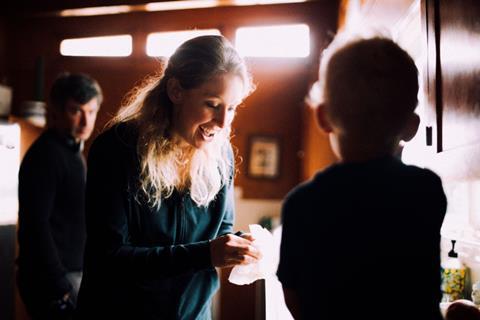
You Can See Everything has been the talk of Hollywood ever since its surprise screening at Telluride in September and lauded box-office performance in North America, where it opened on a mighty $15.6m and by press time had grossed $45.1m. Next year, anybody with an HBO Max subscription in the US will be able to gawp at the saga of convicted Theranos founder Elizabeth Holmes from their couch.
That is because the buzzy documentary from Nathan Fielder and Lance Oppenheim is distributed by A24, which enjoys an exclusive pay-1 output deal with the streamer. Its films typically debut on the platform three to four months after the theatrical run has ended and the title has been exploited through the transactional video-on-demand window comprising premium video-on-demand rental and electronic sell-through digital purchase.
A24 is part of a select band of independent US theatrical distributors to benefit from this kind of exclusive arrangement, the others being Neon and its long-running output deal with Hulu, and Lionsgate, whose pay-1 deal has remained at Starz after the companies separated and runs through 2028.
For most other independents, these multi-title, multi-year licensing deals, which serve as a critical part of the revenue waterfall and until several years ago were fairly prevalent — Magnolia Pictures had a deal with Hulu and Bleecker Street signed a three-year deal with Showtime in 2022, for example — have largely vanished. Before streaming came along, pay-1 buyers were mostly cable companies like HBO, Showtime and Starz.
Prior to Covid, theatrical buyers could venture into the marketplace confident in the knowledge they had the financial security of a pay-1 partner that would pay a fee to stream their films. These SVoD platforms, hungry to build inventories and grow their subscriber bases, paid a minimum, or a ‘floor’, for each film. That is still the case and deals can be tiered to reward distributors when box-office thresholds are reached.
Fees vary depending on the film (they sometimes exclude documentaries or foreign-language titles), theatrical distributor and whether or not there is a prior relationship. They range from tens of thousands of dollars to several hundred thousand in the independent space, often considerably higher on output deals, which help the theatrical buyer recoup part of their minimum guarantee or marketing spend.
Around 2021, the streamers pivoted towards in-house production to achieve scale. Since then, their appetite for pay-1 deals has dwindled. Pay-1 outputs are par for the course for Hollywood studios that operate within vertically integrated media giants with streaming components — the exception being Sony Pictures, which has a $7bn deal with Netflix — but for independents, the picture is bleak. As a result, a broad swath of US theatrical buyers have become far less active in the marketplace than they used to be.
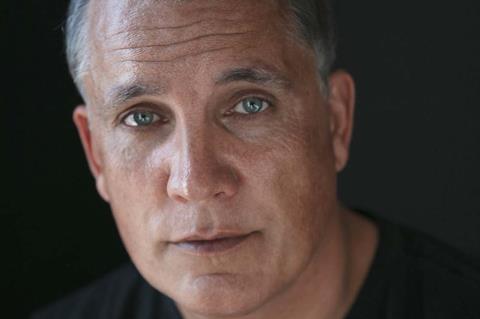
“The pay-1 problem is hurting US distributors, indie financiers and producers alike and the situation is no easier in the key overseas territories,” says Stuart Ford, chairman and CEO at sales, production and finance company AGC Studios. “As an industry, we have to find a way for these SVoD licence fees to be more equitably calculated or for windowing for other media to assume a more prominent role in the revenue model.”
Ford continues: “As a financier we have to assume less and less risk against the US revenue streams on a film going in, and as a seller we’re navigating an unprecedentedly gun-shy domestic acquisitions landscape.” A US deal will help trigger international sales if territory buyers know there will be a US campaign.
Shifting goalposts
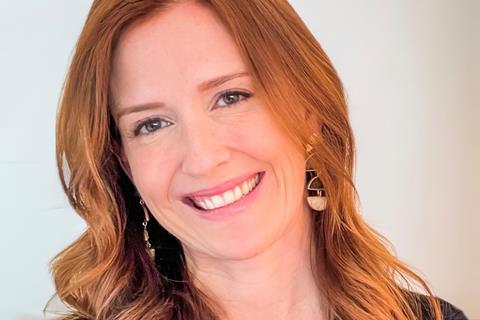
The Los Angeles-based UK executive is not the only one to voice concern. “The pay-1 conversation is a component in how we go and monetise the movie when we sell domestic,” says Deborah McIntosh, head of WME Independent.
“If you look at a marketplace that traditionally has had a floor for what something could sell for in the US because of who’s in it, what the genre is and what a distributor thinks it will do theatrically, that’s where the pay-1 part comes in. Theatrical distributors were able to make more aggressive offers when they had pay-1 output deals.”
McIntosh adds: “The pricing for the pay-TV window is not what it used to be. The pay-TV partners have less need for product and so there’s really no floor anymore in terms of what a film could potentially achieve theatrically and how it could perform downstream.” Deals typically run to 18 months and these days can be sub-divided between different platforms within the overall term length.
Buyers must up their game, pick a lane and make their acquisitions stand out. “Now more than ever, with or without a pay-TV deal, every buyer is evaluating if they’re the right buyer for the movie, based on whether they think the movie speaks to an audience that they know how to go get,” says McIntosh. “That is wise. The more we can give an audience a brand affiliation based on the distributor, the more opportunity that film will have to potentially cut through the noise.”
Independent distributors are scrambling to make bespoke arrangements with pay-1 partners, wherever possible on a film-by-film basis. For proven theatrical hits or films with a clear audience, a deal will follow. Luc Besson’s 2025 release Dracula earned more than $13m in North America to become Vertical’s biggest hit and streams on Paramount+; Magnolia Pictures’ 2024 Sundance hit Thelma, directed by Josh Margolin and starring June Squibb, landed on Hulu; and it can only be a matter of time before a pay-1 deal is announced on Casper Kelly’s horror Buddy, which set opening records for Roadside Attractions and Saban Films and has swept past $26m.
Independent distributors can get creative when needed, but standing out from the crowd takes careful planning and resources, which have become harder to come by. Nobody who spoke to Screen International would divulge proprietary details of their rate cards with pay-1 buyers, but fees have dropped drastically.
“I tried to get a pay-1 deal on this picture I was putting together earlier in the year,” says one independent producer. “We used to get $750,000, $1m, and now it’s $300,000, $400,000. You can’t make up that difference; it blows a hole in your finance plan. There’s no appetite out there.” The issue is spooking financiers. Another producer notes: “Most independent productions can’t raise money without a minimum guarantee or a sizeable distribution commitment.”
Streaming platforms that have been active buyers in the independent marketplace — Netflix, Hulu, Prime Video and the newly combined Paramount+ and HBO Max — declined to comment. As one source who has worked at streamers and independents says: “The issue is alignment of interest. Every independent distributor would love to have a solid pay-1 output deal that takes every single one of their movies, and from a pay-1 perspective you want to be choosy, and you don’t want to take the ones that aren’t going to work. I get both sides.”
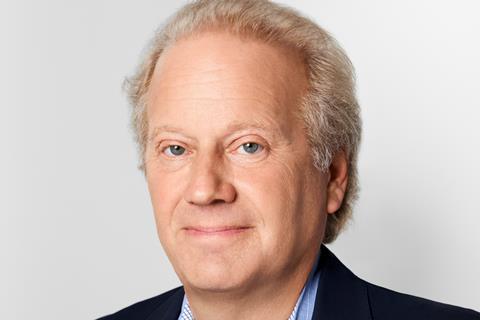
Teddy Schwarzman’s Black Bear moved into US distribution in 2025. “What Black Bear has done very successfully is pay-1 deals either on a one-picture or a multiple-picture basis, but not an output deal,” says head of TV distribution Dan Cohen. The company’s first US acquisition, 2025 TIFF premiere Christy starring Sydney Sweeney, went to HBO Max last spring, and 2025 Telluride acquisition Tuner streams on Paramount+. Black Bear has made deals with Starz on other titles, and at press time was negotiating with a pay-1 partner on late October release Wicker starring Olivia Colman and Alexander Skarsgard.
“Every film has had multiple bidders, and we’ve been able to land each film with what we think is the best service for that film, with the best economics,” says Cohen, the former Paramount chief content licensing officer and Republic Pictures president, who was also a Showtime buyer. “I understand the logic of output deals and there may come a time when we think that’s the right answer, but right now, I love the fact we have optionality.”
For independent buyers without the capital resources of a Black Bear, taking a punt on a film and outlaying for a minimum guarantee and prints and advertising (p&a) spend in the hopes the film performs well enough in cinemas to attract a streamer can be prohibitive.
US distributors would like to see some kind of mandatory investment by streamers in independent film along the lines of the European system. A new coalition of producers and Hollywood agencies called American Entertainment Alliance is advocating for exactly that.
“It’s one of the larger blind spots that’s going to have tragic consequences if it’s not dealt with soon,” says one distribution source of the pay-1 hole. “Netflix, Apple and Amazon could sneeze out an output deal for a few independents that could help save them and yet they have no interest in doing so, which just shows a completely myopic view. Where’s that independent new wave [of filmmakers] coming from? Maybe it’s all YouTube, as we’ve seen from the summer.”





No comments yet